
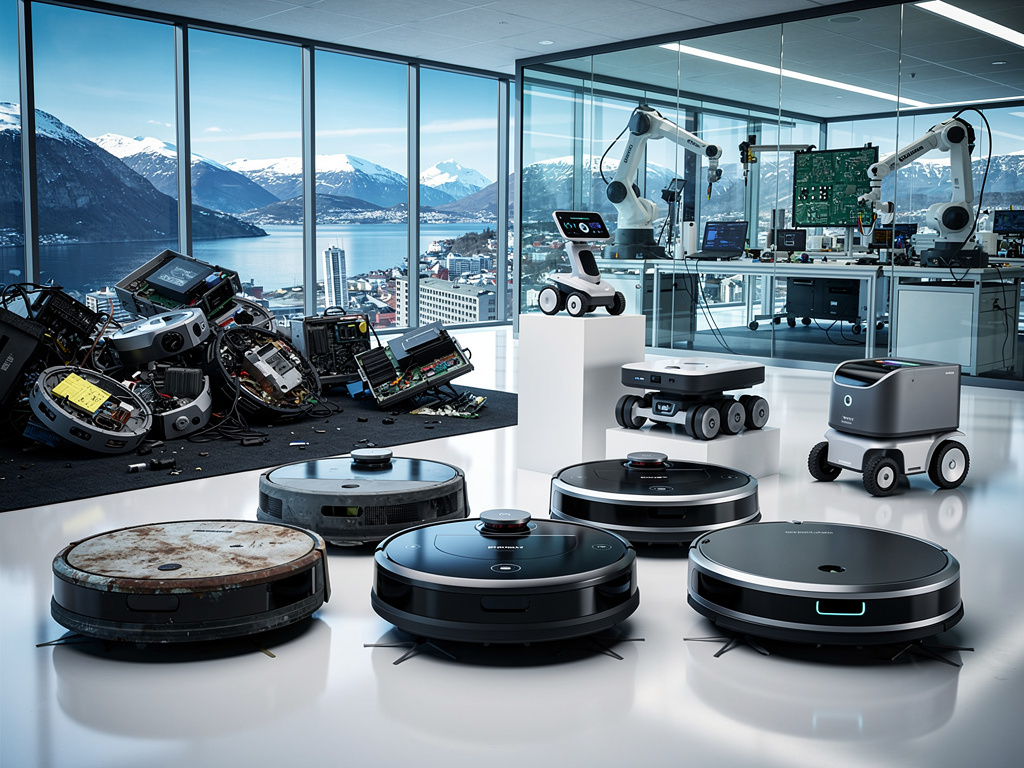
When iRobot Corp. collapsed under the weight of a failed Amazon acquisition and mounting financial losses, the future of the iconic Roomba vacuum — and the decades of robotics research behind it — seemed destined for the scrap heap. But in a twist that reads more like a Silicon Valley redemption arc than a corporate obituary, a small Norwegian robotics company called Picea Robotics has emerged as the unlikely savior of iRobot’s core technology, purchasing key assets and relaunching the brand with ambitious plans that extend far beyond vacuuming floors.
The deal, which closed in recent weeks, marks one of the more unusual acquisitions in the consumer robotics sector. Picea Robotics, a company with a fraction of the headcount that iRobot once commanded, acquired the rights to iRobot’s Safe Intelligence platform — the proprietary navigation, mapping, and obstacle-avoidance system that powered the company’s most advanced Roomba models. The acquisition also included iRobot’s brand name, certain patents, and the institutional knowledge embedded in a team of engineers who had spent years refining autonomous home navigation, as reported by The Verge.
A Storied Brand Finds an Unlikely New Home
iRobot’s downfall was swift and painful. Founded in 1990 by MIT roboticists, the company essentially created the consumer robot vacuum category with the original Roomba in 2002. At its peak, iRobot was a household name synonymous with home automation, commanding a dominant share of the robot vacuum market globally. But a proposed $1.7 billion acquisition by Amazon, announced in August 2022, became mired in regulatory scrutiny on both sides of the Atlantic. European Union regulators raised significant antitrust concerns, and in January 2024, Amazon officially walked away from the deal.
The collapse of the Amazon deal proved fatal. iRobot had restructured its operations in anticipation of the merger, cutting staff and deferring strategic investments. Without Amazon’s deep pockets, the company found itself financially weakened and strategically adrift. In August 2024, iRobot filed for Chapter 11 bankruptcy protection, and its assets were put up for sale. The bankruptcy marked a humbling end for a company that had once been valued at billions of dollars and employed thousands of engineers and designers worldwide.
Picea Robotics: Small Company, Big Ambitions
Enter Picea Robotics, a Norwegian startup that most consumers have never heard of. The company, based in Scandinavia, had been working on its own robotics platform but recognized the extraordinary value embedded in iRobot’s intellectual property portfolio. According to reporting by The Verge, Picea’s leadership saw the acquisition as a once-in-a-generation opportunity to leapfrog years of development by acquiring battle-tested navigation and intelligence systems that had been refined through millions of real-world deployments in homes around the globe.
The centerpiece of the acquisition is iRobot’s Safe Intelligence platform. This system represents the accumulated knowledge of more than three decades of robotics research. It encompasses advanced simultaneous localization and mapping (SLAM) algorithms, sophisticated obstacle detection and avoidance capabilities, and machine learning models trained on vast datasets from Roomba units operating in real homes. The platform allows robots to build detailed maps of their environments, recognize and avoid obstacles ranging from pet waste to charging cables, and adapt their cleaning patterns to the specific layout of each home. For Picea, acquiring this technology was far more efficient than attempting to build comparable systems from scratch.
Beyond the Vacuum: A Platform Play for the Entire Home
What makes Picea’s plans particularly noteworthy is the company’s stated intention to use iRobot’s technology as the foundation for a broader home robotics ecosystem. While the Roomba brand will continue to exist — Picea has committed to maintaining and developing robot vacuum products — the company’s leadership has signaled that the Safe Intelligence platform could power a range of autonomous devices beyond floor care.
This vision aligns with a broader industry trend toward multipurpose home robots. Companies ranging from Amazon with its Astro robot to various Chinese manufacturers have been racing to develop robots that can patrol homes for security, serve as mobile communication hubs, or assist with household tasks. The challenge for all of these efforts has been reliable, safe autonomous navigation in the cluttered, unpredictable environments of real homes. iRobot’s Safe Intelligence platform, having been deployed in millions of homes worldwide, arguably represents the most extensively tested solution to this problem. Picea’s bet is that this foundation can be extended to power an entirely new generation of home robots that do far more than clean floors.
The Competitive Dynamics of a Shifting Market
The acquisition comes at a critical moment for the global robot vacuum industry. Chinese manufacturers, led by Ecovacs, Roborock, and Dreame, have aggressively expanded their market share in recent years, offering feature-rich products at competitive price points that iRobot struggled to match. These companies have invested heavily in their own navigation and AI systems, and their products have earned strong reviews from consumers and critics alike. iRobot’s market share eroded significantly in its final years of independent operation, a decline that contributed to its financial distress.
For Picea Robotics, competing head-to-head with these well-funded Chinese rivals on price alone would be a losing proposition. Instead, the company appears to be positioning itself as a premium alternative, emphasizing the depth and maturity of its navigation technology, its commitment to data privacy — a selling point that resonates particularly in European and North American markets — and the trusted iRobot brand name. The company has also indicated that it plans to develop products with a focus on interoperability with smart home ecosystems, potentially leveraging the Matter standard that has been gaining adoption across the industry.
Engineering Talent: The Hidden Asset
Perhaps as valuable as the patents and software code is the human capital that Picea has acquired. A significant number of former iRobot engineers have joined the new venture, bringing with them institutional knowledge that cannot easily be replicated through technology transfer alone. These engineers understand the nuances of deploying robots in real-world home environments — the edge cases, the failure modes, the subtle design decisions that determine whether a product delights or frustrates its users.
According to details reported by The Verge, Picea has been deliberate about retaining key technical talent from iRobot’s former teams. This approach suggests that the company understands a fundamental truth about robotics acquisitions: the value of a technology platform is inseparable from the people who built and maintained it. Many technology acquisitions have failed precisely because the acquiring company treated intellectual property as a purely transferable asset, neglecting the human expertise required to continue developing and deploying it effectively.
Regulatory Lessons and Strategic Implications
The iRobot saga also offers a cautionary tale about the unintended consequences of regulatory intervention in technology mergers. The European Commission’s scrutiny of the Amazon-iRobot deal was motivated by legitimate concerns about data privacy and market concentration. However, the collapse of the deal ultimately led to iRobot’s bankruptcy, the loss of hundreds of jobs, and the transfer of a strategically important American robotics company’s assets to a foreign buyer. Whether this outcome better serves consumer interests than the original Amazon acquisition would have is a question that regulators and policymakers may need to grapple with as they evaluate future technology mergers.
The deal also highlights the increasing globalization of the robotics industry. While much attention has focused on Chinese companies’ growing dominance in consumer robotics, Picea’s acquisition demonstrates that European firms are also positioning themselves as significant players. Norway, in particular, has a strong tradition of technology innovation, and Picea’s move could signal a broader European ambition to compete in autonomous systems and home automation.
What Comes Next for the Roomba Brand
For consumers who have grown attached to their Roombas, the immediate question is whether Picea Robotics can deliver products that live up to the brand’s legacy. The company faces significant challenges: it must scale manufacturing, establish distribution channels, provide customer support for existing iRobot products, and continue investing in research and development — all while competing against rivals with far greater resources and established supply chains.
Yet the opportunity is genuine. The global home robotics market is projected to grow substantially over the coming decade, driven by aging populations, rising labor costs, and increasing consumer comfort with autonomous devices in their homes. If Picea can successfully leverage iRobot’s technology platform and brand equity while executing on its broader vision for home robotics, the company could emerge as a formidable competitor in a market that is still in its early stages of maturation. The Roomba may have come close to extinction, but its second act could prove to be even more interesting than its first.


 WebProNews is an iEntry Publication