
Marlon Ferro called himself GothFerrari online. At 20, he now faces more than six years behind bars. A federal judge sentenced him on May 6 to 78 months in prison. The charge? Conspiracy to participate in a racketeer influenced and corrupt organization. He must also pay $2.5 million in restitution and serve three years of supervised release.
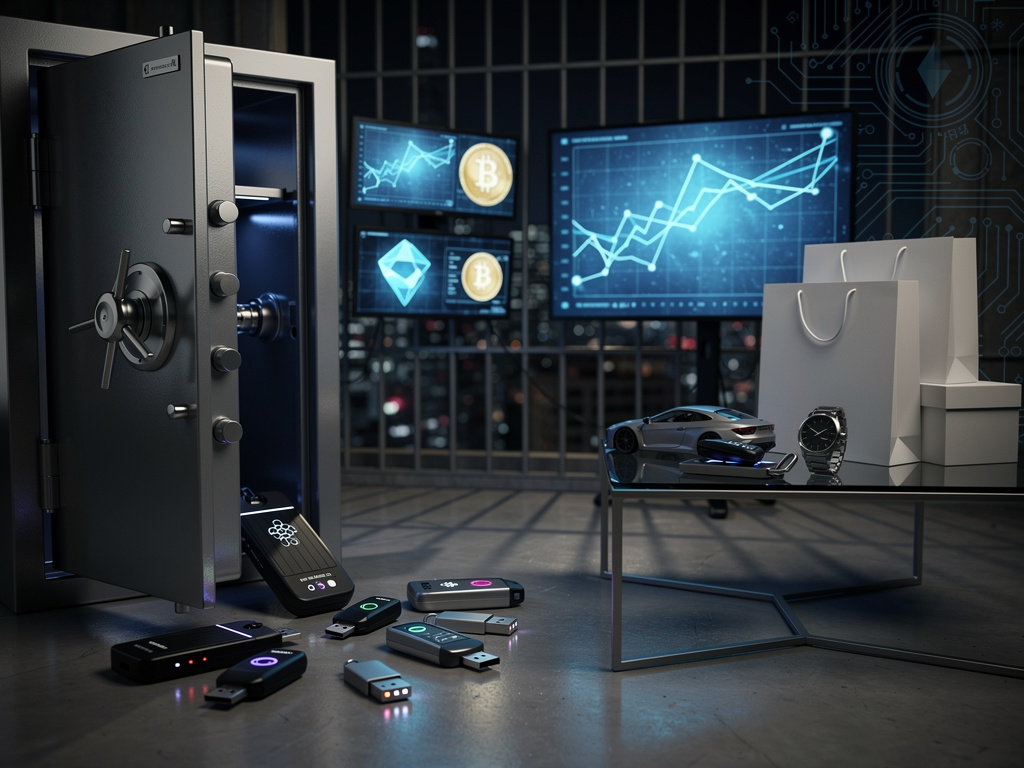
Ferro did not mastermind the scheme. He served as its blunt instrument. When slick phone calls and database hacks failed to pry loose cryptocurrency from victims, the group sent him to break in and take the hardware wallets. One theft alone netted roughly 100 bitcoin. At the time that haul exceeded $5 million.
The operation ran from late 2023 into early 2025. It stole well over $250 million — some reports put the figure near $263 million — from targets across the United States. Members operated from California, Connecticut, New York, Florida and locations abroad. Many first connected through friendships formed on online gaming platforms. U.S. Attorney’s Office for the District of Columbia laid out the details in its announcement.
“Marlon Ferro served as the criminal enterprise’s instrument of last resort,” said U.S. Attorney Jeanine Ferris Pirro. “When his co-conspirators couldn’t deceive victims into handing over access to their cryptocurrency or hack their way into digital accounts, they turned to Ferro to break into homes and steal hardware wallets outright.”
She added a sharper point. “This scheme blended sophisticated online fraud with old-fashioned burglary to drain victims of millions of dollars in digital assets. Today’s sentence sends a clear message: cryptocurrency fraud is not a victimless, consequence-free crime carried out safely behind a screen — it is serious criminal conduct that will lead to federal prison.”
The group specialized. Some identified wealthy crypto holders. Others hacked databases. Callers impersonated support staff or officials, spinning tales to gain remote access. When victims relied on cold-storage hardware wallets, the script changed. Ferro flew to their cities.
In February 2024 he targeted a home in Winnsboro, Texas. He stole the device holding the bitcoin. Months later, in July, he spent days surveilling a residence in New Mexico. He positioned a cell phone to monitor movements. Accomplices tracked the owner through iCloud. Once the coast cleared, Ferro smashed a window with a brick and searched inside. Home surveillance cameras captured him.
But burglary formed only part of his contribution. Ferro also laundered proceeds. He used a fake identification document from a foreign national to open a digital payment card account on a geo-blocked platform. That let the crew spend freely at Miami nightclubs and retail outlets. He bought more than $255,000 in designer clothing for co-conspirators. After one leader’s arrest in September 2024, Ferro converted hundreds of thousands of dollars in stolen crypto to cash through illicit channels. He paid the jailed man’s attorneys. He even arranged the purchase and shipment of Hermès Birkin bags for the leader’s girlfriend.
The spending told its own story. Stolen funds bought up to $500,000 in services at nightclubs in a single evening. Luxury watches ranged from $100,000 to more than $500,000. The group acquired a fleet of exotic cars valued at up to $3.8 million. They rented high-end homes in the Hamptons, Los Angeles and Miami. Private jets, security guards and designer handbags completed the picture. Federal authorities later seized more than two dozen vehicles — Lamborghinis, Porsches, Rolls-Royces, BMWs, Ferraris — along with designer goods and nearly $170,000 found in a Louis Vuitton bag.
Ferro’s path to the crew began after he relocated to California in early 2024. He offered his burglary services. The enterprise welcomed the help. Fourteen suspects in total have faced charges in the RICO conspiracy. Another young California man, 22-year-old Evan Tangeman, received a 70-month sentence for laundering at least $3.5 million of the proceeds. Bleeping Computer reported those linked outcomes.
Authorities arrested Ferro on May 13, 2025. He carried two firearms — a 9mm black rifle and a Glock 19 pistol — plus the fake ID. He had pleaded guilty the previous October before Judge Colleen Kollar-Kotelly. The case drew resources from the FBI’s Washington, Los Angeles and Miami field offices as well as IRS Criminal Investigation.
This prosecution arrives as cryptocurrency crime surges. The FBI’s latest Internet Crime Report showed Americans lost $11 billion to crypto-related scams in 2025. Investment fraud alone accounted for $7.2 billion of that total. Yahoo Finance highlighted those numbers in its coverage of the Ferro case.
Yet the GothFerrari story stands apart. Most crypto losses stay digital. Hackers drain exchange hot wallets. North Korean groups linked to the Lazarus operation stole a record $2.02 billion in 2025 according to blockchain analytics firm Chainalysis, pushing their cumulative total past $6.75 billion. Those actors favor mixers, bridges and Chinese-language laundering services. Chainalysis published the annual theft report in December 2025.
Ferro’s ring mixed the virtual with the physical. Social engineering convinced many victims to hand over keys willingly. Hardware wallets forced a return to old tactics — casing houses, smashing windows, grabbing devices. The combination proved lucrative until it wasn’t.
Prosecutors released home surveillance footage showing Ferro after one of the break-ins. They also shared images of a Birkin bag purchased with crime proceeds. The visuals drive home the point. Digital theft can end with a flashlight beam sweeping across a bedroom floor at night.
Self-custody advocates have long preached that users control their keys. This case adds a hard caveat. Those keys must remain physically secure too. A hardware wallet offers no protection once a burglar walks out the door with it.
The broader industry continues to wrestle with such hybrid threats. Regulators debate sanctions on mixing services that obscure trails. Courts have even overturned certain Treasury actions against decentralized tools like Tornado Cash. Still, law enforcement emphasizes accountability for individuals who convert code into cash and luxury cars.
Ferro’s sentence reflects that stance. At 20 he helped steal sums that dwarf most traditional heists. He now has years to consider the distance between online gaming chats and a federal penitentiary. The message, as Pirro put it, lands clearly. Screens do not shield criminals from consequences. And victims keep learning that crypto fortunes require more than strong passwords. They demand vigilance in the physical world as well.


 WebProNews is an iEntry Publication