
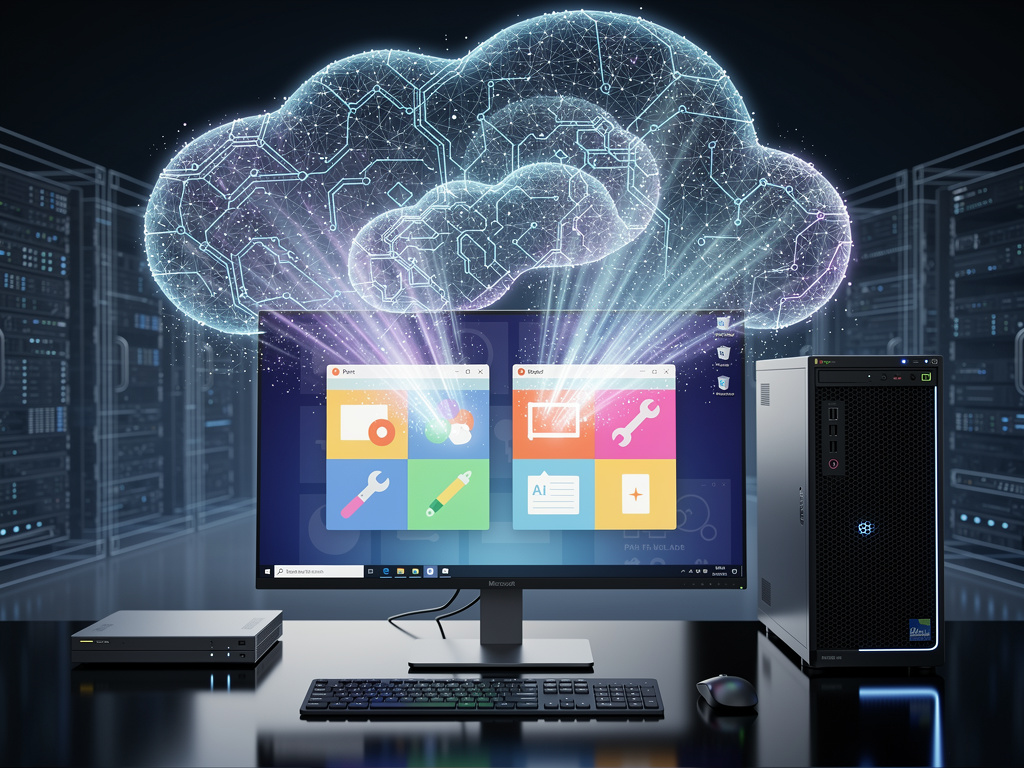
REDMOND, Wash.—For decades, Microsoft Paint and Notepad existed as digital afterthoughts, the spartan, unloved utilities bundled with every copy of Windows. They were functional relics, remembered more for their limitations than their capabilities. But in the corridors of Microsoft, a quiet and audacious plan has been unfolding: to transform these humble applications into beachheads for the company’s all-encompassing artificial intelligence ambitions.
This strategy is not a sudden pivot but the culmination of a long evolution. A decade ago, Microsoft’s vision for creativity in its simplest apps was embodied by a digital coloring book. The company’s “Fresh Paint” application for Windows 8 was designed to be a simple, tactile experience, a far cry from the generative AI now being embedded into its successor. As The Verge reported back in 2013, the focus was on mimicking the real world, not inventing new ones. Today, that goal has been inverted. Microsoft is no longer just giving users a digital canvas; it’s handing them a collaborator powered by some of the most advanced AI models on the planet.
The most striking evidence of this transformation is Paint Cocreator. What was once a tool for creating crude pixel art can now generate complex images from simple text prompts. This feature, powered by OpenAI’s DALL-E models, represents a profound democratization of generative AI. By embedding it directly into an application used by hundreds of millions, Microsoft is normalizing a technology that, until recently, was the domain of tech enthusiasts and startups. It’s a strategic move to make AI an indispensable, everyday utility, much like the original Paint once was for basic image edits.
A New Canvas for the AI Era
The integration goes beyond mere text-to-image generation. Microsoft has also armed Paint with AI-powered background removal, a feature that once required expensive software like Adobe Photoshop. With a single click, users can now isolate a subject from its surroundings, a task that has historically been a tedious manual process. These features were part of a major AI-focused update for Windows 11, which Microsoft detailed as bringing “the power of Copilot and new AI powered experiences” to its core apps. In a September 2023 announcement on the official Windows Experience Blog, the company positioned these updates as the “next wave of AI innovation,” making it clear this is not a gimmick but a foundational shift in the operating system’s philosophy.
This strategy of embedding AI into legacy applications serves a dual purpose. First, it provides a low-friction entry point for users to experience Microsoft’s AI ecosystem. There is no new software to install and no complex interface to learn. The familiar Paint icon is now a gateway to the cloud-based power of Azure and OpenAI. Second, it revitalizes assets that have been stagnant for years, turning them into tangible selling points for the Windows platform in its fierce competition with Apple’s macOS and Google’s ChromeOS.
The push extends well beyond Paint. The Photos app, another standard Windows utility, has received similar AI enhancements, including a sophisticated background blur feature that mimics the “portrait mode” on high-end smartphones and one-click background removal and replacement. The Snipping Tool, a simple screenshot utility, can now intelligently extract text from any image on the screen, a feature known as Text Actions. According to a hands-on review by Windows Central, these tools are “genuinely useful” and demonstrate a commitment to making AI a practical part of the user workflow rather than a standalone novelty. The Snipping Tool can also automatically redact sensitive information like email addresses and phone numbers, adding a layer of AI-powered privacy.
Utility Apps Infused with Intelligence
Each of these features, while seemingly minor on its own, contributes to a broader strategic mosaic. Microsoft is methodically weaving AI into the very fabric of the Windows user experience. The goal is to create an environment where AI assistance is ambient and perpetually available, whether a user is editing a family photo, capturing a receipt, or creating a presentation. This pervasive integration is a key differentiator for Microsoft, which controls the entire software stack from the operating system up to its cloud services.
While Paint and Photos have already received their AI upgrades, signs point to Notepad being the next frontier. Early in 2023, reports surfaced of Microsoft internally testing a version of Notepad with a feature unofficially dubbed “Cowriter.” This AI-powered assistant would help users write, rewrite, and summarize text directly within the famously minimalist application. While the feature has yet to be publicly released, its existence in internal builds, as reported by outlets like The Verge when discussing other Notepad updates, signals the company’s intent. Transforming Notepad from a plain text editor into a smart writing assistant would be a powerful statement about its AI-first direction.
These app-level enhancements are designed to funnel users toward Microsoft’s flagship AI product, Windows Copilot. Billed as an “everyday AI companion,” Copilot is integrated directly into the Windows 11 taskbar, acting as a centralized hub for AI-driven tasks. The features in Paint, Photos, and the Snipping Tool serve as powerful, practical demonstrations of what this AI can do, encouraging users to engage more deeply with the main Copilot interface. It’s a classic flywheel strategy: use familiar, trusted applications to introduce a new technology, then use that familiarity to drive adoption of the broader platform.
A Strategic Wedge Against Silicon Valley Rivals
This aggressive, OS-level integration places Microsoft in a distinct position relative to its competitors. Apple has taken a more measured, privacy-centric approach, focusing on on-device machine learning for features like text recognition in photos, largely avoiding the cloud-based generative models that Microsoft has embraced. Google, while a leader in AI research, has primarily integrated its technology into web services like Search and Workspace, with a less cohesive strategy for its ChromeOS desktop platform. Microsoft’s bet is that by embedding a powerful AI assistant directly into the operating system, it can create a stickier, more productive environment that competitors will struggle to replicate.
The long-term financial implications are significant. By training users to rely on these AI features, Microsoft can drive consumption of its Azure cloud services, which power the underlying models. Furthermore, it creates an on-ramp for its premium subscription offerings, such as Copilot for Microsoft 365. According to an analysis by The Wall Street Journal, the pricing of these enterprise-grade AI tools indicates a massive new revenue opportunity for the company. The free features in Windows 11 are, in effect, a marketing engine for these more lucrative commercial products.
However, this path is not without its challenges. The reliance on cloud-based models for features like Paint Cocreator introduces concerns about user privacy, data security, and the operational cost of running these computationally expensive services. There is also the risk of feature creep, where the beloved simplicity of applications like Paint and Notepad is lost under the weight of complex AI additions. Microsoft must strike a delicate balance between innovation and preserving the core identity of these decades-old tools.
Navigating the Uncharted Territory of OS-Level AI
The company’s execution of this strategy will be critical. The performance and reliability of these AI features must be seamless to win over a user base that spans from casual home users to demanding enterprise clients. Any perception of AI as a gimmick or a performance drain could lead to backlash and a retreat to simpler, third-party alternatives.
Ultimately, the AI-powered evolution of Paint and its sibling applications is more than just a software update; it is a microcosm of Satya Nadella’s entire vision for Microsoft. It represents a shift from a company that sells software licenses to one that provides intelligent, cloud-connected services. By starting with the most basic and universal components of its flagship product, Microsoft is making a bold declaration that in its view, the future of personal computing is inextricably linked with artificial intelligence. The humble paintbrush, once a tool for digital scribbles, has become a vanguard for a new technological era.


 WebProNews is an iEntry Publication