
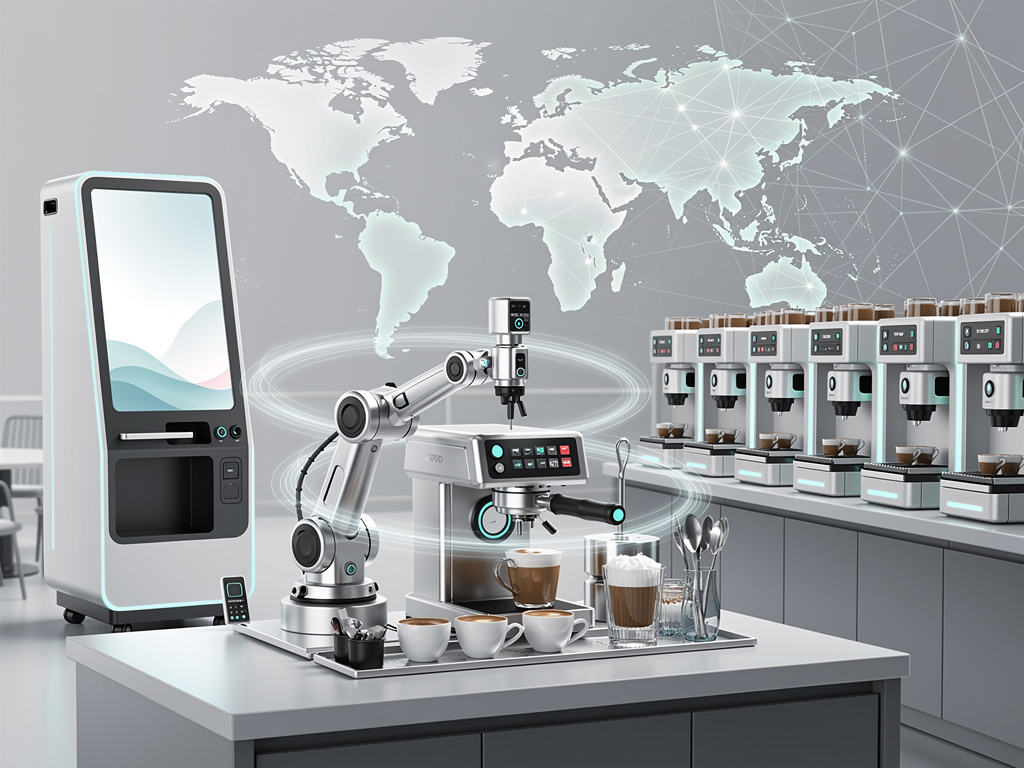
Joe Yang knows what great coffee tastes like. As a U.S. coffee champion with titles in brewers cup, latte art and roasting, he spent years perfecting pours, temperatures and textures. Then he met a team of former Amazon robotics engineers. Their goal wasn’t novelty. They wanted his craft repeated hundreds of times a day without variation.
That meeting produced Jarvis, the robotic barista now operating inside a Muji store in Portland, Oregon. The system captures Yang’s exact arm movements through motion tracking. It reproduces milk pours with mechanical precision. Cameras watch every latte, score the art, and adjust in a continuous feedback loop. Ingredients measure to within 0.1 gram. Extraction variables stay locked. The result surprised even the skeptics.
Digital Trends visited the location and reported the coffee itself was surprisingly good. Yang himself admitted there are situations where he trusts the system to make drinks more consistently than he would during a busy shift. The praise lands because the machine avoids the usual robotic pitfalls. No flat, mechanical taste. Instead, natural creaminess and sweetness emerge without added sugar.
Artly, the company behind Jarvis, didn’t start with coffee on a whim. Its founders sold a facial recognition startup and turned to robotics. Coffee offered a perfect test case. Skilled labor shortages plague the industry. Demand for specialty drinks keeps rising. A machine that nails consistency could serve high-traffic spots where human baristas falter under pressure.
Yet the system isn’t fully autonomous. Staff still handle bean refills, milk replenishment and cleaning. Jarvis monitors tamping pressure, cup placement and ingredient levels. It corrects course when needed. That hybrid approach matters. Pure automation often fails in unpredictable environments. Interruptions break fixed sequences. The feedback loop helps Jarvis adapt.
Cafe X took a different path years earlier. Its robotic arms have poured coffee for paying customers since 2017. The company shifted focus after closing several San Francisco storefronts. Airports proved more reliable. Today Cafe X operates multiple kiosks at San Francisco International Airport terminals. One location sits near Gate B2. Others serve departures and arrivals in Terminal 3.
Those units feature house-made 72-hour infused syrups and 24-hour extracted cold brews. They use beans from Onyx Coffee Lab. Similar setups run at the RegentX location in Glendale Galleria with barrel-aged espresso from Regent Coffee. A unit at Northwest Arkansas National Airport operates under Onyx. Another serves the Tesla Gigafactory visitor lobby in Berlin with local Vote Coffee. The deployments show how robotic systems fit environments where speed and predictability count more than conversation.
But the sector has expanded far beyond these two players. The global robot barista market reached $1.86 billion in 2025. It is forecast to hit $2.18 billion this year, according to the Robot Barista Global Market Report 2026. That 16.8 percent compound annual growth rate reflects labor shortages, self-service demand and contactless preferences. North America leads in current size. Asia-Pacific grows fastest.
Hi-Dolphin’s COFE+ robots operate in Chinese tourist spots including the Terracotta Warriors site and Shanghai Bund. Some units have run more than 1,500 days. Crown Digital’s Ella robot serves Singapore cafes and hospitals, producing 300 coffees in a single morning shift. The unit’s price has dropped from around $200,000 to $100,000. Payback arrives in six to eight months at 400 to 500 cups per day with net margins of 40 to 50 percent. Traditional cafes often scrape by at 10 to 15 percent.
Keith Tan, who created Ella after running his own cafes, told Global Coffee Report that the robot forms part of an intelligent platform. It remembers customer preferences. Tan sees robots freeing humans for higher-value work. Simon Sun, a former Chinese barista champion running Marus Coffee in Suzhou, offers a more measured view. Robots suit high-traffic commercial brands. They struggle to deliver the emotional connection customers expect from specialty experiences.
Richtech Robotics upgraded its ADAM robot in May 2025. The new version adds an artisanal espresso system with grinder, automated tamping and NVIDIA-powered vision. It adjusts water pressure and extraction in real time. The launch fits a broader pattern. Companies now combine mechanical arms with AI vision and learning algorithms. Consistency becomes the selling point. A drink tastes the same at 7 a.m. as it does at 7 p.m.
Still, challenges remain. Early Cafe X locations in downtown San Francisco closed abruptly in 2020. The company pivoted to airports and corporate lobbies where foot traffic is captive and expectations center on speed. Artly’s Portland installation sits inside a retail store rather than operating as a standalone cafe. That placement reduces overhead. It also limits the theater some customers crave.
Yang recommends starting with a latte. The system’s latte art earns particular praise. Cameras evaluate each design against standards. The robot recalibrates if needed. Such self-correction separates current generation machines from earlier gimmicks that poured the same pattern every time. Precision now extends to texture and flavor balance. The goal is replication of championship-level results across thousands of servings.
And the ambitions don’t stop at coffee. Artly experiments with robotic systems for cocktails, mocktails and smoothies. One project with Virginia Tech explores automated fish filleting. The underlying technology transfers. Motion capture, computer vision and adaptive control apply across food preparation tasks that once required years of human training.
Cafe X systems can handle up to 600 orders daily when running at full capacity. Many installations operate unattended for long stretches. That capability appeals to operators facing chronic staffing problems. Yet the most successful deployments seem to pair robots with human oversight. Staff handle exceptions. They engage customers. The machine manages repetitive precision work.
Recent demonstrations at CES 2026 drew long lines for Xbot’s coffee robot. Attendees waited for the novelty as much as the caffeine. Similar interest greeted Artly’s Jarvis when shown at trade events. The spectacle still matters for market education. But operators increasingly focus on economics. Labor savings. Consistent quality. Reduced waste from over-extracted or poorly steamed drinks.
So the question shifts. Can robots capture the nuance that makes a great barista exceptional? Or do they simply remove the downside of human inconsistency? Yang’s involvement suggests the former remains possible. His techniques now live inside software and actuators. The machine doesn’t get tired. It doesn’t rush when the line grows. It repeats the champion’s motions exactly.
Market growth projections point to continued expansion. More units will appear in airports, campuses, hospitals and corporate campuses. Some will partner with premium roasters like Onyx to maintain specialty credentials. Others will target volume with simpler menus. The technology has moved past proof of concept. Operators now test which locations and price points deliver sustainable returns.
Human baristas aren’t disappearing. Many reports suggest robots push them toward more creative roles. Complex drinks. Customer relationships. Menu development. The machines take the repetitive tasks that cause burnout. That division of labor could improve overall quality if implemented thoughtfully.
Yet emotional value still matters. Sun’s observation carries weight. A perfect robotic latte satisfies the palate. It rarely creates the same sense of connection as a barista who remembers your name and asks about your day. The industry’s next phase may blend both. Robots for consistency. Humans for warmth. The winners will likely master that combination rather than choose one over the other.
Artly and Cafe X represent different bets on that future. One emphasizes championship technique captured through advanced sensing. The other focuses on reliable, high-volume airport service with specialty partnerships. Both demonstrate that robotic coffee has advanced beyond gimmick status. The drinks taste good. The operations run efficiently. Scale now becomes the test.
As more competitors enter, from Hi-Dolphin’s tourist-focused units to Richtech’s AI-upgraded ADAM, the bar rises. Precision alone no longer impresses. Operators demand measurable returns, minimal downtime and quality that matches or exceeds skilled human work. The robots have earned their place at the counter. The task ahead is proving they belong there for the long term.


 WebProNews is an iEntry Publication