
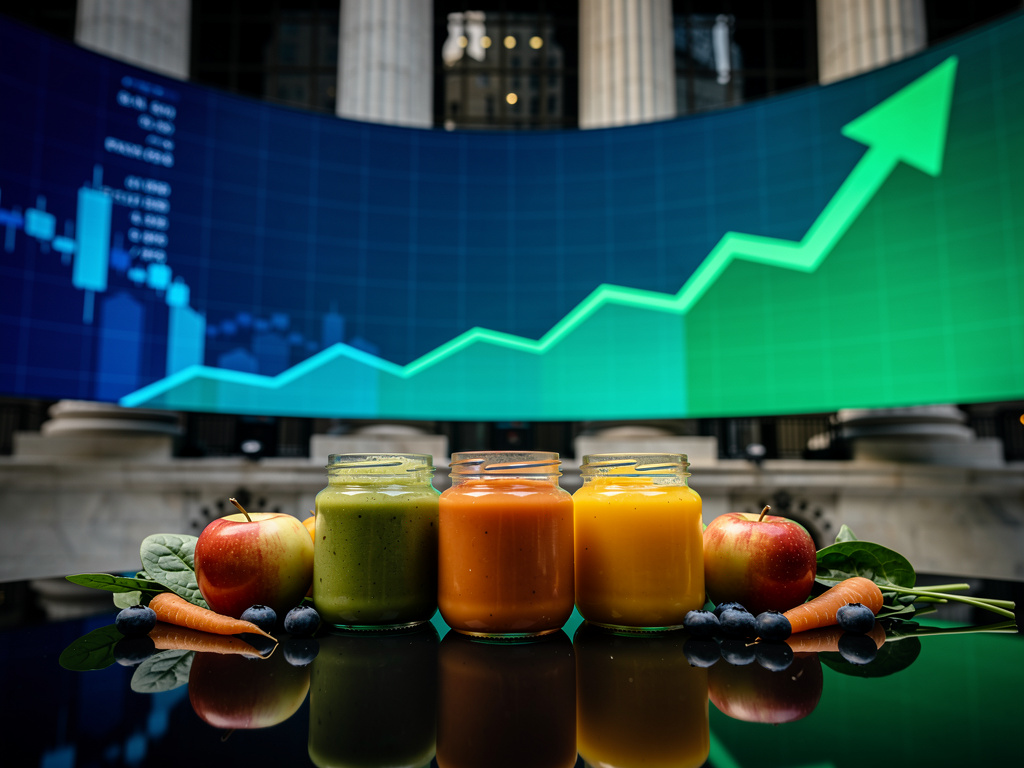
When the opening bell rang on the New York Stock Exchange on February 6, 2026, Jennifer Garner wasn’t just another celebrity lending her name to a consumer brand. She was standing on the trading floor as co-founder and chief brand officer of Once Upon a Farm, watching shares of her organic baby and kids’ food company surge 20% in one of the most closely watched initial public offerings of the young year. The stock, trading under the ticker OFRM, opened well above its IPO price, signaling robust investor appetite for a brand that has quietly become one of the fastest-growing names in the children’s nutrition space.
The company priced its shares at the top end of its expected range, and by midday trading, OFRM had climbed sharply as institutional and retail investors alike rushed to take positions. The IPO raised substantial capital that Once Upon a Farm plans to deploy toward expanding its retail footprint, investing in new product lines, and scaling its cold-pressed supply chain — the technological backbone that differentiates its offerings from the shelf-stable baby food products that have dominated grocery aisles for decades. As reported by CNBC, the debut marked a significant milestone for a company that began as a small mission-driven startup and has grown into a nationally recognized brand carried by more than 12,000 retail locations across the United States.
A Celebrity Co-Founder Who Did More Than Just Show Up
Jennifer Garner’s involvement with Once Upon a Farm has been a case study in what authentic celebrity entrepreneurship looks like — a stark contrast to the many endorsement deals and vanity equity stakes that have proliferated across consumer packaged goods in recent years. Garner joined the company in 2017, not merely as a spokesperson but as an active participant in product development, brand strategy, and corporate mission. Her background as a mother of three and her long-standing philanthropic work with Save the Children gave her both credibility and genuine passion for improving children’s nutrition. In interviews leading up to the IPO, Garner emphasized that her role has always been hands-on, from taste-testing new recipes in the company’s test kitchen to personally visiting farms that supply the organic ingredients used in Once Upon a Farm products.
The company was originally founded in 2015 by Cassandra Curtis, a former pediatric nurse, and Ari Raz, who developed the cold-pressed processing technology that allows Once Upon a Farm’s pouches, cups, and snacks to retain more nutrients than traditionally processed baby food. Garner’s entry as a co-founder and investor brought not just capital but an enormous platform. Her social media following — tens of millions across Instagram and other channels — gave the brand immediate visibility that would have cost a startup tens of millions in marketing dollars to replicate. But what made Garner’s involvement particularly effective was the consistency and sincerity of her advocacy. She didn’t just post about the products; she wove them into a broader narrative about feeding kids real, wholesome food without artificial preservatives, concentrates, or added sugars.
The Cold-Pressed Advantage: How Once Upon a Farm Built Its Moat
At the heart of Once Upon a Farm’s value proposition is its cold-pressed, cold-chain supply model — a technology and logistics approach borrowed from the premium juice industry and applied to baby and toddler food. Traditional baby food is processed using high heat, which extends shelf life but degrades vitamins, enzymes, and flavor. Once Upon a Farm’s products are instead processed using high-pressure processing (HPP), which uses extreme pressure rather than heat to eliminate pathogens while preserving nutritional integrity. The result is a product that tastes noticeably fresher — closer to homemade purees — and retains significantly more of the vitamins and phytonutrients found in the raw organic fruits and vegetables.
This approach, however, comes with significant operational complexity. Cold-pressed products require refrigerated distribution and have shorter shelf lives than their heat-treated counterparts, which means Once Upon a Farm has had to build out a cold-chain logistics network that can deliver products to thousands of retail locations while maintaining quality. It’s a capital-intensive model, and the IPO proceeds are expected to help the company further invest in this infrastructure. According to the company’s S-1 filing, Once Upon a Farm has invested heavily in proprietary supply chain technology and partnerships with organic farms across the country to ensure consistent sourcing. The company has also expanded beyond baby food into toddler and kids’ snacks, dairy-free smoothies, and other refrigerated products, broadening its addressable market considerably.
Riding the Clean-Label Wave in Children’s Nutrition
Once Upon a Farm’s IPO arrives at a moment when consumer demand for clean-label, organic, and minimally processed children’s food has never been stronger. A growing body of research linking early childhood nutrition to long-term health outcomes has made parents increasingly scrutinous about what they feed their babies and toddlers. Reports of heavy metals found in major baby food brands in recent years — including findings published by a U.S. Congressional subcommittee — have further eroded trust in legacy brands and created an opening for premium, transparency-focused alternatives. Once Upon a Farm has leaned into this trend aggressively, prominently displaying its ingredient lists, sourcing information, and nutritional data on its packaging and website.
The organic baby food market in the United States has been growing at a compound annual rate well above the broader packaged food category, and analysts expect this trajectory to continue as millennial and Gen Z parents — demographics that index heavily toward organic and natural products — represent an increasing share of new parents. Once Upon a Farm has positioned itself at the premium end of this market, with price points that are meaningfully higher than conventional baby food but competitive with other organic refrigerated options. The company has argued, both in its marketing and in its IPO roadshow, that the nutritional superiority of its cold-pressed products justifies the premium, and the 20% first-day pop suggests that investors are buying the thesis.
Financial Performance and the Path to Profitability
While the first-day trading performance was impressive, Wall Street analysts have been quick to note that Once Upon a Farm still faces the challenge that confronts many high-growth consumer brands: achieving sustained profitability at scale. The company’s revenue growth has been striking — the S-1 filing revealed that net revenues have grown significantly year over year, driven by both new retail distribution and increasing velocities at existing stores. The direct-to-consumer channel, which includes a subscription model for home delivery, has also been a meaningful contributor to top-line growth and provides valuable first-party data on consumer preferences and purchasing patterns.
However, the company has not yet reached consistent profitability on a GAAP basis, with significant investments in marketing, supply chain buildout, and new product development weighing on margins. Gross margins have been improving as the company achieves greater scale and negotiating leverage with suppliers, but operating expenses remain elevated. The company’s management team, led by CEO John Foraker — a veteran of the natural foods industry who previously led Annie’s Homegrown through its IPO and eventual acquisition by General Mills — has outlined a clear path to profitability that hinges on continued revenue growth, margin expansion through scale, and disciplined cost management. Foraker’s track record is a key part of the investment thesis; his experience navigating Annie’s from a niche organic brand to a mainstream powerhouse gives investors confidence that he can execute a similar playbook with Once Upon a Farm.
The Broader Implications for Celebrity-Backed Consumer Brands
The success of Once Upon a Farm’s IPO carries implications well beyond the baby food aisle. It represents a validation of the celebrity-as-co-founder model when executed with genuine involvement and strategic alignment. In recent years, the consumer products space has seen a wave of celebrity-backed brands across categories from spirits (Ryan Reynolds’ Aviation Gin, George Clooney’s Casamigos) to beauty (Rihanna’s Fenty Beauty, Jessica Alba’s Honest Company). The results have been mixed: while some have generated enormous value, others have struggled to translate celebrity awareness into sustainable business performance. Alba’s Honest Company, which went public in 2021, saw its stock decline significantly from its IPO price in subsequent years, a cautionary tale for investors in celebrity-driven consumer brands.
What distinguishes Once Upon a Farm, according to analysts and industry observers, is the depth of Garner’s involvement and the strength of the underlying product differentiation. Unlike brands where the celebrity association is primarily a marketing tool, Garner’s role at Once Upon a Farm is deeply integrated into the company’s identity and operations. Her credibility as a parent, her philanthropic work, and her willingness to be the face of the brand in substantive ways — not just in glossy advertisements but in conversations about childhood nutrition policy and food access — have created a brand association that feels organic rather than transactional. The company has also invested in a social mission, including programs to increase access to nutritious food for underserved communities, which aligns with Garner’s broader public persona.
What Comes Next for OFRM and Its Investors
As the initial euphoria of the IPO settles, the real work begins for Once Upon a Farm as a public company. The management team will need to deliver on the growth and profitability targets outlined during the roadshow while navigating the increased scrutiny and quarterly reporting cadence that comes with being publicly traded. The company faces competition from both legacy baby food giants like Gerber (owned by Nestlé) and Beech-Nut, as well as a growing cohort of premium organic competitors. Maintaining its innovation edge and brand loyalty will be critical.
The IPO also provides Once Upon a Farm with a currency for potential acquisitions, and industry observers have speculated that the company could look to acquire complementary brands in adjacent categories — organic kids’ snacks, plant-based dairy alternatives, or functional children’s nutrition products — to accelerate its growth. For now, though, the market has spoken: investors believe in the Once Upon a Farm story, and the 20% first-day pop is a powerful endorsement of a company that has managed to combine mission-driven branding, genuine product innovation, and smart celebrity partnership into a compelling public market debut. As CNBC noted, it was one of the strongest consumer brand IPO debuts in recent memory — and a fairy-tale beginning to Once Upon a Farm’s next chapter.


 WebProNews is an iEntry Publication