
Frogs’ Secret Weapon: JAIST’s Bacterium Breakthrough Redefines Anticancer Innovation
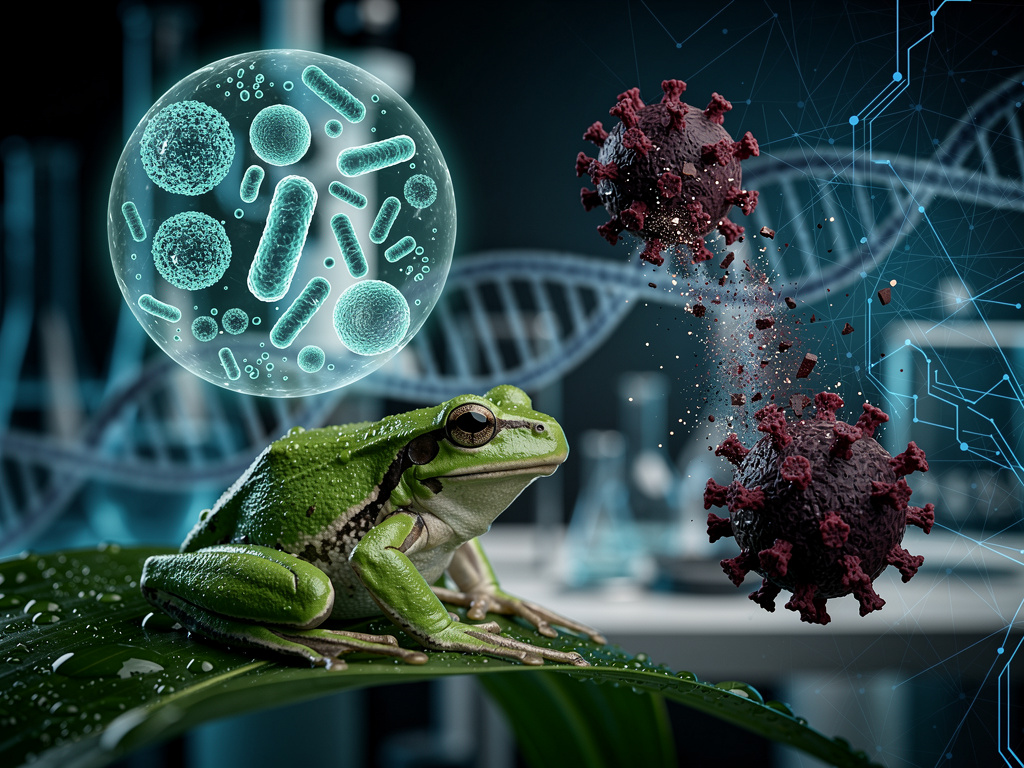
In the lush forests of Japan, where tree frogs navigate misty canopies, scientists have uncovered an unlikely hero in the fight against cancer. A research team at the Japan Advanced Institute of Science and Technology (JAIST) has identified a bacterium residing on these amphibians that exhibits remarkable anticancer properties. Led by Professor Eijiro Miyako, the team isolated Ewingella americana from the skin of Japanese tree frogs, revealing its potent ability to inhibit tumor growth in laboratory tests. This discovery, detailed in a recent press release from JAIST, marks a significant step forward in natural product-based oncology, potentially opening doors to new therapies derived from biodiversity.
The process began with fieldwork in Japan’s rural woodlands, where researchers collected samples from Hyla japonica, the common Japanese tree frog. These creatures, known for their resilient skin microbiomes adapted to humid environments, harbor a diverse array of microorganisms. Miyako’s team employed advanced genomic sequencing to identify Ewingella americana, a gram-negative bacterium previously noted in environmental contexts but never deeply explored for medical applications. Initial screenings showed it produces compounds that disrupt cancer cell proliferation, particularly in models of breast and lung cancers, without harming healthy cells.
This finding aligns with a growing interest in microbiome-derived therapeutics, where bacteria from unexpected sources yield bioactive molecules. As reported in Life Technology™, the JAIST team’s work demonstrates how Ewingella americana induces apoptosis—or programmed cell death—in malignant cells, a mechanism that could complement existing chemotherapies. Industry insiders note that such natural agents might reduce the side effects associated with synthetic drugs, offering a more targeted approach to treatment.
Unveiling Nature’s Pharmacy Through Advanced Techniques
To validate their discovery, the researchers conducted in vitro experiments, exposing human cancer cell lines to extracts from the bacterium. Results indicated a 70% reduction in tumor viability at low concentrations, surpassing some conventional agents in efficacy. Miyako, whose background in nanotechnology informs his interdisciplinary approach, integrated microfluidic devices to simulate physiological conditions, enhancing the reliability of these tests. This methodological rigor underscores JAIST’s reputation as a hub for cutting-edge research, blending biology with engineering.
Further analysis via mass spectrometry revealed the active compounds as novel polyketides, secondary metabolites with structures akin to known anticancer drugs like doxorubicin but with potentially lower toxicity. Collaborators from nearby institutions contributed to structural elucidation, confirming the molecules’ ability to inhibit key enzymes in cancer pathways, such as those involved in DNA replication. This level of detail, as highlighted in reports from Nature Index on related institutes, positions JAIST at the forefront of Japan’s push into bio-prospecting.
The ecological context adds another layer: Japanese tree frogs thrive in environments rich in microbial diversity, influenced by seasonal changes and pollution levels. By studying these symbionts, scientists gain insights into evolutionary adaptations that could inspire drug design. Insiders in the pharmaceutical sector speculate that this could lead to scalable production through synthetic biology, where engineered bacteria produce the compounds in bioreactors, bypassing the need for wild harvesting.
Bridging Biodiversity and Biotech in Japan’s Research Ecosystem
Japan’s commitment to biodiversity conservation intersects neatly with this research. The country’s forests, home to endemic species like the Japanese tree frog, are protected under national policies, yet they serve as untapped reservoirs for medical innovation. Miyako’s team adhered to ethical sampling protocols, ensuring minimal disruption to frog populations, which are indicators of environmental health. This approach reflects broader trends in Japanese science, where sustainability informs discovery.
Integrating artificial intelligence has accelerated the pace of such breakthroughs. At JAIST, AI algorithms analyzed genomic data to predict bioactive potential, a technique echoing advancements in Chambers and Partners’ guide on AI in Japan, which notes the National Institute of Advanced Industrial Science and Technology’s role in setting standards for AI-driven research. By sifting through vast datasets, these tools identified Ewingella americana as a prime candidate among hundreds of microbial isolates, slashing analysis time from months to days.
The implications extend to global health challenges. With cancer rates rising in aging populations—Japan’s own demographic shift amplifying the urgency—this bacterium could inform personalized medicine. Early preclinical trials, planned in collaboration with pharmaceutical firms, aim to test efficacy in animal models, potentially fast-tracking human applications. Sources from ULPA’s guide on AI in Japan suggest that machine learning models are already optimizing compound synthesis, hinting at a fusion of natural discovery and digital innovation.
From Lab to Clinic: Challenges and Pathways Forward
Translating this discovery into viable treatments involves navigating regulatory hurdles. Japan’s Pharmaceuticals and Medical Devices Agency requires rigorous safety data, and Miyako’s team is preparing dossiers that highlight the bacterium’s low mutagenic risk. Partnerships with biotech companies, possibly under frameworks like the U.S.-Japan Technology Prosperity Deal outlined in The White House, could facilitate international trials, leveraging shared resources in oncology research.
Skeptics point to historical precedents where natural products faltered in clinical stages due to scalability issues. However, advances in fermentation technology, as seen in AIST’s work profiled in various indices, offer solutions. JAIST researchers are engineering strains of Ewingella americana to boost yield, using CRISPR tools to enhance production without altering the core compounds. This genetic tweaking, informed by AI predictions, could yield a pipeline of derivatives tailored to specific cancer types.
Economic factors play a role too. Japan’s investment in life sciences, bolstered by policies like the AI Act discussed in Gov-online.go.jp, allocates funds for such projects. Insiders estimate that successful commercialization could generate billions in revenue, positioning Japan as a leader in microbiome therapeutics amid global competition from U.S. and European firms.
Global Ripples: AI-Enhanced Drug Discovery in Asia
The JAIST breakthrough resonates beyond cancer research, influencing fields like antibiotic development where microbial sources are key. Posts on X, reflecting current sentiment, buzz with excitement over Japanese innovations, including claims of self-evolving AI systems that could further accelerate biotech. For instance, discussions highlight how AI models like those from Osaka University enable real-time learning, potentially applicable to predicting bacterial behaviors in drug contexts.
Comparisons to other Asian advancements abound. In China, similar microbiome studies have yielded antimicrobials, but Japan’s focus on precision and ethics sets it apart. JAIST’s ranking in global metrics, as per CWUR, underscores its rising influence, with collaborations extending to robotics and AI for automated lab processes.
Looking ahead, Miyako envisions a consortium involving JAIST, industry partners, and international bodies to standardize microbiome screening. This could integrate with Japan’s robotics market, detailed in The Swamp, where AI-driven robots handle high-throughput testing, enhancing efficiency in drug discovery pipelines.
Ethical Horizons and Future Prospects in Bio-Innovation
Ethical considerations loom large, particularly regarding biodiversity access. Japan’s adherence to the Nagoya Protocol ensures fair benefit-sharing from genetic resources, a model for global research. Miyako’s team is documenting indigenous knowledge about tree frogs, incorporating it into their framework to respect cultural heritage.
The role of AI in this ecosystem cannot be overstated. Recent trends, as covered in Dreamer Technoland, include quantum-enhanced learning that could model complex bacterial interactions, predicting anticancer efficacy with unprecedented accuracy. At JAIST, such tools are being piloted to refine Ewingella americana’s applications, potentially extending to neurodegenerative diseases.
Industry observers predict that within five years, derivatives from this bacterium could enter phase I trials, transforming oncology. This optimism is tempered by calls for robust clinical data, but the foundational work at JAIST provides a strong base. As Japan navigates its technological future, discoveries like this exemplify how natural wonders, amplified by human ingenuity, can yield profound health benefits.
Sustaining Momentum in Japan’s Scientific Renaissance
Funding streams are critical to sustaining this momentum. Government initiatives, including those promoting AI utilization as per recent legislation, allocate resources to institutes like JAIST. This support fosters interdisciplinary teams, blending microbiologists with data scientists to tackle multifaceted challenges.
International interest is surging, with U.S. firms eyeing licensing opportunities. The White House’s deal with Japan facilitates such exchanges, potentially accelerating development through shared AI platforms for drug modeling.
Ultimately, the JAIST discovery highlights Japan’s strategic pivot toward bio-innovation, where environmental treasures fuel medical progress. As researchers delve deeper into Ewingella americana’s secrets, the promise of frog-derived cures inches closer to reality, offering hope to millions battling cancer worldwide. With AI as a catalyst, this could herald a new era of targeted, nature-inspired therapies, redefining how we harness the planet’s microbial diversity for human good.


 WebProNews is an iEntry Publication