
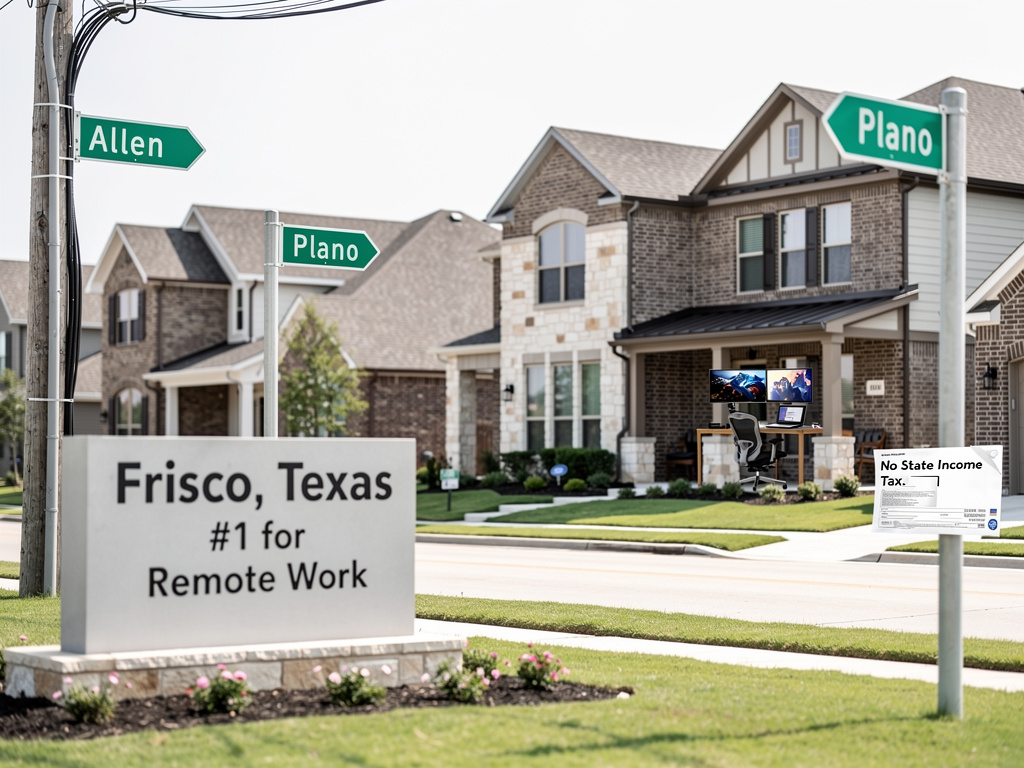
In the booming suburbs north of Dallas, Frisco has emerged as the unrivaled leader for remote workers, topping national studies with a workforce where more than one-third operate from home offices. A recent WFAA report highlighted SmartAsset’s analysis of 357 U.S. cities over 100,000 residents, using 2024 Census Bureau data, placing Frisco at No. 1 with 33.7% remote workers—about 42,133 individuals—edging out Berkeley, California at 31.5%.
This marks a slight dip from 34.2% the prior year, yet Frisco holds firm while others climbed. Average commutes for its in-office workers clock in at 27.3 minutes, with under 1% walking, underscoring a car-dependent culture optimized for flexibility. Nearby McKinney ranks seventh at 26.7%, Allen 13th at 25.5%, cementing North Texas’s grip on high rankings.
Persistent Top Rankings Across Studies
Frisco’s dominance spans multiple analyses. SmartAsset’s 2025 update pegged it at 34.16% remote workers, or 40,029 out of 117,193 adults aged 16 and older, retaining the top spot despite a drop from 46,381 in 2024, as detailed in a Local Profile article. Earlier, in 2024, it hit 39.7%, second only to Cary, North Carolina, per Dallas Morning News.
Wave Connect’s 2025 study of 40 largest remote hubs awarded Frisco a near-perfect 99/100 score, factoring remote share, pay, living costs, rent, dining, internet, coworking, and safety. It outpaced all, with Allen third and Plano sixth, according to CultureMap Dallas. Median remote salary: $111,000, download speeds at 271 Mbps, cost-of-living index 92.7—the lowest in the top 10.
Infrastructure Fuels the Remote Boom
Blazing internet stands out: Frisco boasts some of the nation’s fastest averages, up to 526 Mbps in spots, with 99.5% broadband coverage, ranking fifth nationally per Local Profile. Proximity to three major airports eases travel, while unemployment hovers at 2.4% and median income at $72,421 for remote pros.
CoworkingCafe lauded its spacious homes—rent just 15.2% of median household income—and 87.3% high-speed coverage in a hybrid work analysis, where Frisco led telecommuters at nearly 40%. Fields projects, PGA headquarters, and Universal Studios developments amplify appeal, blending work with entertainment.
Economic Engines and Corporate Magnetism
No state income tax, corporate relocations—25 Fortune 500s in DFW—and a renter surge position Frisco ideally. CultureMap Dallas noted remote workers earn 51% more than commuters in the metro. Wave Connect CEO George El-Hage stated in Audacy: “The data reveals that smaller cities can actually offer better value to remote workers.”
Frisco’s median household income hit $145,444, up 33% since 2019, with 74.2% labor participation (12th nationally), per CoworkingCafe’s small-city careers ranking where it placed 11th. Safety bolsters it: top-10 safest suburb, low crime supports family relocations.
Regional Peers and National Trends
DFW suburbs dominate: Plano, Allen, McKinney frequently top-10 across LawnStarter, SmartAsset, Wave Connect. Austin trails at 28.13% (11th nationally), while Odessa lags at 1.58%. Nationally, 22 cities exceed 25% remote, but Frisco leads shares.
Post-pandemic, remote holds at 22% of U.S. workforce despite RTO pushes, per Upwork. Frisco exemplifies how suburbs with tech infra, affordability, and quality-of-life draw talent from coastal hubs, as El-Hage noted: “If the shift to remote work continues, we might see traditional tech hubs losing residents to these more affordable destinations.”
Future Growth Amid Shifts
With $2B+ investments, 90+ company moves in 2024, and AI/tech ambitions, Frisco eyes powerhouse status. X discussions highlight its HQ density per capita alongside WFH. Challenges like housing costs persist, but remote prevalence frees budgets—annual dining spend just $2,300/person, lowest top-10.
WFAA’s January 2026 post drew buzz, confirming sustained leadership. As hybrid evolves, Frisco’s model—high earnings, connectivity, low costs—positions it to retain top billing, drawing professionals seeking balance beyond urban cores.


 WebProNews is an iEntry Publication