
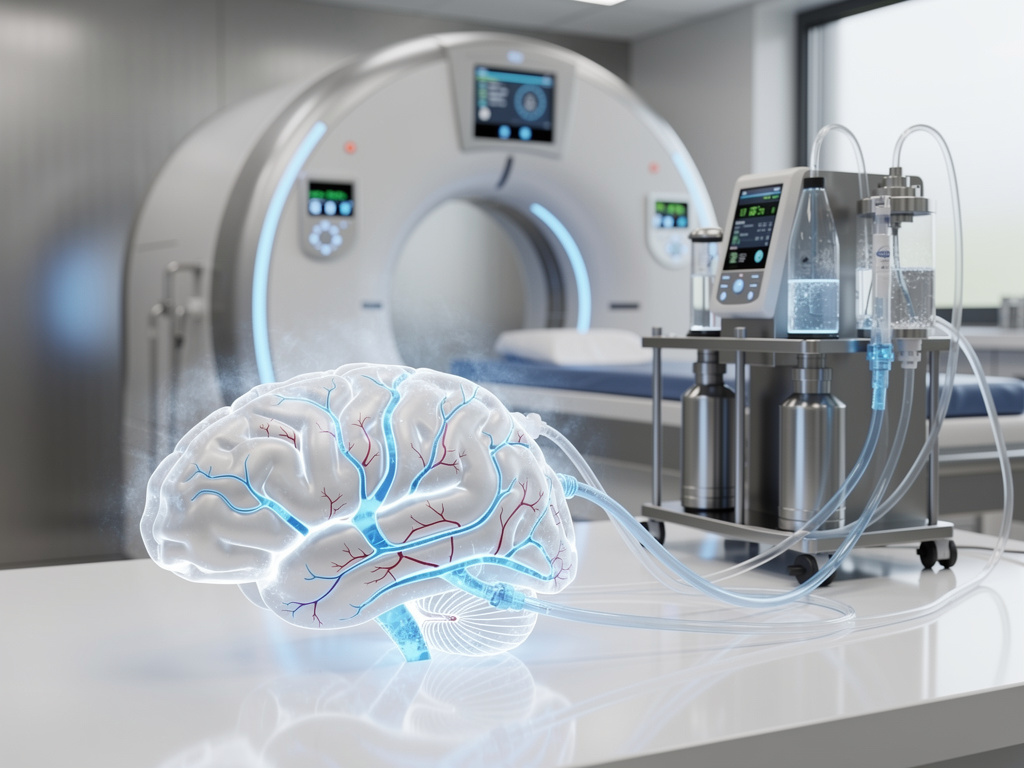
Stroke strikes fast. Brain cells begin to die within minutes when blood flow stops. For decades doctors have raced the clock with clot-busting drugs and mechanical clot removal. Yet many patients still face lasting disability. Now researchers are testing whether lowering brain temperature can buy precious extra time and limit harm.
The idea draws from successes in cardiac arrest and newborn brain injury where controlled cooling protects neurons. But applying it to conscious stroke patients has proven difficult. Shivering, pneumonia and other side effects often outweighed benefits in earlier systemic approaches. Recent work focuses on smarter, more targeted methods. Some use drugs to trigger hypothermia internally. Others deliver cold fluid straight to brain arteries during clot retrieval.
A study published June 17, 2026, in Science Translational Medicine tested a two-drug combination of chlorpromazine and promethazine. Scientists at the Beijing Institute for Brain Disorders showed this chemical approach slowed metabolism in mice, monkeys and a small group of people. In animals it reduced brain injury and neurological deficits after stroke. In 32 patients with acute ischemic stroke the treatment proved safe and well tolerated across doses. Biomarkers indicated reduced metabolic activity, with the highest dose producing measurable body temperature drops. “Hypothermia and hypometabolism hold promise for helping patients with acute severe disease,” the researchers wrote.
But. This was only a phase one safety trial. Larger studies must confirm whether the protection seen in labs translates to better long-term recovery in humans. And awake patients still resist cooling through natural shivering responses that raise body heat and complicate care.
Meanwhile other teams pursue focal cooling that spares the rest of the body. At the European Stroke Organisation Conference in May 2026 two Chinese phase three trials presented conflicting data on intra-arterial hypothermia during endovascular thrombectomy. The CHILL-ART trial, conducted at 26 centers and involving 262 patients, delivered cold saline directly into cerebral arteries before and after clot removal. More than half the cooled patients achieved functional independence at 90 days compared with 39.8 percent in the sham group. The adjusted relative risk was 1.36. Infarct volumes shrank by an average 8.77 milliliters. Safety profiles stayed comparable. Lead investigator Huang called it “a new paradigm integrating perfusion with targeted neuroprotection” that could prove cost-effective if confirmed in broader populations. (TCTMD, May 8, 2026)
The companion FOCUS trial at 12 centers with 258 patients used a slightly different post-thrombectomy cooling protocol and found no significant difference in modified Rankin Scale distribution or independence rates. It did however record lower rates of intracranial hemorrhage at 24 hours in the cooling arm, suggesting possible blood-brain barrier protection. Investigator Li said the results “pave the way for future studies” and hinted at exploring extracorporeal cooling methods. The mixed signals highlight how protocol details, timing and patient selection can sway outcomes.
These focal techniques matter because earlier systemic cooling trials often failed to show clear gains for stroke while raising complication risks. Older patients with more comorbidities proved especially vulnerable to pneumonia and cardiac issues. Selective brain cooling avoids many of those pitfalls by limiting temperature drops to the damaged area.
European researchers are advancing another practical solution. The EU-funded CUCUMBER project, coordinated by Juergen Bardutzky at the Medical Center of the University of Freiburg, uses a device called CoolConnect. It cools patients via a nasal catheter within 30 minutes and stabilizes core temperature between 32 and 36 degrees Celsius. Early tests showed the approach caused no pain. The brain absorbs the protective effect through blood circulation. A multicenter randomized trial in Germany has enrolled an initial 45 patients toward a target exceeding 400. Organizers hope data will demonstrate reduced disabilities so more survivors can live independently and return to work. (CORDIS, Sep 26, 2025)
Parallel laboratory efforts explore even more elegant biological paths. In October 2025 researchers led by Takeshi Sakurai at the University of Tsukuba reported in the Journal of Neuroscience that activating specific Q neurons in mice induced a natural hypothermic state. After brain injury the treated animals showed better motor performance. Imaging revealed greater neuron survival in the damaged zone and lower neuroinflammation. The cellular profile suggested preserved neural health. Sakurai noted that optimizing timing, testing additional injury models and evaluating safety in larger animals remain essential next steps. (News-Medical, Oct 13, 2025)
Such findings echo older animal data where rapid cooling cut infarct size dramatically. Yet human translation has lagged. Past trials like ICTuS 2 and EuroHyp-1 struggled with slow cooling rates and shivering management. Newer intra-arterial and drug-induced strategies address those weaknesses directly. They also align with growing recognition that the ischemic penumbra, the tissue at risk but not yet dead, can be salvaged for hours if metabolism is suppressed.
Challenges persist. Timing is everything. Cooling must start as early as possible, ideally before or during reperfusion. Patient selection matters too. Those with large vessel occlusions undergoing thrombectomy appear most likely to benefit from adjunctive cooling. And regulatory paths require consistent functional outcome improvements across diverse populations, not just infarct volume changes.
Still the momentum builds. A 2025 review in Brain Sciences highlighted hypothermia’s multiple mechanisms: lowered metabolic demand, reduced oxidative stress, inflammation control. When combined with mechanical thrombectomy or thrombolysis it may extend the therapeutic window. Another recent paper in PMC showed brain-selective hypothermia preserved blood-brain barrier integrity and limited immune cell infiltration in ischemic models.
Physicians treating stroke already integrate temperature management informally. Fever worsens outcomes so antipyretics and surface cooling are routine. The leap to deliberate, rapid, targeted hypothermia represents a more aggressive step. If phase three data continue to accumulate positively, hospital protocols could shift within years.
Consider the numbers. Stroke disables millions annually. Even modest reductions in disability translate to thousands more independent lives. The number-needed-to-treat of seven in the positive CHILL-ART arm is clinically meaningful by cardiology standards. Add in the potential of drug-triggered or neuron-activated cooling and the options multiply.
Not every approach will succeed. Some trials will disappoint. The field has seen false starts before. But the convergence of pharmacological, endovascular and biological strategies suggests the concept of “freezing” stroke damage is moving from experimental curiosity toward practical tool. Larger confirmatory trials are already planned. Neurointerventionalists, stroke neurologists and critical care teams watch closely.
So do patients and families desperate for any edge against sudden brain attack. The next wave of results could determine whether cooling joins tPA and thrombectomy as standard of care. For now the data offer measured hope. Protection is possible. Delivery methods are improving. The brain’s tolerance for brief metabolic slowdown may prove one of medicine’s oldest defenses against its newest threats.


 WebProNews is an iEntry Publication