
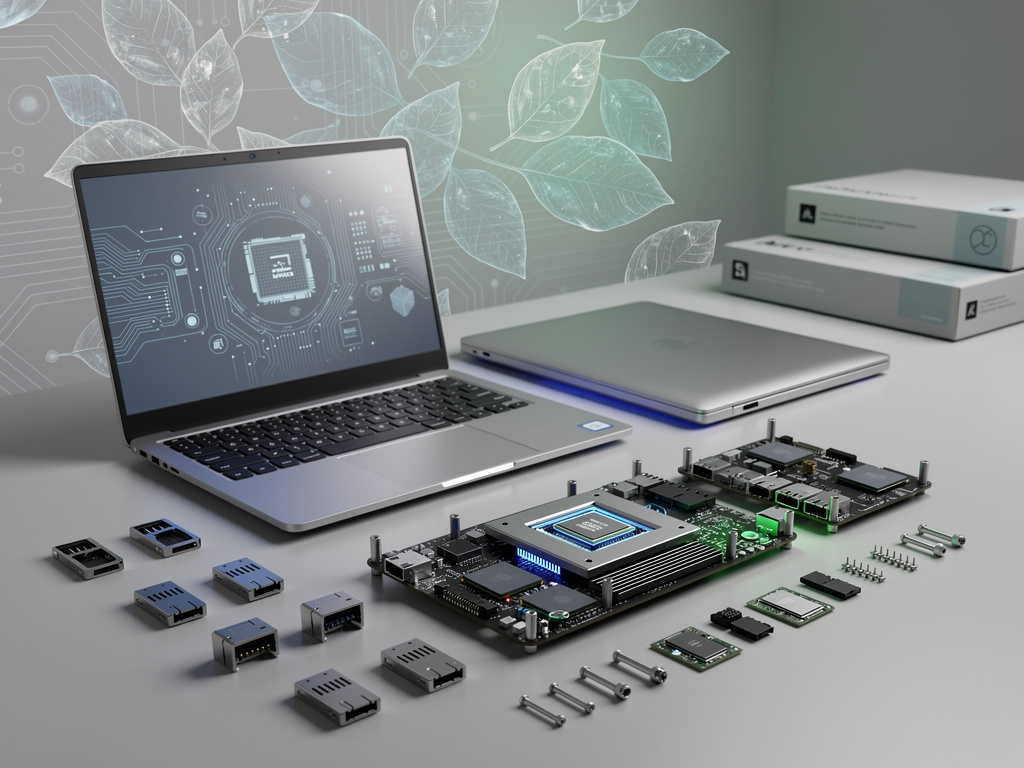
In the ever-evolving world of modular computing, a new chapter has unfolded for enthusiasts and professionals alike. The Framework Laptop 13, long celebrated for its user-upgradable design, now welcomes a groundbreaking third-party upgrade: a mainboard featuring a 12-core ARM processor. This development, announced recently, stems from a collaboration between Framework and MetaComputing, a Swiss startup specializing in AI-focused hardware. It marks a significant pivot toward ARM architecture in a device traditionally dominated by x86 processors from Intel and AMD.
The upgrade kit, centered around the CIX P1 processor, promises enhanced performance for AI workloads, boasting up to 45 TOPS (trillions of operations per second) in neural processing capabilities. According to details from NotebookCheck.net, this mainboard replaces the laptop’s existing one, allowing users to swap in ARM power without discarding their chassis or peripherals. Framework’s modular ethos—where components like ports, screens, and keyboards can be customized—extends seamlessly to this processor shift, potentially extending the device’s lifespan and reducing electronic waste.
For industry insiders, this isn’t just an incremental update; it’s a testament to the viability of open hardware ecosystems. MetaComputing’s entry into the Framework ecosystem introduces a processor with a mix of high-performance and efficiency cores, tailored for tasks like machine learning inference and edge computing. Early benchmarks suggest it rivals mid-tier Intel Core Ultra chips in multi-threaded operations, though software compatibility remains a key consideration given ARM’s different instruction set.
Unlocking ARM Potential in Modular Design
Framework, founded in 2021, has built its reputation on challenging the throwaway culture of consumer electronics. The Laptop 13’s design allows for mainboard swaps that have previously included upgrades from 11th to 13th-generation Intel processors and, more recently, AMD Ryzen AI 300 series options. As reported in a review by Wired, these upgrades have proven the company’s bet on repairability, with users able to boost performance years after purchase without buying a new laptop.
The ARM upgrade kit, priced at around $800 according to initial listings, includes the CIX P1 chip, which integrates 12 cores: four high-performance cores clocked up to 3.5 GHz and eight efficiency cores for balanced power consumption. This setup is particularly appealing for developers working on AI models, as the built-in NPU (neural processing unit) handles tasks like real-time image recognition with minimal battery drain. However, as noted in coverage from CNX Software, the kit requires users to install a compatible operating system, such as a customized Linux distribution, since Windows on ARM support is still maturing.
Insiders point out that this move aligns with broader industry shifts toward ARM, driven by Apple’s success with M-series chips and Qualcomm’s Snapdragon X Elite in Windows laptops. Framework’s openness to third-party mainboards, unlike proprietary designs from Dell or HP, fosters innovation. MetaComputing, established in 2024, positions this as an “AI PC” upgrade, emphasizing its 45 TOPS capability for on-device AI processing, which could reduce reliance on cloud services for tasks like natural language processing.
Technical Specifications and Performance Insights
Diving deeper into the CIX P1’s architecture, the processor features a 5nm process node, enabling dense packing of transistors for improved efficiency. It supports up to 32GB of LPDDR5X RAM and includes integrated graphics capable of handling 4K video output. Benchmarks shared in a post on Liliputing indicate that in synthetic tests like Geekbench, the 12-core setup scores comparably to AMD’s Ryzen 7 7840HS, with strengths in parallel computing but potential weaknesses in legacy x86 software emulation.
Installation is straightforward for those familiar with Framework’s system: users remove the bottom panel, disconnect cables, and slot in the new mainboard. This process, detailed in Framework’s official guides, takes about 30 minutes and requires no soldering. However, compatibility with existing expansion cards—Framework’s modular USB-C ports—has been confirmed, ensuring that users retain flexibility in connectivity options like HDMI or Ethernet.
From a power perspective, the ARM board draws around 28W under load, lower than some Intel equivalents, which could extend battery life in the Laptop 13’s 61Wh battery to over 10 hours for light tasks. Yet, as highlighted in an article from ShiftDelete.Net Global, it’s not optimized for ultra-long endurance, making it better suited for docked workstation use rather than all-day mobility.
Market Implications and Ecosystem Growth
The introduction of this ARM kit expands Framework’s appeal beyond hobbyists to enterprise users in AI and data science fields. Companies exploring edge AI deployments might find the upgradable nature ideal for prototyping, where hardware can evolve with software needs. Framework’s subreddit, as seen in discussions on Reddit, buzzes with excitement over this, with users speculating on future third-party boards, perhaps even RISC-V options.
Critically, software support is the linchpin. While Linux distributions like Ubuntu ARM run natively, Windows users may face hurdles with app compatibility, though Microsoft’s push for ARM versions of Office and Adobe suites is closing the gap. MetaComputing has committed to providing drivers and firmware updates, but long-term support will depend on community involvement, a hallmark of Framework’s model.
Economically, this upgrade challenges the planned obsolescence in tech. By enabling processor swaps, Framework reduces the need for full device replacements, potentially saving consumers thousands over time. As per a review in PCMag, the 2025 Ryzen edition already boasts excellent upgradability, and the ARM kit amplifies this by introducing architectural diversity.
Challenges and Future Horizons
Not everything is seamless. Early adopters report thermal management issues under sustained loads, where the CIX P1’s fans ramp up noticeably, though Framework’s chassis design allows for aftermarket cooling mods. Pricing could be a barrier; at $800, it’s a premium add-on, especially when base Framework laptops start at $999. Availability is another factor—MetaComputing’s initial batch sold out quickly, per reports on X (formerly Twitter), where users expressed frustration over shipping delays to regions outside Europe.
Comparatively, this positions Framework against ARM-powered competitors like the Microsoft Surface Laptop, but with the unique selling point of modularity. Industry analysts see it as a step toward heterogeneous computing, where users mix ARM and x86 boards in their workflows, perhaps via external enclosures.
Looking ahead, Framework’s expansion into desktops and other form factors, as mentioned in community posts, suggests more ARM integrations could follow. MetaComputing hints at future iterations with even higher core counts, potentially 16 or more, tailored for generative AI tasks.
Industry Reactions and Broader Impact
Reactions from tech circles have been largely positive. On platforms like X, posts from Framework’s official account and enthusiasts highlight the kit’s role in democratizing AI hardware, with some users sharing custom builds integrating the ARM board with high-end storage. This sentiment echoes in news from Ars Technica, which praises Framework’s ongoing innovations, including keyboard tweaks in recent models.
For sustainability advocates, this upgrade underscores a shift away from disposable tech. By supporting third-party hardware, Framework fosters a vibrant aftermarket, similar to PC building communities. This could pressure giants like Apple to open up their ecosystems, though that’s unlikely given proprietary designs.
In terms of global reach, the kit’s launch coincides with rising interest in ARM for energy-efficient computing, especially in data centers. MetaComputing’s focus on AI aligns with trends in autonomous systems and smart devices, where on-device processing enhances privacy and reduces latency.
Expert Perspectives and Final Thoughts
Experts like those at Gizmodo, reflecting on past Framework upgrades in an older piece at Gizmodo, note that modular laptops are finally reaping benefits, with ARM adding a new dimension. Analysts predict this could inspire similar initiatives from other modular projects, like the Pinebook or Fairphone’s laptop ambitions.
The real test will be in real-world adoption. Developers in machine learning report seamless integration with frameworks like TensorFlow on ARM, enabling portable AI experimentation. For businesses, the cost savings from upgradability could justify the initial investment, especially in fleets where hardware refreshes are frequent.
Ultimately, this ARM upgrade kit for the Framework Laptop 13 represents a bold stride in computing flexibility, blending performance, sustainability, and innovation. As the tech sector grapples with efficiency demands, such developments could redefine how we think about hardware longevity and adaptability, paving the way for a more inclusive and enduring digital future.


 WebProNews is an iEntry Publication