
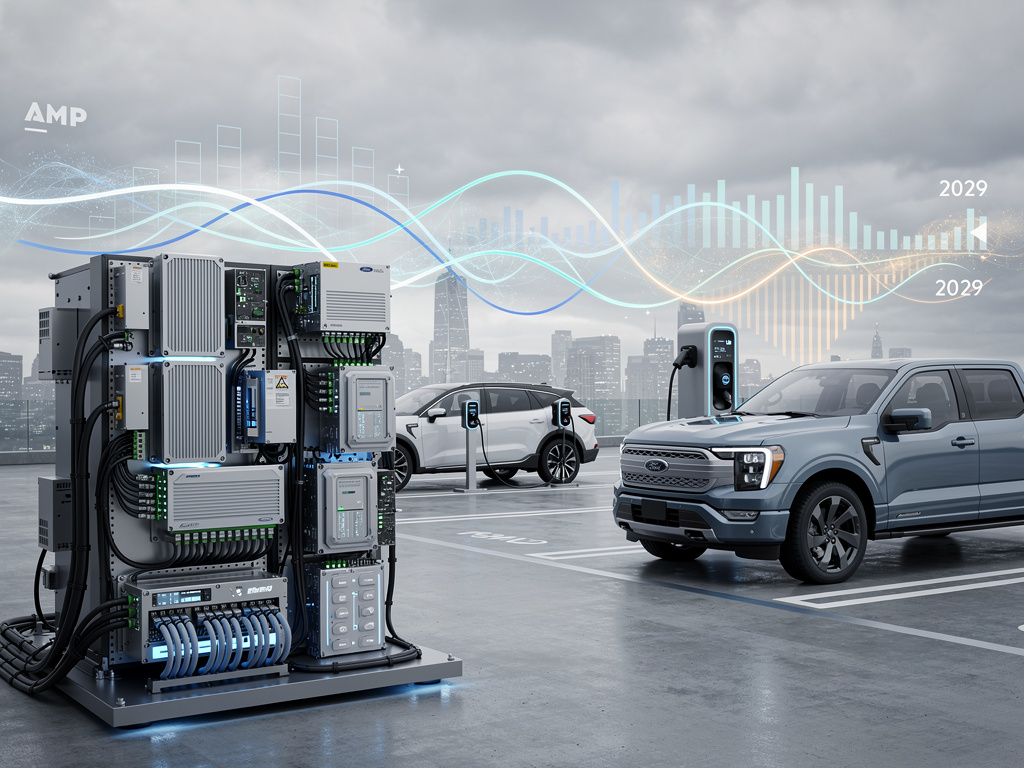
Ford’s Charging Gambit: Acquiring AMP to Power the Electric Future
Ford Motor Company’s acquisition of Auto Motive Power (AMP) in late 2023 marked a pivotal move in the automaker’s push to enhance its electric vehicle ecosystem. The deal, which integrated AMP’s expertise in energy management and charging technology, was aimed at addressing one of the most persistent hurdles in EV adoption: reliable and efficient charging. AMP, a Los Angeles-based startup founded in 2017, had built a reputation for powering some of the world’s leading electric vehicle manufacturers with its software and hardware solutions for battery management and charging infrastructure.
At the time of the acquisition, Ford executives highlighted how AMP’s technology would bolster the company’s Model e division, focusing on speeding up EV adoption among consumers. The startup’s innovations included advanced power conversion systems and cloud-based energy management platforms that promised to make charging faster and more seamless. This move came amid growing competition in the EV space, where players like Tesla had already established dominant positions in charging networks.
Industry observers noted that Ford’s strategy was not just about acquiring technology but also about talent. AMP’s team of engineers, many with backgrounds from Tesla and other tech giants, brought invaluable expertise to Ford’s operations. The acquisition was reported to be a strategic fit, allowing Ford to internalize critical components of the EV supply chain rather than relying on third-party providers.
Strategic Integration and Technological Edge
Integrating AMP’s technology into Ford’s lineup involved significant R&D efforts. For instance, AMP’s power electronics were designed to optimize energy flow between vehicles, chargers, and the grid, potentially reducing charging times and improving battery longevity. Ford planned to deploy these advancements in models like the F-150 Lightning and Mustang Mach-E, aiming to offer customers a more integrated experience.
According to reports from TechCrunch, the deal was seen as Ford snapping up a secretive startup that claimed to power most of the world’s top electric OEMs. This acquisition allowed Ford to enhance its BlueOval Charge Network, expanding access to charging stations and improving software for route planning and energy optimization.
However, the path hasn’t been without challenges. Post-acquisition, Ford faced integration hurdles, including aligning AMP’s agile startup culture with its own corporate structure. Insiders suggested that while the technology was promising, scaling it across Ford’s global operations required substantial investment in manufacturing and testing.
Evolving Market Dynamics and Policy Shifts
By 2025, the automotive industry saw significant shifts, influenced by changing U.S. policies under the Trump administration. Ford announced a retreat from some EV initiatives, taking a $19.5 billion charge as demand weakened and regulations favored traditional vehicles. This was detailed in a Reuters article, highlighting how the company was redeploying EV unit plants for gas, hybrid, and energy storage products.
Despite this pullback, the AMP acquisition’s value persisted in hybrid applications and energy storage. Ford’s focus shifted toward profitable segments, where AMP’s battery management tech could support hybrid powertrains and grid-connected systems. This adaptability underscored the foresight in acquiring AMP, as it provided tools not limited to pure EVs.
Recent news from The Detroit News indicated Ford’s plans to achieve profitability in its EV division by 2029, with AMP’s contributions playing a role in cost reductions through efficient energy management. The technology helped in developing extended-range electric vehicles, blending AMP’s innovations with Ford’s engineering prowess.
Competitive Pressures and Industry Sentiment
Posts on X (formerly Twitter) reflected mixed sentiments about Ford’s EV strategy post-AMP acquisition. Enthusiasts praised the initial boost to charging tech, with some users noting how it positioned Ford to compete with Tesla’s Supercharger network. For example, discussions highlighted Ford’s adoption of Tesla’s NACS connector in 2023, which complemented AMP’s software for better interoperability.
However, more recent posts expressed disappointment over Ford’s scaling back of models like the all-electric F-150 Lightning. One account lamented the shift away from pure EVs, attributing it to policy changes and market demand, while others saw it as a pragmatic pivot. These online conversations, gathered from various X threads, illustrated the broader industry’s volatility, where technological acquisitions like AMP’s must navigate economic and political headwinds.
In comparison, competitors like General Motors and Stellantis have pursued similar acquisitions, but Ford’s move with AMP was distinctive for its focus on energy management rather than just battery production. This niche expertise has allowed Ford to explore vehicle-to-grid (V2G) technologies, where EVs can return power to the grid, potentially creating new revenue streams.
Innovation in Charging Infrastructure
Delving deeper into AMP’s contributions, the startup’s cloud platform enabled predictive analytics for charging, using AI to forecast energy needs and optimize sessions. This was particularly beneficial for fleet operators, a growing segment for Ford’s commercial EVs. By integrating AMP’s systems, Ford could offer features like bidirectional charging, turning vehicles into mobile power sources during outages.
A ArenaEV report emphasized how the acquisition advanced Ford’s battery management, crucial for extending range and reducing degradation. Engineers from AMP brought proprietary algorithms that improved thermal management, ensuring batteries perform optimally in diverse climates.
Ford’s Silicon Valley-style skunk works, as covered in a New York Times piece, incorporated AMP’s tech in redesigning its fleet to catch up with Chinese automakers. This team, operating near Los Angeles, hatched innovative designs that leveraged AMP’s power electronics for more efficient vehicles.
Global Implications and Future Trajectories
The acquisition also had international ramifications. In markets like Europe and Asia, where EV adoption is accelerating, Ford has used AMP’s tech to comply with stricter emissions standards. Partnerships with charging networks abroad have been strengthened, allowing Ford vehicles to access a wider array of stations seamlessly.
Challenges remain, including supply chain disruptions for battery metals, as noted in another Reuters analysis. Prices for lithium and nickel have fluctuated, impacting the cost-effectiveness of AMP-integrated systems. Ford has mitigated this by diversifying suppliers and investing in recycling technologies.
Looking ahead, industry insiders speculate that AMP’s full potential will unfold in Ford’s next-generation vehicles, possibly including autonomous features tied to energy management. The technology could enable smarter grids, where fleets of Ford EVs act as distributed energy resources, balancing supply and demand.
Talent Acquisition and Cultural Shifts
Beyond tech, the AMP deal was about human capital. Ford absorbed a team versed in rapid iteration, contrasting with its traditional manufacturing ethos. This infusion has spurred internal innovation, with cross-functional teams now blending automotive heritage with startup agility.
Reports from Electrek detailed how Ford aimed to improve the overall EV ownership experience through AMP’s enhancements. Customers have reported faster charging times and better app integrations, validating the acquisition’s intent.
Yet, retention of AMP talent has been a focus, with Ford offering incentives to keep key personnel amid Silicon Valley’s competitive job market. This human element is crucial, as the true value of acquisitions often lies in the minds behind the tech.
Regulatory Environment and Adaptation Strategies
Recent federal retreats from EV mandates, as explored in an AutoWeek article, have forced Ford to adapt. The shutdown of some government EV chargers underlines the policy volatility, making AMP’s flexible tech even more vital for hybrid transitions.
Ford’s strategy now emphasizes versatility, using AMP’s platforms for both EV and hybrid models. This approach hedges against uncertain demand, ensuring investments yield returns regardless of market swings.
In the broader context, Ford’s acquisition reflects a pattern among legacy automakers: buying into startups to accelerate electrification without building everything from scratch. AMP’s integration has positioned Ford to weather industry fluctuations better than peers who lagged in such moves.
Sustaining Momentum in Energy Innovation
As of early 2026, Ford continues to leverage AMP for advancements in home charging solutions. Updates to the National Electrical Code, mentioned in a recent openPR release, have introduced challenges like GFCI requirements, but AMP’s adaptable tech helps navigate these.
Collaborations with energy firms have expanded, exploring solar-integrated charging. This diversification reduces reliance on pure EV sales, aligning with Ford’s recalibrated goals.
Ultimately, the AMP acquisition stands as a testament to Ford’s commitment to energy innovation, even as priorities shift. It equips the company with tools to thrive in an evolving automotive sector, where charging efficiency could define market leaders. With ongoing R&D, Ford aims to turn these assets into sustainable advantages, fostering growth in electrification’s next phase.


 WebProNews is an iEntry Publication