
Ford’s Lunar Leap: Revolutionizing EVs with Bold Bets and Charging Realities
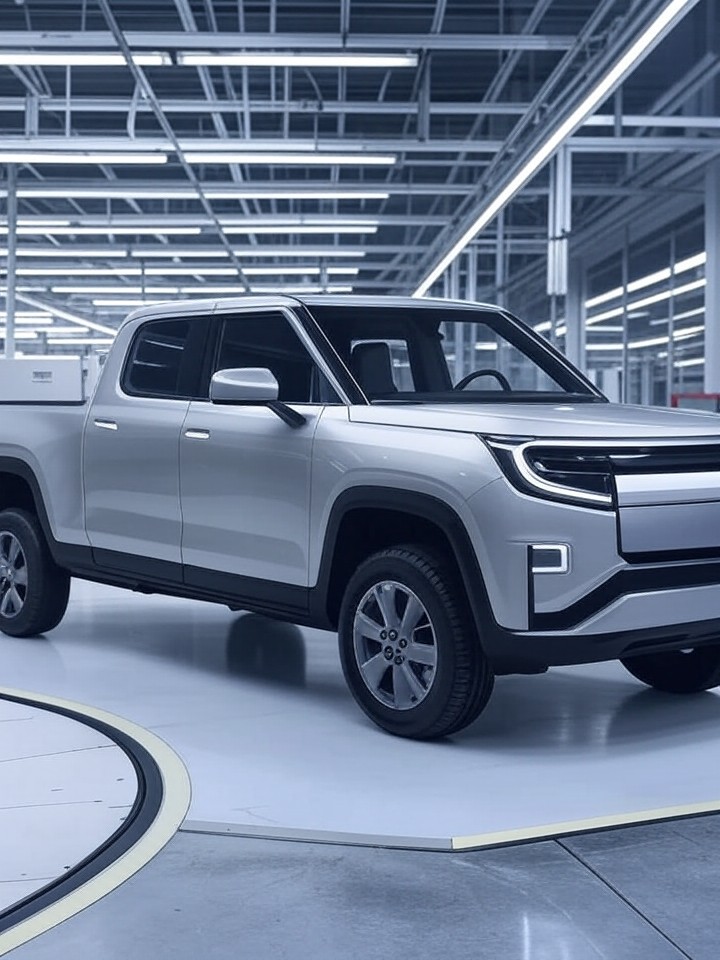
In the high-stakes arena of electric vehicle innovation, Ford Motor Co. is charting an ambitious course with its new Universal Electric Vehicle (UEV) platform, a move that echoes the moonshot aspirations of the Apollo era. Announced amid a flurry of industry shifts, this platform promises to deliver affordable, high-tech EVs starting in 2027, beginning with a midsize electric truck priced around $30,000. Ford’s CEO Jim Farley has likened the project to a space mission, emphasizing its potential to reshape the company’s future while acknowledging the inherent risks. Drawing from recent developments, this initiative isn’t just about building cars; it’s a comprehensive overhaul of manufacturing, battery technology, and market strategy to compete against global giants like China’s BYD and Tesla.
The UEV platform represents a pivot for Ford, born out of lessons learned from earlier EV endeavors like the Mustang Mach-E and F-150 Lightning. After facing profitability challenges and fluctuating demand, Ford has refocused on cost efficiency and scalability. The company is investing approximately $5 billion to support this platform, including upgrades to its Louisville Assembly Plant in Kentucky and the BlueOval Battery Park in Michigan. This investment is expected to create or secure nearly 4,000 jobs, underscoring Ford’s commitment to domestic manufacturing. As detailed in a piece from Ford’s From the Road blog, the platform draws inspiration from the simplicity of the Model T, aiming to merge startup-like innovation with Ford’s industrial heritage.
Farley’s vision emphasizes simplicity in design to drive down costs, targeting vehicles that appeal to a broad consumer base. The first product, a compact electric truck, is already in the prototype stage, with Farley noting in interviews that the project feels like “the Apollo mission.” This analogy highlights the platform’s blend of advanced prismatic lithium-iron-phosphate (LFP) batteries for longer range and lower costs, alongside innovative assembly processes that could revolutionize production efficiency. However, Farley has been candid about uncertainties, stating in a recent discussion reported by Ford Authority that success is not guaranteed due to the platform’s complexity and the evolving market dynamics.
Unveiling the Technological Backbone
At the core of the UEV platform is a flexible architecture designed to underpin a variety of vehicle types, from trucks to crossovers, allowing Ford to scale production and adapt to consumer preferences. This modularity is key to competing with low-cost imports from China, where manufacturers like BYD have flooded markets with affordable EVs. Ford’s strategy includes producing advanced LFP batteries in-house, which offer better energy density and safety compared to traditional lithium-ion options. The platform also incorporates over-the-air software updates and autonomous driving features, positioning Ford to challenge Tesla’s dominance in tech-forward EVs.
Manufacturing innovations are equally pivotal. Ford is implementing a new assembly system at its Louisville plant, described in another From the Road article as a reinvention akin to the Model T era. This system uses modular components and automated processes to reduce build times and costs, potentially allowing Ford to price vehicles competitively without sacrificing quality. The midsize truck, set for a 2027 launch, is touted as a game-changer for affordability, with Farley emphasizing its role in broadening EV adoption among everyday consumers.
Yet, the platform’s success hinges on more than just hardware. Ford is broadening its electrification strategy to include hybrids and extended-range EVs, as noted in coverage from EV Magazine. This hybrid approach addresses range anxiety and infrastructure gaps, blending battery power with gasoline engines for longer trips. Recent posts on X highlight industry sentiment, with users discussing Ford’s pivot toward energy storage and range-extender technologies, reflecting a pragmatic response to slower-than-expected pure EV uptake.
Charging Infrastructure: The Critical Frontier
No EV platform can thrive in isolation; charging infrastructure remains a linchpin for widespread adoption. Ford has made significant strides here, notably through its partnership with Tesla, which grants Ford EV owners access to over 12,000 Superchargers across North America. This collaboration, announced in 2023 and expanding into 2025 models, integrates Tesla’s North American Charging Standard (NACS) directly into Ford vehicles. As reported in a Digital Trends article, this move is crucial for Ford’s “lunar” ambitions, ensuring that charging stations are part of the equation to avoid leaving drivers stranded.
Beyond the Tesla alliance, Ford is investing in its own charging ecosystem. The company has partnered with utilities like Xcel Energy to install 30,000 charging ports by 2030, focusing on home and workplace solutions. This initiative, echoed in X posts from industry observers, aims to make charging as seamless as refueling a gas car. Ford’s BlueOval Charge Network further aggregates public chargers from multiple providers, offering a unified app experience for route planning and payments.
Looking ahead, Ford is exploring intelligent charging features, such as patents for road-trip optimization that suggest stops at frequently visited locations. A recent U.S. News report on the 2027 truck launch highlights how these developments tie into job creation and economic boosts in U.S. plants. However, challenges persist: rural areas lag in charger density, and grid capacity strains could hinder scalability, as discussed in broader industry analyses.
Market Pressures and Competitive Dynamics
Ford’s UEV push comes amid intensifying global competition. Chinese manufacturers are gaining ground, prompting reactions like Ontario Premier Doug Ford’s criticism of Canada’s EV deals with China, as covered in a CBC News piece. Farley has voiced concerns about this influx, advocating for tariffs to protect American jobs while Ford ramps up its own affordable offerings. The UEV platform is positioned as a countermeasure, with its low-cost focus aiming to undercut imports without compromising on features.
Internally, Ford is reallocating resources, pulling back from large battery-only vehicles to emphasize hybrids and smaller EVs, per insights from X posts and a InsideEVs interview with Farley. This includes a $2 billion commitment to repurpose factories for grid-scale battery storage, signaling a diversified approach to electrification. Analysts note that while pure EVs face demand hurdles, hybrids provide a bridge, subsidizing the transition through profits from Ford’s core truck business.
The broader industry is watching closely. Rivals like General Motors are similarly pivoting to energy storage amid faltering battery demand, as mentioned in finance-related X discussions. Ford’s strategy could set a precedent, blending aggressive innovation with practical concessions to consumer realities.
Risks and Realities on the Horizon
Despite the optimism, Farley has tempered expectations, reiterating in the Ford Authority piece that the UEV’s novelty introduces risks. Supply chain vulnerabilities, particularly for critical minerals like lithium and copper, could disrupt timelines. Recent X posts speculate on potential battery deals with BYD, hinting at collaborations that might accelerate development but raise geopolitical concerns.
Consumer adoption remains a wildcard. While the $30,000 truck targets budget-conscious buyers, factors like charging accessibility and total ownership costs will determine market penetration. Ford’s integration of Tesla’s network mitigates some issues, but expanding rural infrastructure is essential. As outlined in the Digital Trends coverage, the platform’s success will depend on whether charging solutions keep pace with vehicle advancements.
Industry insiders point to Ford’s history of bold bets, from the Model T to the F-150, as a foundation for confidence. Yet, the EV shift demands agility. With prototypes advancing and investments flowing, Ford is positioning itself not just as a carmaker, but as a leader in sustainable mobility.
Strategic Implications for the Auto Sector
Ford’s UEV initiative has ripple effects across the automotive world. By prioritizing affordability and efficiency, it challenges premium-focused competitors and pressures suppliers to innovate. The emphasis on domestic production aligns with U.S. policy goals, potentially qualifying for incentives under the Inflation Reduction Act.
Collaborations extend beyond charging; Ford’s forays into hybrid tech and energy storage, as noted in EV Magazine, suggest a holistic energy ecosystem. This could include vehicle-to-grid capabilities, where EVs feed power back to homes or utilities, enhancing resilience.
Looking to 2026 and beyond, Ford’s engine developments for Formula 1 and aggressive hybrid tech, detailed in a HotCars article, indicate a multi-pronged assault on electrification. The UEV platform is the centerpiece, but its integration with these elements will define Ford’s trajectory.
Voices from the Industry and Path Forward
Sentiment on X reflects cautious enthusiasm, with posts praising Ford’s Tesla partnership for expanding charger access while debating the merits of hybrids over pure EVs. Influencers like Marques Brownlee have highlighted the consumer benefits, noting how NACS adoption simplifies ownership.
Farley’s leadership style—blending startup energy with corporate might—has been a recurring theme in From the Road narratives. His return to Ford was motivated by such projects, aiming to recapture the innovative spirit of Henry Ford.
As Ford navigates this path, the UEV platform stands as a testament to adaptive strategy in a volatile market. With billions invested and prototypes rolling, the company is betting that simplicity, technology, and infrastructure will propel it to new heights, much like a mission to the moon—ambitious, risky, and potentially transformative.


 WebProNews is an iEntry Publication