
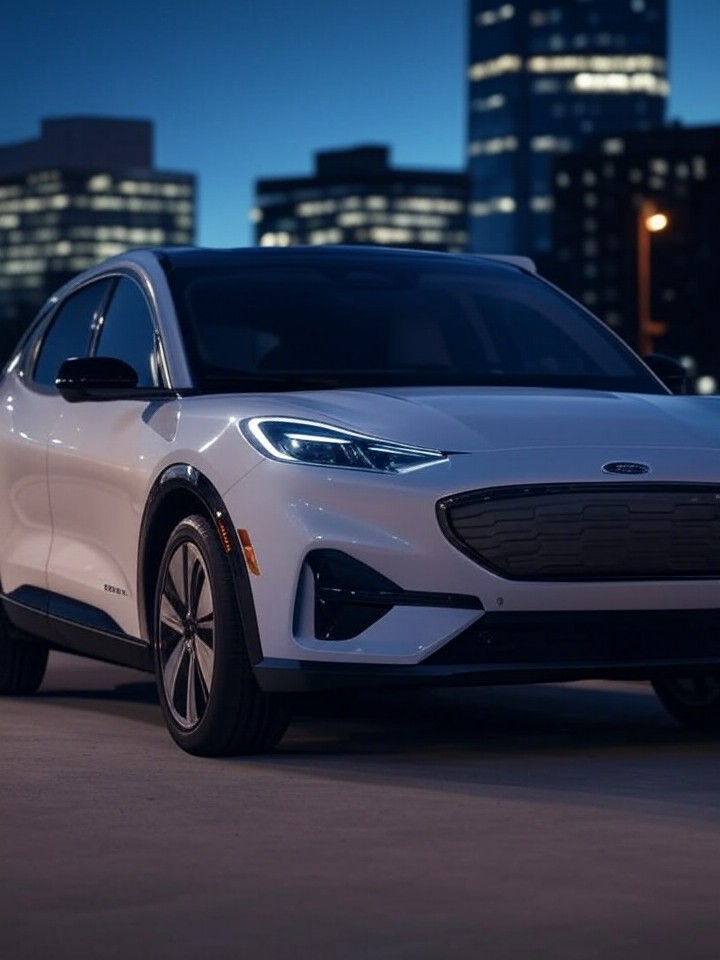
Ford’s AI Awakening: Steering Toward a Smarter Automotive Future
Ford Motor Company is accelerating into the artificial intelligence era with a new in-car companion designed to transform how drivers interact with their vehicles. Announced at the Consumer Electronics Show (CES) 2026, this AI assistant promises to go beyond simple voice commands, offering contextual advice tailored to the vehicle’s capabilities and the driver’s needs. Drawing from recent developments, the system will initially debut in the Ford app later this year, with full in-vehicle integration planned for 2027 models. This move positions Ford in a competitive race against rivals like Tesla and Rivian, who have long touted advanced AI features in their electric vehicles.
The assistant, powered by Google Cloud technology, is engineered to handle practical queries that blend vehicle data with real-world scenarios. For instance, it can calculate how much firewood fits in a truck bed or suggest optimal routes based on payload limits. According to reports from Business Insider, Ford’s in-house development of this AI marks a shift from relying on third-party systems like Amazon’s Alexa, aiming for deeper integration and customization. This isn’t just about convenience; it’s a strategic pivot to make Ford vehicles more intuitive and user-friendly, especially in an industry where software increasingly defines the driving experience.
Industry observers note that Ford’s timing aligns with broader trends in automotive tech, where AI is becoming essential for everything from navigation to maintenance predictions. The company’s executives emphasized during the CES reveal that this assistant will evolve through over-the-air updates, ensuring it stays relevant as new features roll out. Early feedback from tech enthusiasts on platforms like X highlights excitement, with users speculating on how it might integrate with existing systems like Ford’s BlueCruise hands-free driving.
Unveiling the Tech Behind the Wheel
At its core, Ford’s AI assistant leverages large language models to process natural language queries, pulling from a vast database of vehicle specifications and real-time data. This allows it to provide answers that are not only accurate but also proactive—reminding drivers of tire pressure issues or fuel efficiency tips without being prompted. As detailed in coverage from Ars Technica, the system is set to debut in Ford and Lincoln models starting in 2027, complementing enhancements to BlueCruise, Ford’s advanced driver-assistance suite.
Comparisons to competitors are inevitable. Tesla’s voice assistant, integrated with its Full Self-Driving software, has set a high bar by handling complex tasks like adjusting climate controls based on conversational cues. Ford’s version aims to differentiate by focusing on utility for everyday users, particularly in trucks and SUVs where load management is key. Posts on X from automotive influencers suggest this could appeal to commercial users, such as contractors who need quick calculations on the go, potentially boosting Ford’s market share in fleet sales.
Development of this AI wasn’t without challenges. Ford has invested heavily in partnerships, including with Google, to ensure robust cloud infrastructure supports the assistant’s operations. This collaboration enables seamless data syncing between the app and vehicle, allowing users to plan trips from their phones and have the AI ready upon entry. Insiders point out that privacy concerns are addressed through on-device processing for sensitive queries, reducing reliance on constant cloud connectivity.
Autonomous Ambitions and Timeline Shifts
Looking ahead, Ford’s roadmap extends beyond the AI companion to Level 3 autonomous driving, slated for 2028. This “eyes-off” capability will allow drivers to disengage from the wheel in certain conditions, building on the next generation of BlueCruise. The Verge reports that Ford plans to introduce this in a $30,000 electric vehicle, making advanced autonomy more accessible than premium offerings from Tesla or General Motors.
The cost reductions are significant: Ford claims the new BlueCruise hardware will be 30% cheaper to produce, as noted in TechCrunch. This efficiency stems from streamlined sensors and a unified “vehicle brain” that integrates AI processing. For industry insiders, this signals Ford’s push to democratize high-tech features, potentially disrupting the market by undercutting competitors on price while maintaining safety standards.
Social media buzz on X reflects a mix of optimism and skepticism. Some users draw parallels to past Ford innovations like the Co-Pilot360 suite, which introduced automatic emergency braking years ago, while others question if Ford can catch up to leaders in AI-driven autonomy. Recent posts highlight how this could integrate with emerging tech like shared SLAM maps, similar to advancements seen in robotics and self-driving prototypes.
Competitive Pressures and Market Positioning
Ford’s entry into AI assistants comes amid intensifying rivalry. Rivian, backed by Amazon, has its own in-house AI for voice interactions, while General Motors explores similar tech in its Super Cruise system. CNBC underscores how Ford’s 2028 target for eyes-off driving places it in direct competition, aiming to launch broadly rather than in limited geofenced areas like Waymo.
To stand out, Ford is emphasizing affordability and accessibility. The company’s vision, as outlined in its own publication From the Road, focuses on turning advanced tech into everyday tools for all drivers, not just luxury buyers. This strategy could resonate in segments like electric trucks, where practical AI can enhance utility—think advising on battery range for towing or optimizing charging stops.
However, challenges loom. Regulatory hurdles for Level 3 autonomy vary by region, and Ford must navigate safety certifications. Drawing from X discussions, there’s concern over data privacy, especially with patents suggesting vehicles could report speeding or other infractions, echoing broader debates on surveillance in connected cars.
Innovation Ecosystem and Future Integrations
Ford’s AI initiative is part of a larger ecosystem push. The assistant will first appear in the Ford app in early 2026, as announced at CES and covered by Lifehacker, allowing users to interact via smartphone before full vehicle rollout. This phased approach lets Ford gather user data to refine the system, much like software betas in the tech world.
Integration with other Ford technologies is key. The AI could enhance BlueCruise by providing verbal updates on road conditions or suggesting when to take over manual control. Industry analysts predict this could evolve into more immersive experiences, such as augmented reality overlays for navigation, though Ford hasn’t confirmed such features yet.
On X, tech enthusiasts are abuzz with speculation. Posts reference how this AI might leverage vehicle-to-everything (V2X) communication, sharing data with infrastructure for smarter traffic management. Comparisons to Tesla’s robotaxi ambitions highlight Ford’s more grounded approach, focusing on assisting human drivers rather than replacing them entirely.
Economic Implications for the Industry
The financial stakes are high. By reducing BlueCruise production costs, Ford aims to boost profit margins on EVs, a segment where it’s lagged behind Tesla. InsideEVs notes that this tech push includes a $30,000 EV truck platform with eyes-off capabilities, potentially capturing budget-conscious consumers entering the electric market.
For suppliers and partners, this means new opportunities. Google’s involvement could lead to broader AI applications, like predictive maintenance using machine learning. Insiders speculate on job shifts within Ford, with more emphasis on software engineers over traditional mechanics.
Critics on X warn of overhyping, pointing to past delays in autonomous tech. Yet, Ford’s track record with innovations like the Fusion’s driver-assist suite suggests steady progress. As the company refines its AI, it could redefine customer loyalty through personalized experiences.
Challenges and Ethical Considerations
No tech rollout is without risks. Cybersecurity remains a concern; an AI deeply integrated with vehicle controls could be a target for hacks. Ford has pledged robust safeguards, but industry watchers recall incidents like Jeep’s remote hacking scandal, urging caution.
Ethically, the assistant’s data collection raises questions. While Ford assures anonymization, X users debate the balance between convenience and privacy, especially with patents for camera tech that could monitor surroundings.
Looking forward, Ford’s AI could influence global standards. As autonomy levels advance, collaborations with regulators will be crucial to ensure safe deployment.
Vision for Tomorrow’s Roads
Ford’s broader strategy envisions AI as a core pillar of its vehicles. By 2028, with Level 3 driving in affordable EVs, the company aims to make smart tech ubiquitous. This aligns with consumer demands for seamless integration, as seen in rising adoption of connected cars.
Partnerships will play a pivotal role. Beyond Google, Ford might explore ties with AI firms for specialized features, like natural language processing for multilingual support.
Ultimately, this AI companion represents Ford’s bet on software-defined vehicles, where updates keep cars fresh long after purchase. For insiders, it’s a reminder that in the evolving automotive arena, adaptability is key to staying ahead. As developments unfold, Ford’s progress will be closely watched, potentially setting new benchmarks for the sector.


 WebProNews is an iEntry Publication