
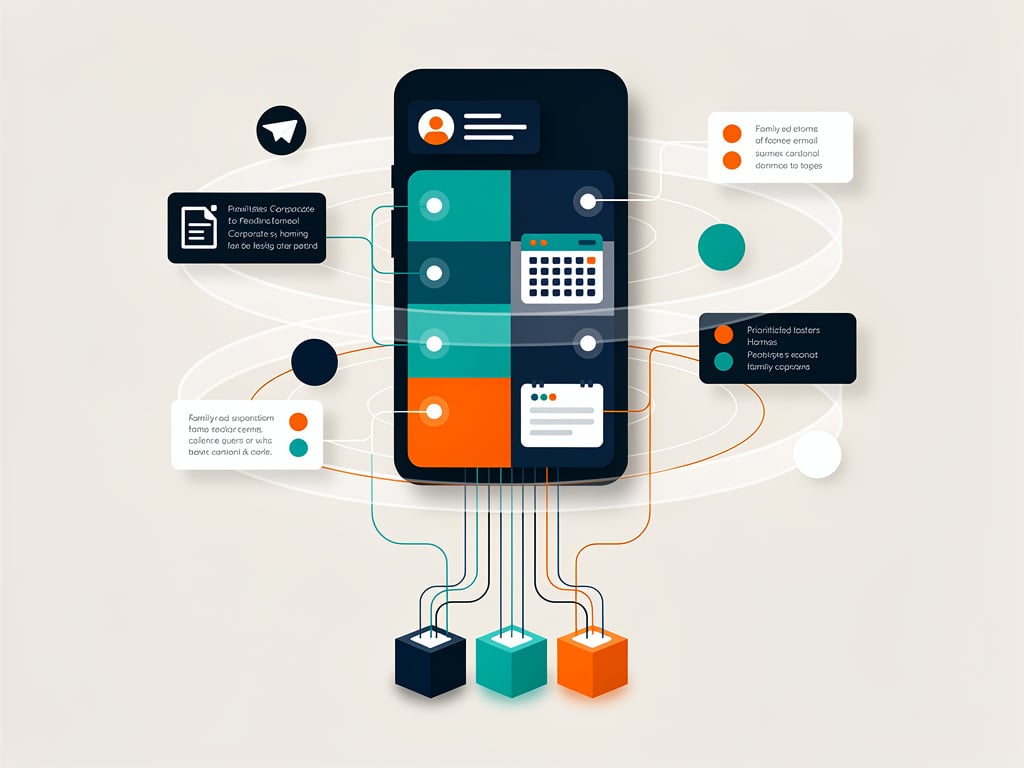
Whitney Stefko Dover starts her day before most alarms sound. At 4 a.m., her custom AI agent delivers a briefing. It scans emails. It checks the family calendar. It flags appointments, tasks and reminders. She named it the Daily Dover. Others might call it a family chief of staff.
Dover serves as director and senior counsel for policy and operations at Ford Motor Company. Her role demands focus on complex regulatory matters and emerging technology. Yet the demands at home proved just as relentless. Three children. A busy spouse. School events, sports, doctor visits and household logistics. The mental load never let up.
So she built her own solution. Using Anthropic’s Claude large language model, Dover “vibe coded” an autonomous agent. No formal software engineering degree required. She described the desired behavior in plain language. The system took shape through iteration. Trial. Error. Refinement. The result handles coordination that once consumed her evenings and weekends.
The Daily Dover reads incoming messages. It identifies commitments. It builds a prioritized list for the day ahead. One recent briefing highlighted a child’s orthodontist appointment, a soccer practice conflict and a work email thread that needed her attention before noon. All synthesized into a concise report.
She shared her project in a recent Business Insider article. The story struck a chord. Professionals across industries recognized the pattern. Work bleeds into home. Home pressures follow into the office. Traditional calendars and to-do apps fall short. Something more proactive was needed.
And executives have taken notice. Ford CEO Jim Farley has spoken bluntly about artificial intelligence’s reach. In interviews last year, he predicted AI could replace literally half of all white-collar workers in the U.S. The comments came during an appearance at the Aspen Ideas Festival with Walter Isaacson. Farley pointed to efficiency gains already visible inside Ford and across corporate America. (Yahoo Finance)
His warnings focused on jobs. Yet Dover’s experiment shows the same technology flowing the opposite direction. Into personal life. Into family management. The tools that automate office tasks now tackle soccer carpools and grocery lists.
The Shift From Corporate AI to Home Systems
Companies pour resources into AI agents for sales forecasting, customer support and supply chain optimization. Individual users now adapt those same models for private use. Dover joined a small but growing group of technically curious professionals building personal systems. They connect large language models to email accounts, calendars and messaging platforms through APIs. The agents act without constant prompting.
Recent projects show the trend accelerating. One developer described a fleet of autonomous agents that run overnight, triage inboxes, draft responses and prepare morning briefings. Another analysis highlighted tools like alfred_ and Arahi AI that deliver executive-level coordination for a fraction of a human assistant’s salary. (Get Alfred, Arahi AI)
Enterprise software makers follow suit. Asana introduced its own AI chief of staff last week. The tool, called Dash, monitors projects across email, calendars and team messages. It flags risks and suggests actions. Arnab Bose, Asana’s chief product officer, positioned it as a proactive coordinator. (Computerworld)
But personal applications carry different risks. Data privacy sits front and center. The Daily Dover accesses family emails and schedules. A breach could expose children’s activities or medical details. Security practices matter. So does transparency with family members about what the system knows.
Dover addressed some of these concerns in her project. She limited scope. The agent summarizes rather than stores sensitive information long term. She reviews outputs. The system augments her judgment. It does not replace it.
Results came quickly. Mornings feel less chaotic. Decisions happen faster. She reclaims hours once lost to context switching. The family reports lower stress around logistics. Simple. Yet meaningful.
Critics question whether such systems scale. A single executive with coding curiosity can build one. Most families lack that starting point. They turn instead to off-the-shelf products. ChatGPT custom GPTs. Claude Projects. Dedicated AI assistant platforms. Each requires configuration. Each carries subscription costs. The barrier remains higher than many admit.
Still, momentum builds. Venture funding flows into AI agents. Startups promise personal chief of staff experiences. Larger platforms integrate similar features. The question shifts from whether these tools will arrive to how deeply they will integrate into daily routines.
Farley’s Ford faces the other side of this equation. The company invests heavily in vehicle intelligence and manufacturing automation. Blue-collar trades stay essential, he argues. Skilled workers who build infrastructure and maintain systems resist easy replacement. White-collar roles face greater pressure. (Fortune)
Dover’s work sits at the intersection. A policy and operations leader inside an automaker. She applies the technology her company studies to her own life. The experiment feels both practical and symbolic. One executive. One family. One custom AI. Yet it previews broader adoption.
Expect more stories like this. Parents who script bedtime routines. Couples who automate bill payments and conflict calendars. Professionals who hand routine coordination to agents while they focus on high-value work. The technology exists today. The limiting factor is imagination and comfort with sharing personal data.
Dover keeps iterating. She tweaks prompts. She expands capabilities. The Daily Dover evolves. What began as a time-saving hack now functions as a quiet member of the household staff. Always on. Rarely wrong. Ready with the next briefing.
Her approach offers a template. Describe the outcome you want. Feed the model relevant context. Test relentlessly. Adjust. The process mirrors product development more than traditional coding. Vibe coding, she calls it. The term captures the experimental spirit. Less syntax. More intent.
Industry watchers see parallels in corporate settings. AI agents that monitor executive inboxes already exist in prototype form. Some companies test them internally. Others wait for mature platforms. The home versions may prove the faster path to widespread acceptance. People tolerate experimentation with their own schedules before they trust systems with company secrets.
Privacy regulations could shape the next phase. Europe’s GDPR and emerging U.S. state laws place strict limits on personal data processing. Agents that read emails must comply. Companies offering these services will face audits. Individuals building their own must understand the rules.
None of that slowed Dover. She saw a problem. She applied available tools. The family calendar runs smoother. Her professional output benefits. The experiment succeeds on multiple levels.
Others will copy the model. Some will improve it. A few will build products around the concept. The family chief of staff may soon move from custom project to commercial offering. When it does, credit the Ford executive who showed what one determined user could accomplish with the right model and enough persistence.


 WebProNews is an iEntry Publication