
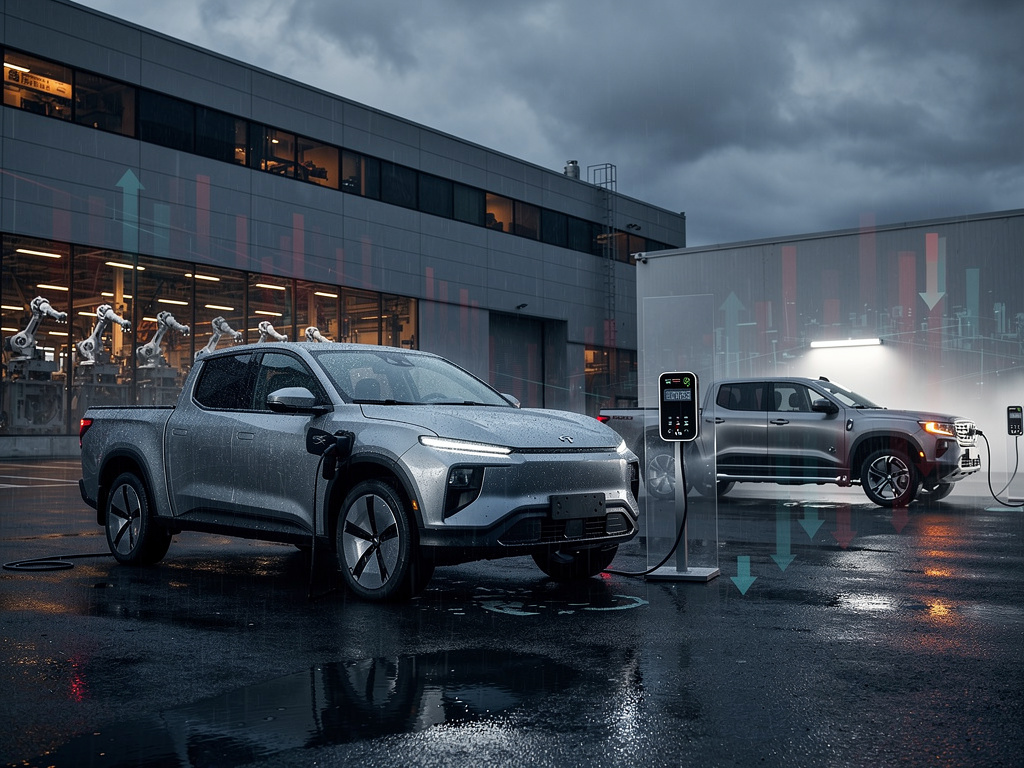
The Lightning That Fizzled: Ford’s Bold EV Bet Meets Market Reality
Ford Motor Company’s decision to halt production of its all-electric F-150 Lightning pickup truck marks a pivotal moment in the automotive industry’s push toward electrification. Announced in mid-December 2025, this move comes amid mounting financial pressures and shifting consumer preferences, underscoring the challenges facing battery-powered vehicles in a segment long dominated by traditional engines. The Lightning, once hailed as a flagship for Ford’s electric ambitions, failed to achieve profitability despite initial enthusiasm, leading the company to pivot toward hybrid alternatives.
The truck’s discontinuation follows years of production hurdles, including supply chain disruptions and quality control issues that plagued its rollout. Ford had invested heavily in the model, positioning it as a direct competitor to emerging electric pickups from rivals like Tesla and Rivian. However, sales never met expectations, with demand softening as economic factors like inflation and high interest rates made the vehicle’s premium price tag less appealing to buyers.
In response, Ford is redirecting resources to develop an extended-range electric vehicle (EREV) version of the Lightning, which will incorporate a gasoline engine to generate power for the battery. This hybrid approach aims to address key pain points such as range limitations and charging infrastructure gaps, while still offering some of the environmental benefits of electrification.
A Turbulent Launch and Persistent Challenges
From its debut in 2022, the F-150 Lightning faced an uphill battle. Priced starting at around $40,000 but often climbing to over $90,000 for higher trims, it targeted a market where affordability remains a critical factor. According to a report from TechRadar, the truck’s high cost was exacerbated by the lack of widespread, reliable charging networks, particularly in rural areas where pickup owners often reside. This infrastructure deficit fueled range anxiety, a persistent barrier for EV adoption in the heavy-duty vehicle segment.
Moreover, the Lightning’s real-world performance didn’t always align with promotional promises. Winter conditions, for instance, could slash its range by up to 40%, making it less practical for towing or long-haul tasks compared to gas-powered counterparts. Posts on X, formerly Twitter, from users like truck enthusiasts and industry watchers, frequently highlighted these issues, with sentiments echoing frustration over the vehicle’s limitations in cold weather and heavy use scenarios.
Ford’s own admissions point to customer feedback driving the shift. As detailed in an NPR article, CEO Jim Farley emphasized that the company is “following the customer” by moving away from pure EVs toward hybrids, which offer greater flexibility without sacrificing the familiar refueling process.
Financial Fallout and Strategic Realignment
The financial toll of this pivot is staggering. Ford announced a $19.5 billion charge related to scaling back its EV investments, including the Lightning’s discontinuation. This write-down reflects not just the model’s underperformance but broader recalibrations in the company’s electrification strategy. An Fox Business piece outlined how production cuts at the Rouge Electric Vehicle Center in Michigan will allow Ford to retool for hybrid models, signaling a retreat from aggressive battery-only plans.
Industry analysts attribute part of this shift to external pressures, including policy changes under the incoming Trump administration. Reports from Reuters note that anticipated rollbacks in EV incentives and emissions standards have prompted automakers to temper their electric ambitions. Weakening demand, compounded by economic headwinds, has led to an oversupply of EVs on dealer lots, forcing price cuts and production halts across the board.
Ford isn’t alone in this reassessment. Competitors like General Motors and Stellantis have also delayed EV launches or increased hybrid offerings, recognizing that full electrification may not be feasible in the near term for all vehicle types. The Lightning’s fate illustrates how even well-engineered products can falter when market readiness lags behind technological advancements.
Market Dynamics and Consumer Sentiment
Diving deeper into market trends, the electric pickup segment has seen fluctuating fortunes. While Tesla’s Cybertruck has garnered buzz, its unconventional design and production delays have left room for traditional players like Ford to capitalize—or falter. Data from recent sales figures show EV pickups accounting for only a fraction of the overall truck market, which remains dominated by internal combustion engines.
Social media platforms like X reveal a tapestry of opinions, with users posting about the Lightning’s discontinuation as a vindication of skepticism toward forced EV transitions. Comments often cite practical concerns, such as the truck’s inability to handle extreme workloads without frequent charging stops, mirroring broader debates on electrification’s viability for commercial use.
In contrast, hybrids are gaining traction as a bridge technology. Ford’s plan to produce an EREV Lightning at its Michigan facility, as covered by MotorTrend, promises up to 700 miles of range by combining battery power with a small gas engine. This setup could appeal to buyers wary of pure EVs but open to partial electrification.
Competitive Pressures and Innovation Gaps
Competition has intensified, with startups and established brands alike vying for share in the electric truck arena. Rivian’s R1T and Chevrolet’s Silverado EV have offered compelling alternatives, often with better range or features tailored to off-road enthusiasts. Ford’s Lightning, while praised for its work-truck capabilities like onboard power generation, struggled with perceptions of being a “gadget” rather than a reliable daily driver.
Historical context adds layers to this narrative. Ford’s earlier production cuts in 2023 and 2024, as referenced in older X posts, foreshadowed the current outcome. For example, announcements of halved production goals due to slowing demand highlighted ongoing issues that weren’t fully resolved.
Innovation in battery technology and supply chains could have altered this trajectory, but global disruptions delayed progress. The Automotive News explored how Ford’s massive BlueOval City complex in Tennessee, originally slated for next-gen Lightning production, will now focus on other models, freeing up resources for hybrid development.
Policy Influences and Global Implications
Governmental policies play a outsized role in shaping the EV market. The Trump administration’s expected relaxation of fuel economy standards and potential elimination of tax credits for EVs have accelerated Ford’s pivot. This aligns with sentiments expressed in a Wired analysis, which frames the discontinuation as a response to waning federal support and consumer hesitancy.
On a global scale, similar trends are emerging. In Europe and China, where EV adoption is more advanced, pickups aren’t as central to the market, but lessons from Ford’s experience could influence strategies elsewhere. The push for sustainability continues, yet practical considerations like grid capacity and raw material availability temper optimism.
Ford’s leadership views this as a pragmatic adjustment rather than a defeat. Farley has publicly stated that hybrids represent a “sweet spot” for current technology, allowing the company to meet emissions goals without alienating core customers.
Lessons for the Industry’s Electric Future
The Lightning’s story offers valuable insights for automakers navigating the transition to cleaner vehicles. It highlights the need for alignment between innovation, infrastructure, and consumer needs. While pure EVs excel in urban settings, segments like pickups demand more versatile solutions.
Looking ahead, Ford’s EREV approach could set a precedent. As detailed in an Electrek report, the new Lightning promises to be “every bit as capable” as its predecessor, potentially with lower operating costs and reduced environmental impact compared to traditional trucks.
Industry insiders speculate that this hybrid focus might extend to other models, reshaping Ford’s lineup. The $19.5 billion charge, while painful, positions the company to invest in technologies that better match market realities.
Echoes of Broader EV Market Shifts
Broader EV market trends mirror Ford’s challenges. Sales growth has slowed from the rapid pace of previous years, with inventory buildup prompting discounts. An InsideEVs piece declared the all-electric Lightning “dead,” emphasizing the pivot to EREVs as a lifeline for the nameplate.
Consumer surveys indicate that while environmental concerns drive interest in EVs, practical barriers like charging time and initial cost deter purchases. X posts from recent weeks amplify this, with users celebrating the discontinuation as a blow to overzealous green mandates.
Ford’s experience underscores the importance of flexibility in strategy. By retaining the Lightning brand for hybrids, the company preserves brand equity while adapting to feedback.
The Road Ahead for Electric Pickups
As Ford reorients, questions linger about the future of electric pickups. Will hybrids dominate the interim, or will advancements in fast-charging and battery density revive pure EVs? Rivals are watching closely, with some doubling down on batteries and others exploring similar hybrid paths.
The discontinuation also sparks discussions on workforce impacts. Production shifts could affect thousands of jobs, though Ford has committed to retraining and reallocation.
Ultimately, the Lightning’s fizzling serves as a cautionary tale, reminding the industry that technological promise must intersect with market readiness for lasting success. Ford’s pivot may well chart a more sustainable course, blending tradition with innovation in the quest for greener mobility.


 WebProNews is an iEntry Publication