
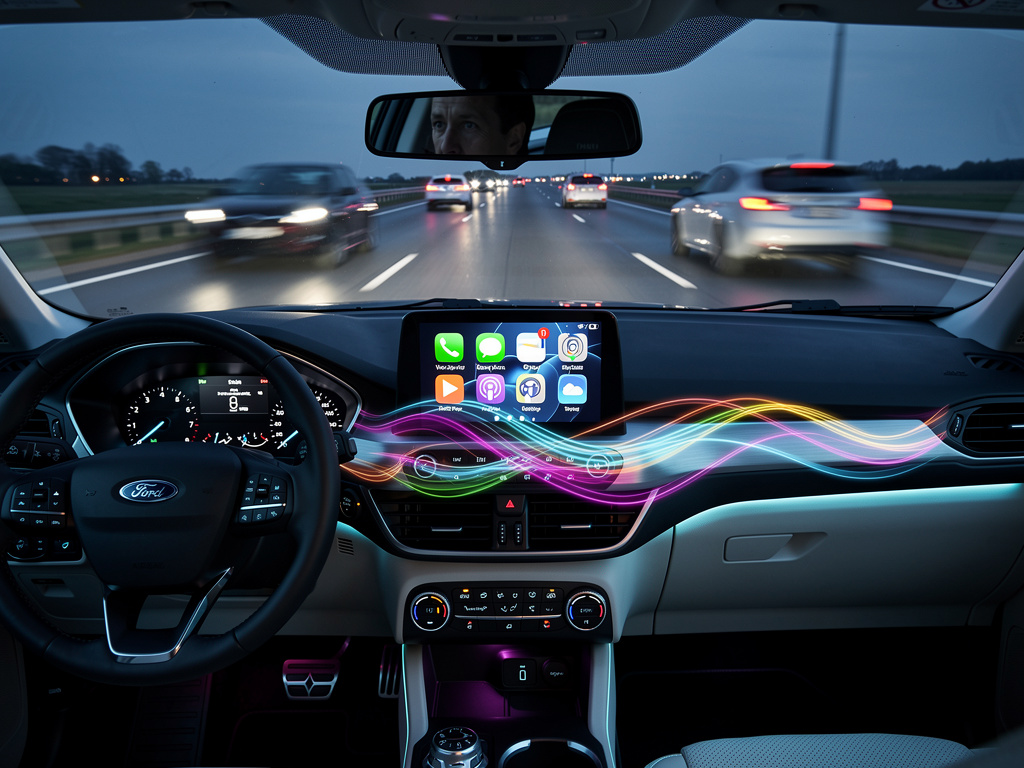
Ford’s Steadfast Alliance with Apple CarPlay in a Fragmenting Auto-Tech World
In the ever-evolving realm of automotive technology, Ford Motor Co. has once again planted its flag firmly in the camp of Apple Inc.’s CarPlay system. At the 2025 Barclays Global Auto and Mobility Tech Conference, Ford’s Chief Financial Officer Sherry House made headlines by reaffirming the company’s dedication to integrating CarPlay into its vehicles. This stance comes at a time when other automakers are reevaluating their relationships with third-party infotainment systems, highlighting Ford’s strategic bet on consumer choice and seamless connectivity.
House’s comments were direct and enthusiastic. “We’re passionate about giving drivers the option to use CarPlay alongside other in-car systems,” she stated, emphasizing Ford’s belief in providing flexibility to its customers. This isn’t a new position for Ford; the company has long supported CarPlay, viewing it as a key feature that enhances driver safety and satisfaction by keeping eyes on the road and hands on the wheel. By contrast, rivals like General Motors have begun phasing out CarPlay in favor of proprietary systems, a move that has sparked debate within the industry about control over the in-car experience.
The reaffirmation arrives amid broader industry shifts, including the rollout of Apple’s next-generation CarPlay Ultra. Announced earlier in 2025, CarPlay Ultra promises deeper integration, allowing Apple’s software to control multiple screens and even some vehicle functions. Ford’s commitment suggests it may embrace this advanced version, potentially rolling it out in models like the Explorer and Edge by mid-2025, according to insights from automotive blogs and dealer updates.
Ford’s Historical Ties to Tech Integration
Ford’s journey with CarPlay dates back to 2016, when it first introduced the system in select models as part of its Sync infotainment platform. This integration was seen as a forward-thinking move, aligning with consumer demands for smartphone mirroring in vehicles. Over the years, Ford has expanded CarPlay availability across its lineup, from sedans to trucks, making it a standard feature in many trims. This approach has paid dividends in customer loyalty, with surveys indicating high satisfaction rates among users who appreciate the familiarity of Apple’s interface.
However, the path hasn’t been without challenges. Early implementations faced criticism for glitches and limited functionality, but Ford invested heavily in updates to refine the experience. By 2020, the company had synchronized CarPlay with its voice-activated controls, allowing seamless transitions between native apps and Apple’s ecosystem. This evolution underscores Ford’s philosophy: technology should augment, not replace, the driving experience.
Looking ahead, Ford’s CFO highlighted the company’s “technology roadmap” during the conference, hinting at continued innovation without abandoning proven partnerships. Sources close to the matter, including reports from 9to5Mac, note that Ford views CarPlay as a complementary tool rather than a competitor to its own systems. This balanced strategy could position Ford advantageously as consumers increasingly prioritize connectivity in their vehicle purchases.
Industry analysts point out that Ford’s stance contrasts sharply with GM’s decision to eliminate CarPlay from its electric vehicles starting in 2024. GM cited the need for a more integrated, subscription-based model, but critics argue this could alienate iPhone users, who make up a significant portion of the market. Ford, by maintaining support, avoids such risks and appeals to a broader demographic.
Recent posts on X (formerly Twitter) reflect mixed sentiments, with some users praising Ford’s customer-centric approach. For instance, automotive enthusiasts have shared enthusiasm for the potential of CarPlay Ultra in Ford models, speculating on enhanced features like adaptive climate controls and instrument cluster integration. These discussions underscore the buzz around Apple’s advancements, even as they remain inconclusive without official confirmations.
Meanwhile, Ford’s competitors are navigating similar waters. Tesla, long resistant to third-party integrations, has shown signs of warming to CarPlay, with rumors of a holiday update enabling support. This shift, if true, could pressure other holdouts to follow suit, creating a more unified front for Apple in the automotive space.
Implications for Apple’s CarPlay Ultra Rollout
Apple’s CarPlay Ultra, which began rolling out in May 2025 with partners like Aston Martin, represents a significant leap forward. The system extends beyond the central infotainment screen to encompass the entire dashboard, offering customizable interfaces and deeper vehicle data access. For Ford, adopting this could mean reimagining cabin designs to accommodate multi-screen setups, a move that aligns with its commitment as stated by House.
According to Apple’s own announcements on their newsroom, the rollout is phased, starting in North America and expanding globally. Ford’s plans, as detailed in specialized automotive sites like Carluex, indicate a mid-2025 integration for SUVs, ensuring a polished experience tailored to each model. This cautious approach helps mitigate potential issues, such as compatibility with existing hardware.
The economic incentives are clear. By supporting CarPlay, Ford taps into Apple’s vast ecosystem, potentially boosting sales among tech-savvy buyers. Market data suggests that vehicles with robust smartphone integration see higher resale values and faster turnover rates, a factor not lost on Ford’s executives.
Yet, not all views are rosy. Ford CEO Jim Farley has previously expressed caution about ceding too much control to Apple. In a November 2025 interview with Fortune, Farley questioned whether consumers want the “Apple brand” dominating their driving experience. He revealed discussions with Apple CEO Tim Cook, indicating ongoing negotiations to balance integration with brand autonomy.
This tension highlights a broader debate: how much influence should tech giants wield in automobiles? Ford’s reaffirmation suggests a pragmatic middle ground, allowing CarPlay while developing parallel in-house tech. Industry insiders speculate this could lead to hybrid systems where users toggle between interfaces, enhancing personalization.
On X, posts from tech influencers echo these concerns, with some warning of privacy risks from deeper Apple integration. Others celebrate the convenience, sharing anecdotes of improved navigation and media streaming. While these opinions vary, they illustrate the public’s divided yet engaged response to such developments.
Competitive Pressures and Market Dynamics
Ford’s commitment also reflects competitive pressures in the electric vehicle segment, where infotainment is a key differentiator. With rivals like Polestar expressing openness to full-screen CarPlay takeovers, Ford must innovate to stay relevant. House’s conference remarks emphasized passion for options, positioning Ford as a flexible player in a market where rigidity could prove costly.
Financially, this strategy makes sense. Ford’s stock has hovered around $13 amid recalls and battery news, as reported in outlets like TechStock², but positive tech announcements could bolster investor confidence. Analysts from Barclays, the conference host, project growth in connected vehicle services, an area where CarPlay integration could drive revenue through partnerships.
Globally, Ford aims to expand CarPlay Ultra availability, starting in key markets like Europe and Asia. This mirrors Apple’s strategy, ensuring broad accessibility while navigating regional regulations. For consumers in these areas, the promise of advanced features like real-time traffic updates and voice commands could redefine daily commutes.
Critics, however, argue that over-reliance on third-party tech stifles innovation. GM’s White Automotive, in a blog post on GM Authority, explained discontinuing CarPlay upgrades due to OTA update conflicts, highlighting potential pitfalls. Ford must address such issues to maintain reliability.
Beyond infotainment, Ford’s tech ambitions extend to partnerships like its F1 engine collaboration with Red Bull, as covered in RacingNews365. This diversification shows Ford isn’t putting all eggs in one basket, using CarPlay as part of a broader innovation portfolio.
Social media sentiment on X leans positive toward Ford’s stance, with users contrasting it favorably against GM’s phase-out. Posts from figures like Ford’s own executives reinforce this narrative, building brand affinity.
Future Horizons for Ford and Apple
As 2025 draws to a close, Ford’s reaffirmation serves as a beacon for consumer choice in automotive tech. By committing to CarPlay, the company not only caters to current demands but also positions itself for future evolutions, such as augmented reality integrations rumored for upcoming Apple updates.
Challenges remain, including ensuring cybersecurity in deeply integrated systems. Ford’s ongoing dialogues with Apple, as Farley mentioned, aim to safeguard data privacy while enhancing functionality. This collaborative spirit could set precedents for other automakers.
Ultimately, Ford’s strategy underscores a belief in coexistence: proprietary tech alongside giants like Apple. As the industry watches, this approach may influence how vehicles evolve, blending tradition with cutting-edge connectivity for the modern driver.
In reflecting on these developments, it’s clear Ford is navigating a complex web of partnerships and innovations. With CarPlay as a cornerstone, the company eyes a future where technology empowers rather than dictates the driving experience, potentially reshaping market dynamics for years to come.


 WebProNews is an iEntry Publication