
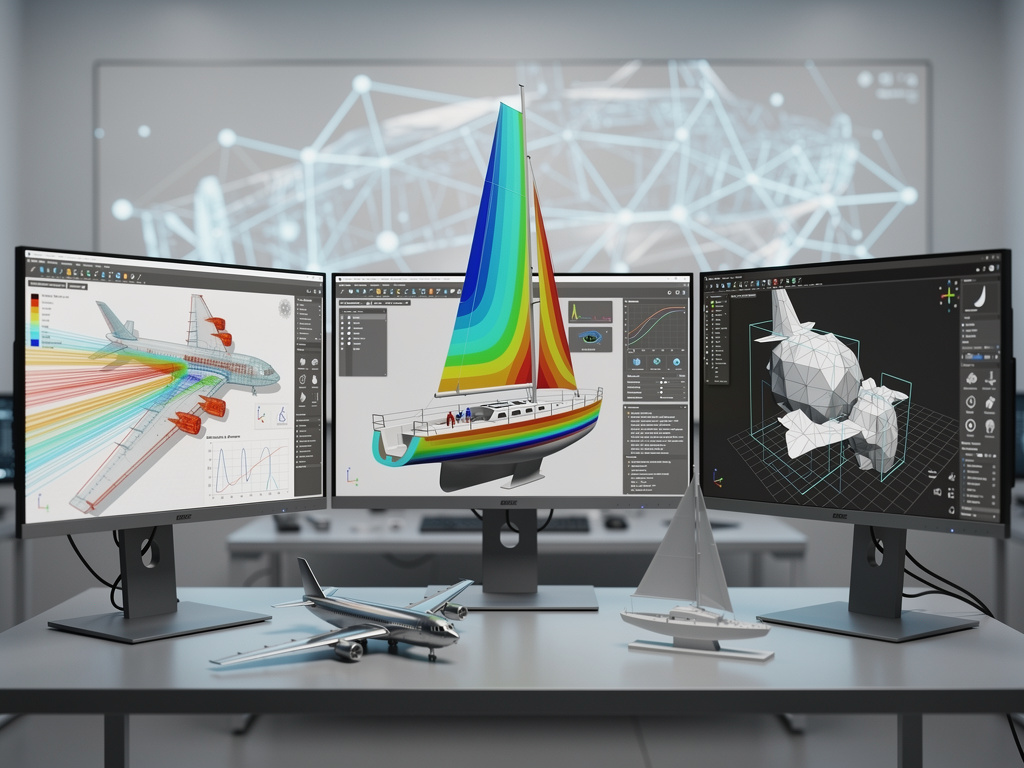
Flow5, the aerodynamic simulation software that has evolved from the open-source roots of xflr5, represents a significant leap in computational fluid dynamics for aviation and marine design enthusiasts. Originally developed as a merger of xflr5’s plane analysis capabilities and sail7’s boat modeling features, Flow5 has been steadily refined since its inception. The latest updates, as detailed in the official release notes, introduce enhancements that cater to both hobbyists and professional engineers, emphasizing accuracy in viscous drag calculations and improved compatibility with modern frameworks.
One of the standout additions in recent versions is the option to calculate viscous drag on the fly during 3D analyses using XFoil integration. This feature, which becomes active in open-source builds, allows users to interpolate 2D viscous data seamlessly into 3D inviscid solutions, addressing long-standing limitations in legacy tools. According to the documentation on flow5.tech, this update fixes several bugs in the export and import processes for sails in XML formats, particularly for spline-type models, ensuring smoother workflows for sailboat designers.
Moreover, the software has resolved issues with inverted beta angles in the sail module—a glitch introduced in version 7.24 while correcting signs in plane analyses. Scripted VLM (Vortex Lattice Method) analyses now correctly exclude fuselage panels when not intended, and new options allow exporting meshes to STL files for both planes and boats. These changes underscore Flow5’s commitment to precision, especially as the project transitions to open-source status, making it accessible to a broader community of developers and researchers.
Evolution Toward Open-Source Accessibility
The shift to open-source, announced recently, marks a pivotal moment for Flow5. As reported in a discussion on SourceForge, the software’s creator highlighted this as a way to foster community-driven development while maintaining affordability. Previously available on a subscription basis during its beta phase, Flow5’s full open-source release on GitHub enables users to contribute directly, potentially accelerating innovations in areas like 3D Galerkin formulations for more accurate plane and boat simulations.
Compatibility updates are equally noteworthy. The code has been revamped for Qt6, though binaries continue to use Qt5 libraries to ensure broad platform support. This dual approach minimizes disruptions for users on older systems while paving the way for future enhancements. A new documentation page on viscous loops and 2D data interpolation further aids users in understanding how Flow5 outperforms predecessors like xflr5 in real-world scenarios, such as benchmarking airplane performance against wind tunnel tests.
Posts on X from aviation enthusiasts, including those shared around early 2026, reflect excitement about this release. Users have noted how Flow5 now evaluates full-vehicle configurations in VLM environments, expanding beyond just wings and tails. This capability, combined with the open-source model, positions Flow5 as a go-to tool for homebuilt aircraft designers, as discussed in forums like Homebuilt Aircraft & Kit Plane Forum.
Key Bug Fixes and Format Changes
Diving deeper into the release notes, version 7.24 introduced modifications to the .fl5 project file format, rendering newly saved files incompatible with older versions. This change, while potentially inconvenient for legacy users, ensures better data integrity and supports advanced features like scripted analyses. The notes emphasize that this update is crucial for maintaining stability as Flow5 integrates more complex simulations.
In the realm of user interface improvements, Flow5 builds on xflr5’s foundation by offering a more intuitive 3D visualization and analysis suite. For instance, the viscous loop mechanism derives solutions that satisfy both 2D viscous properties and 3D inviscid flows, using xflr5 as an external backend for data generation. Benchmarks cited in the official site show strong correlations with empirical data, particularly for airplanes, though sailboat predictions remain most reliable in upwind conditions.
The open-source announcement has sparked discussions on platforms like GitHub, where the repository at techwinder/flow5 invites contributions. Early adopters report that these updates reduce computational errors in fuselage-inclusive models, a common pain point in earlier iterations. This collaborative model could lead to rapid iterations, with updates released based on bug urgency and feature requests, as outlined on the project’s updates page.
Innovations in Marine and Aviation Modeling
Flow5’s marine capabilities, inherited from sail7, have seen targeted refinements. The fixed beta angle issues in sail modules now allow for more accurate performance predictions in varying wind conditions. Users scripting boat analyses can export detailed meshes, facilitating integration with 3D printing or CAD software for prototyping. These features are particularly valuable for competitive sailing teams seeking an edge without exorbitant costs.
On the aviation side, the software’s plane analysis tools incorporate advanced viscous drag calculations, enhancing predictions for lift, drag, and stability. The release notes highlight how these improvements stem from user feedback during the beta phase, which began around 2019 as an evolution of xflr5. A video series referenced on the SourceForge thread provides tutorials that demonstrate these capabilities, helping newcomers leverage Flow5 for everything from drone design to full-scale aircraft.
Recent news coverage, such as articles on tech forums, underscores the timing of this open-source pivot. For example, a post on X from HackerNewsTop5 around January 1, 2026, linked to announcements confirming the release, aligning with broader trends in accessible engineering software. This move democratizes high-fidelity simulations, previously gated behind subscriptions, and invites global collaboration.
Community Impact and Future Directions
The community’s response has been overwhelmingly positive, with forums buzzing about Flow5’s potential to disrupt traditional CFD workflows. In a thread on Homebuilt Aircraft & Kit Plane Forum, users praised the ability to analyze non-wing elements in VLM, enabling comprehensive vehicle studies. This is a game-changer for kit plane builders who previously relied on fragmented tools.
Looking ahead, the project’s updates page on flow5.tech suggests that releases will taper as the software matures, focusing on stability over frequency. However, the open-source framework ensures ongoing evolution, with possibilities for community plugins or integrations with emerging tech like AI-assisted design. Posts on X from developers hint at excitement for 2026, with some speculating on expansions into GPU-accelerated computations, though these remain unconfirmed.
Integration with external tools remains a strength. By using XFoil indirectly via xflr5, Flow5 avoids reinventing the wheel while adding value through its unique 3D merging. The release notes warn of potential incompatibilities but provide migration guides, easing the transition for long-time users.
Technical Benchmarks and Real-World Applications
Benchmarks detailed in the software’s documentation reveal impressive accuracy. For airplanes, predictions align closely with wind tunnel results, validating Flow5 for preliminary design phases. Sailboat analyses, while niche, show promise in controlled scenarios, as noted in comparisons with real-life performance data.
Industry insiders might appreciate how these updates address scalability. The Qt6 compatibility prepares Flow5 for modern operating systems, potentially extending its lifespan. GitHub contributions could introduce features like enhanced scripting for automated batch analyses, further streamlining workflows for research institutions.
News from broader tech outlets, while not directly focused on Flow5, contextualizes its release amid a surge in open-source engineering tools. For instance, discussions on platforms like SourceForge emphasize affordability, making advanced simulations viable for students and independents.
Broadening Horizons in Simulation Software
As Flow5 enters its open-source era, its role in education and innovation grows. Universities could incorporate it into curricula for aerospace engineering, leveraging free access to teach viscous flow principles. The software’s user-friendly interface, evolved from xflr5, lowers barriers for non-experts while offering depth for professionals.
Challenges remain, such as ensuring backward compatibility, but the release notes address these proactively. Users are encouraged to update to avoid file format issues, with binaries optimized for maximum compatibility.
Ultimately, Flow5’s latest updates solidify its position as a versatile tool bridging aviation and marine design. With community backing, its trajectory points toward sustained relevance in an era of collaborative tech development.


 WebProNews is an iEntry Publication