
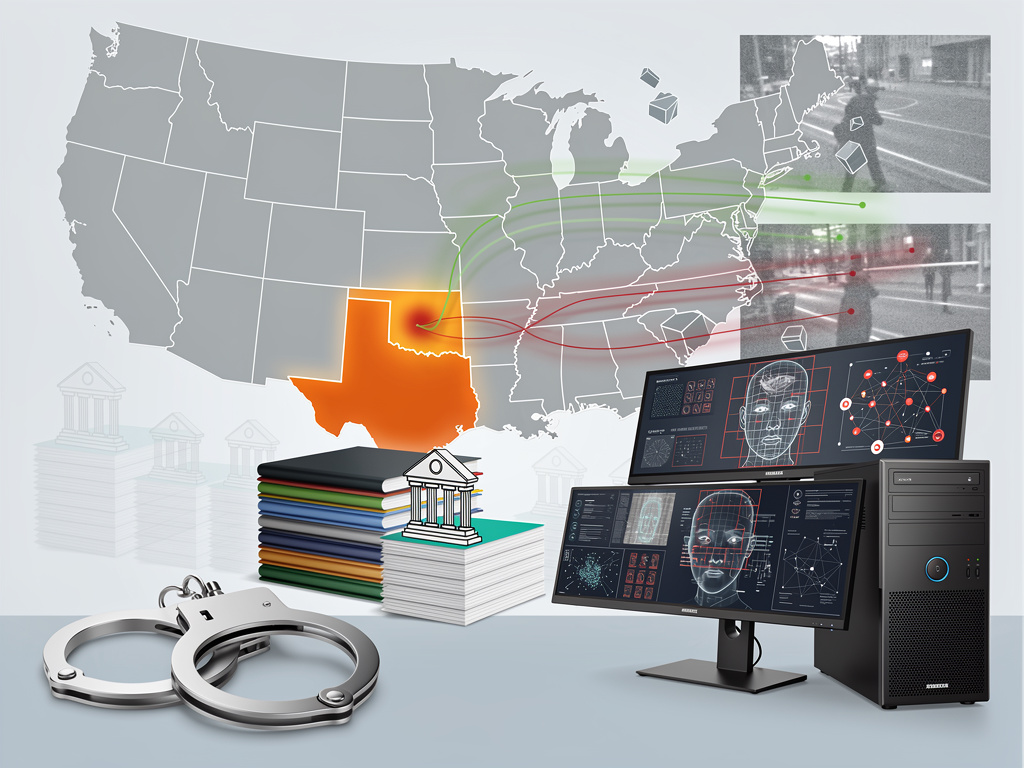
In August 2024 Robert Dillon answered a knock at his Fort Myers door. Officers took him into custody. They said he had tried to lure a child at a McDonald's in Jacksonville Beach. The city sat more than 300 miles away. Dillon had never been there. He had never visited the restaurant. Yet a facial recognition search on blurry surveillance footage had flagged him. Police called it a 93 percent match.
The arrest upended his life. Dillon spent a night in jail. He fell behind on rent. His family watched officers lead him away. Months later the case collapsed. Evidence showed he could not have been at the scene. License plate readers placed his vehicles nowhere near Jacksonville. The suspect in the video had a prominent scar and different facial hair. Dillon had neither. Still the system pointed to him. And officers ran with it.
Now Dillon is fighting back. On June 10 2026 the ACLU and ACLU of Florida filed suit in federal court. The ACLU report details the complaint against the Jacksonville Beach Police Department, the Jacksonville Sheriff’s Office and Pinellas County Sheriff Bob Gualtieri. His agency runs the Faces system. It leases the tool to other departments. The suit accuses officers of using an unreliable match as the foundation for probable cause. They allegedly ignored clear exculpatory evidence.
"This case is about what happens when police let an error-prone artificial intelligence system stand in for an investigation," the complaint states. Dillon's lawyers from the firm Hoguet Newman Regal & Kenney argue the episode fits a larger pattern. One that has ruined lives across the country.
Facial recognition tools have spread through American police departments. They promise speed. They deliver matches in seconds from massive databases. But the technology carries well-documented weaknesses. It performs worse on women. It struggles with people of color. Poor image quality from surveillance cameras compounds the errors. And too many agencies treat a hit as confirmation rather than a lead that demands verification.
The Gizmodo investigation laid out the damage in Florida. It described how the technology led to false arrests. It left innocent people with criminal records. It shattered trust in the justice system. Those stories were not anomalies. They were warnings. Gizmodo highlighted cases where matches sent officers down the wrong path. Alibis were dismissed. Investigations narrowed too soon.
Robert Williams became the first widely known victim. In 2020 Detroit police arrested him at his home. They used facial recognition to tie him to a watch theft. He wasn't there. The system had erred. Williams spent 18 hours in jail. His young daughters saw the police take him. The case drew national attention. It forced Detroit to confront its practices. Yet similar mistakes kept happening.
In 2022 Randal Quran Reid found himself in custody. Georgia officers acted on a Louisiana warrant. Facial recognition had matched him to a shoplifting suspect. He spent days locked up before release. Porcha Woodruff's turn came in 2023. Detroit police arrested the pregnant woman. They said she stole watches. The match was wrong. She became the first woman publicly identified in such a case.
The list has grown. The ACLU now counts more than a dozen documented wrongful arrests tied to facial recognition since 2019. Some victims spent weeks or months behind bars. One woman stayed in jail for six months. Another lost her job. A father from North Carolina spent nearly three months detained after Jacksonville officers relied on a misidentification in a car theft case.
Beau Burgess joined the roster in August 2025. Orlando police arrested him. The facial recognition hit came from the same Jacksonville system now under fire. His case drew fresh coverage from local outlets. It showed the problem had not gone away. It had spread.
Recent reporting adds urgency. A Guardian article published two days ago examined Dillon's suit. It noted how police obtained a warrant despite distance, lack of connection and physical mismatches. The Ars Technica report from this week zeroed in on the 93 percent score. Officers treated it as strong enough. They overlooked the scar. They overlooked the facial hair. They overlooked the alibi data.
So what explains the persistence? Part of the answer lies in policy gaps. No comprehensive federal rules govern police use of these tools. Some states have passed limits. Michigan reached a landmark settlement with the ACLU after Williams' case. It created strict safeguards. Indiana adopted a version in 2025. Yet many departments still operate without binding standards. They use the technology as an investigative shortcut.
Experts who study the systems warn of overconfidence. The algorithms produce a similarity score. That number can look authoritative. A 93 percent match sounds convincing. But the underlying image may be low resolution. The lighting may be bad. The angle may distort features. Demographic biases embedded in training data make errors more likely for certain groups. And police sometimes skip the human review steps that vendors themselves recommend.
The Washington Post examined this dynamic in early 2025. Its analysis found at least eight Americans wrongfully arrested after investigators grew confident in unproven technology. They sometimes skipped traditional steps. They leaned on the match alone. The interactive report cataloged departments from Florida to Maryland that had embraced the tools without sufficient guardrails.
Florida stands out. Multiple agencies there rely on the Faces platform run by Pinellas County. The system draws from a broad database. It serves as a regional hub. That reach multiplies the risk. One flawed search can ripple across jurisdictions. One erroneous warrant can upend a life far from the crime scene.
Dillon's lawyers make this point explicit. They argue that treating a facial recognition hit as probable cause violates constitutional protections. The Fourth Amendment demands more. It requires facts that would lead a reasonable officer to believe a crime occurred and the suspect committed it. A contested algorithm output does not meet that bar when contradicted by concrete evidence.
The suit seeks damages. It also aims to set precedent. If successful it could force agencies to document their review processes. It could require them to disclose when they rely on these matches. It could push judges to scrutinize such warrants more closely.
But legal action addresses only part of the problem. Police culture must change too. Officers need training that emphasizes the technology's limitations. They must treat every match as a starting point. Not the end of inquiry. They must pursue corroboration. They must document why they discounted conflicting facts.
Vendors bear responsibility as well. Companies that sell these systems often highlight accuracy rates measured under ideal conditions. Real-world deployment differs. Blurry video from public cameras rarely matches the test sets. Agencies need clear guidance on acceptable confidence thresholds. They need rules against using the tools on low-quality images.
Advocates point to Detroit's post-settlement policy as a model. It bans use of facial recognition as the sole basis for arrest. It requires independent verification. It mandates transparency with suspects about the technology's role. Other cities could adopt similar rules. State legislatures could codify them.
The alternative looks clear. More Robert Dillons. More nights in jail for innocent people. More families watching police take a parent away based on software that got it wrong. The technology will not disappear. Its power is too tempting. But its use must come with accountability. Otherwise the cost falls on the wrong people.
Dillon's case offers a fresh chance to draw that line. The facts seem straightforward. He was 300 miles away. Physical descriptions did not match. Digital records confirmed his location. Yet the system said otherwise. And that was enough. Until it wasn't.
His lawsuit may not stop every future error. But it forces a conversation that has been delayed too long. Police cannot outsource judgment to an algorithm. Especially one that has already failed so many times. The record of false arrests in Florida and beyond shows the price of that mistake. It is measured in lost freedom. Damaged reputations. Eroded public confidence.
And the cases keep coming. Just this week reports surfaced of yet another Jacksonville misidentification. The pattern holds. The technology improves slowly. Police practices change even more slowly. Dillon wants to change that. His suit represents one man's effort to make the system confront its flaws. Before the next innocent person hears that knock at the door.


 WebProNews is an iEntry Publication