
Florida’s Electrifying Expressway: Revolutionizing Roads with Wireless Power
In the heart of Central Florida, a groundbreaking infrastructure project is set to transform how electric vehicles (EVs) interact with the roadways. State Road 516, a new expressway linking key areas around Lake and Orange counties, isn’t just another highway—it’s poised to become one of the first in the U.S. to wirelessly charge EVs as they cruise at highway speeds. This initiative, backed by over $500 million in funding, represents a bold step toward alleviating range anxiety, a persistent barrier to widespread EV adoption. Drawing from recent advancements in inductive charging technology, the project could signal a shift in how transportation networks support sustainable mobility.
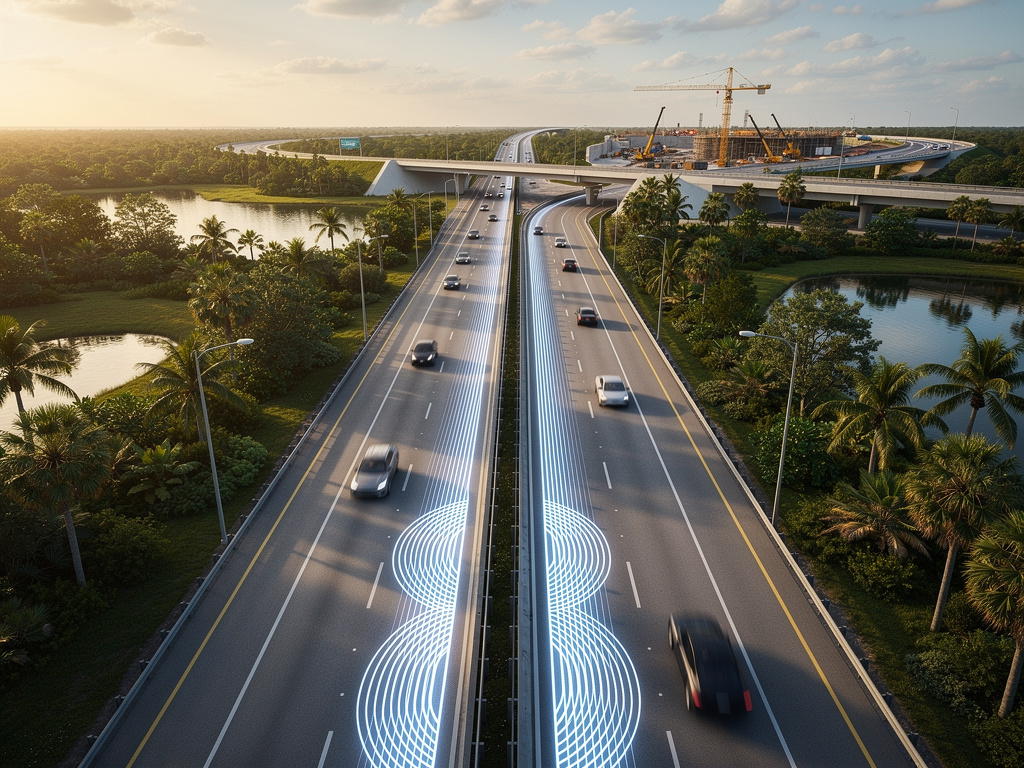
The concept hinges on embedding copper coils beneath the pavement, which generate a magnetic field to transfer power to compatible vehicles equipped with receiver pads. According to details from Digital Trends, the pilot section spans about 0.75 miles and is designed to deliver up to 200 kilowatts of power, potentially adding meaningful range during brief passes over the charged lanes. This isn’t entirely new—similar tests have occurred in places like Detroit and Indiana—but Florida’s effort scales it up for a multi-lane expressway expected to handle significant traffic volumes by its completion in 2029.
Florida’s Department of Transportation (FDOT) is partnering with Norwegian firm ENRX, a leader in dynamic wireless power transfer, to integrate this technology. The expressway, also known as the Lake/Orange Connector, will stretch approximately 5 miles and include features like solar-powered lighting and wildlife crossings, but the electrified road pilot is the star attraction. As reported in recent web updates, construction is slated to begin in 2026, following Indiana’s successful demonstration of charging a heavy-duty truck at speed earlier this month.
The Technological Backbone Powering Dynamic Charging
At its core, the system relies on inductive charging, where alternating current in the road’s coils creates an electromagnetic field that induces current in the vehicle’s receiver. This allows for seamless power transfer without physical connections, eliminating the need for stops at traditional charging stations. Industry insiders note that while the technology promises efficiency, it requires vehicles to be specially equipped—a limitation that means only a select few models, like certain commercial trucks or prototypes from manufacturers such as Porsche, can initially benefit.
Posts on X highlight public excitement mixed with skepticism, with users pointing out that consumer EVs like those from Tesla or Ford currently lack the necessary hardware for this setup. One prominent post from a tech influencer emphasized the project’s focus on commercial applications, suggesting it could first revolutionize fleet operations for logistics companies before trickling down to everyday drivers. This aligns with broader trends in EV infrastructure, where pilot programs test scalability.
Moreover, the project’s environmental angle is compelling. By enabling on-the-go charging, it could reduce the overall demand for large battery packs, lowering vehicle weights and manufacturing costs. Sources indicate that at 60 mph, a vehicle might gain about 2.5 miles of range per pass over the 0.75-mile section, a modest but promising start. Expanding this could create “electric corridors” across states, fundamentally altering long-distance travel.
The initiative draws inspiration from global precedents. In Sweden and Germany, similar electrified roads have been trialed for trucks, proving the concept’s viability for heavy loads. Florida’s version adapts this for a mixed-use highway, incorporating lessons from Purdue University’s recent U.S. test, where a segment wirelessly charged a truck at highway speeds, as detailed in university news releases. This cross-pollination of ideas underscores the collaborative nature of advancing EV tech.
Regulatory Shifts and State Control Over EV Infrastructure
Florida’s push comes amid evolving state laws that centralize control over EV charging. Senate Bill 1084, effective from July 2024, grants the state exclusive authority over charging stations, sidelining local governments. This move, covered in legal blogs like Don’t Get Hit Twice, aims to streamline development but has sparked debates about uniformity versus local needs.
For industry players, this regulatory framework provides certainty, encouraging investments like the State Road 516 project. The expressway’s design also includes sustainable elements, such as solar panels powering toll systems and multi-use trails, positioning it as a model for green infrastructure. Recent news from PCMag confirms the 2026 groundbreaking, building on Indiana’s momentum.
Critics, however, question the cost-effectiveness. With a price tag exceeding $540 million, as noted in automotive outlets, the project must demonstrate tangible returns, such as reduced emissions and enhanced economic activity in the region. Proponents argue that as EV penetration grows—Florida already boasts thousands of public chargers—these innovations will pay dividends by boosting tourism and commerce along major routes.
X discussions reveal a divide: some users hail it as a “leap into the future,” echoing sentiments from The Cool Down, while others decry it as impractical for the average driver. This sentiment reflects broader challenges in EV adoption, where infrastructure must evolve alongside vehicle capabilities.
Economic Implications for Florida’s Transportation Sector
Economically, the project could catalyze growth in Central Florida, connecting burgeoning communities and alleviating congestion on existing roads like Interstate 4. The expressway’s toll-based funding model, combined with federal incentives from the Infrastructure Investment and Jobs Act, makes it financially viable. Industry analysts predict it will create jobs in construction, tech integration, and maintenance, with ENRX’s involvement bringing international expertise.
Comparisons to other U.S. efforts are inevitable. Detroit’s quarter-mile wireless road, installed in 2023, focused on urban settings, while Indiana’s test targeted heavy-duty vehicles. Florida’s scale—aiming for highway-speed charging on a longer stretch—positions it as a leader, potentially influencing national standards. As per Autoblog, only specially equipped vehicles will benefit initially, but retrofitting options could emerge.
The project’s timeline, with completion by 2029, allows for iterative improvements. Engineers plan to monitor energy efficiency, safety, and electromagnetic interference, ensuring compliance with federal regulations. This data-driven approach could inform expansions, perhaps along Florida’s extensive interstate system, which already features over 1,000 miles of EV-friendly corridors as promoted by state officials years ago.
Public reception, gauged from social media, shows optimism tempered by realism. Posts on X from EV enthusiasts calculate potential range boosts, while skeptics highlight the chicken-and-egg problem: without widespread vehicle compatibility, the infrastructure might underperform. Yet, as more automakers explore inductive tech—Porsche’s optional system being a prime example—the ecosystem could mature rapidly.
Challenges and Future Prospects in Wireless EV Integration
Challenges abound, from high installation costs to ensuring grid capacity for powering the coils. Florida’s sunny climate aids with solar integration, but scaling to full highways would require massive energy inputs. Experts warn that without subsidies or breakthroughs in efficiency, widespread adoption might lag.
On the innovation front, the project aligns with global efforts to decarbonize transport. By 2030, EVs are projected to comprise a significant market share, and dynamic charging could extend ranges indefinitely on equipped routes. Time Out describes it as a multi-year endeavor that could recharge drivers en route, reducing stops and emissions.
For insiders, the real value lies in data collection. Metrics on power transfer rates, vehicle speeds, and durability will guide refinements. Partnerships with universities and firms like Purdue could accelerate this, fostering a hub for EV research in the Southeast.
Looking ahead, Florida’s expressway might inspire similar projects nationwide, creating a network of charged highways. As X users speculate, this could make road trips seamless for EV owners, diminishing reliance on static chargers. With construction imminent, the state is betting big on a powered future.
Broader Impacts on Sustainability and Urban Planning
Sustainability benefits extend beyond EVs. The road’s wildlife protections and trails promote biodiversity and recreation, integrating transport with environmental stewardship. This holistic design could set precedents for future developments, balancing progress with preservation.
In terms of urban planning, State Road 516 addresses growth in Orlando’s suburbs, where population booms demand efficient connectivity. By incorporating tech-forward elements, it anticipates a shift toward smart cities, where infrastructure adapts to emerging needs.
Industry watchers see this as a testbed for autonomous vehicles, which could leverage constant power for extended operations. As automakers invest in compatible tech, the gap between pilot and mainstream could narrow swiftly.
The project’s narrative, amplified by media like Supercar Blondie, captivates with its futuristic appeal. Yet, success hinges on overcoming hurdles like standardization—ensuring various EV brands can tap into the system without proprietary barriers.
Voices from the Field and Stakeholder Perspectives
Stakeholders, including FDOT officials, emphasize the pilot’s role in proving concepts before broader rollout. “This is a leap into the future,” one source noted, reflecting enthusiasm shared in environmental publications.
Automotive executives view it as an opportunity to innovate, potentially integrating receivers into new models. Fleet operators, facing pressure to go green, stand to gain most initially, with reduced downtime for charging.
Community input has shaped features like the multi-use trail, ensuring the project serves diverse users. As NBC 6 South Florida reports, solar elements enhance self-sufficiency, minimizing operational costs.
Ultimately, Florida’s electrified highway embodies ambition in sustainable transport. By blending cutting-edge tech with practical infrastructure, it paves the way for a charged, efficient tomorrow, where driving and recharging become one. As the project unfolds, it will likely influence policies and investments far beyond the Sunshine State, marking a pivotal moment in the evolution of mobility.


 WebProNews is an iEntry Publication