
The Upstart’s Gambit: A Tiny Carmaker’s Bold Bid to Upend Tesla’s Electric Empire
In the fiercely competitive arena of electric vehicles, where giants like Tesla dominate with vast resources and brand loyalty, a small player is making waves by targeting niche innovations and agile strategies. This underdog story centers on Fisker Inc., a boutique automaker that’s positioning itself as a direct challenger to Elon Musk’s behemoth. Founded by renowned designer Henrik Fisker, the company has pivoted from past bankruptcies to launch vehicles like the Ocean SUV, aiming to carve out a space in the premium EV segment. Recent developments highlight how Fisker is leveraging unique design, sustainability focus, and partnerships to challenge Tesla’s market stronghold, even as broader industry pressures mount.
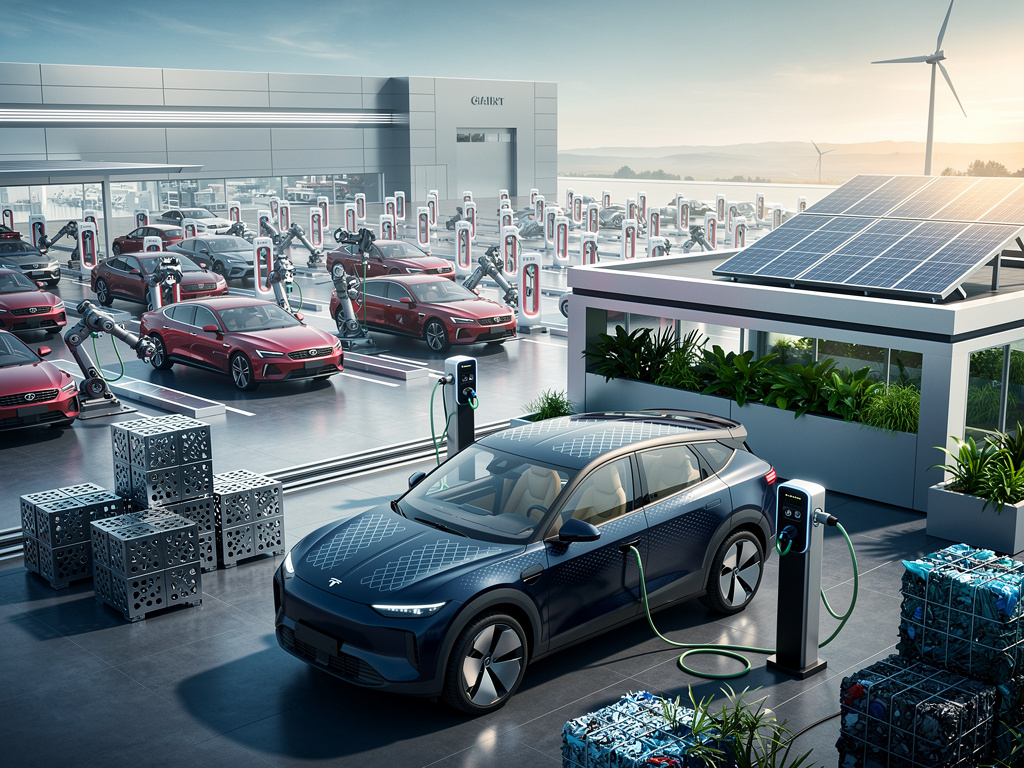
Fisker’s approach contrasts sharply with Tesla’s mass-market scale. While Tesla floods the roads with Models 3 and Y, Fisker emphasizes bespoke features like solar roofs for auxiliary charging and recycled materials, appealing to eco-conscious luxury buyers. This strategy echoes earlier attempts by startups to differentiate through innovation rather than volume. However, Fisker faces steep hurdles, including production delays and financial strains, reminiscent of its 2013 bankruptcy. Yet, optimism persists, fueled by deals like a potential alliance with Nissan for manufacturing support, as reported in various industry analyses.
The broader context reveals a shifting dynamic in the EV sector, where smaller firms are increasingly bold in their confrontations with established leaders. Fisker’s latest moves, such as software updates enhancing vehicle range and user interfaces, directly compete with Tesla’s over-the-air upgrades. Industry observers note that while Tesla boasts a vast Supercharger network, Fisker is betting on interoperability with existing charging infrastructures to lower barriers for adoption. This tactic could resonate in markets where Tesla’s ecosystem feels exclusionary.
Fisker’s Resilience Amid Market Turbulence
Drawing from recent news, Fisker’s challenge to Tesla isn’t just rhetorical; it’s backed by tangible progress. For instance, a MSN opinion piece delves into how this small carmaker is innovating in battery efficiency and vehicle aesthetics to lure away Tesla’s customer base, emphasizing sleek designs that prioritize driver experience over sheer performance metrics. This perspective underscores Fisker’s focus on emotional appeal, a factor often overlooked in Tesla’s data-driven narrative.
Complementing this, updates from social media platforms like X highlight public sentiment. Posts from users and analysts discuss how upstarts like Fisker are gaining traction by addressing gaps in Tesla’s lineup, such as more affordable luxury options or vehicles tailored for urban environments. One thread points to Fisker’s Ocean model as a potential “Model Y killer” due to its competitive pricing under $40,000 after incentives, sparking debates on whether such challengers can sustain momentum against Tesla’s production might.
Moreover, web searches reveal ongoing industry buzz. A Business Insider report notes Tesla’s expansion in robotaxi fleets, but this indirectly benefits smaller players like Fisker, who can position themselves as more approachable alternatives without the baggage of Tesla’s autonomous driving controversies. Fisker’s strategy involves partnering with tech firms for advanced driver-assistance systems, avoiding the full self-driving hype that has plagued Tesla with regulatory scrutiny.
Navigating Regulatory and Economic Headwinds
The path for Fisker and similar small carmakers is fraught with regulatory challenges that Tesla has navigated more adeptly due to its size. Recent rulings, such as a judge’s decision on Tesla’s marketing practices for Autopilot, as detailed in a TechCrunch article, highlight vulnerabilities that upstarts like Fisker can exploit by promoting transparent safety features. Fisker has avoided bold claims about autonomy, instead focusing on proven technologies like adaptive cruise control, which builds consumer trust.
Economic factors add another layer. With U.S. EV sales projected to dip for the first time since 2019, according to an InsideEVs analysis, smaller firms must be nimble. Fisker has responded by slashing prices and offering lease deals, directly undercutting Tesla’s entry-level models. This pricing war is echoed in X posts where users compare Fisker’s value proposition to Tesla’s, often praising the former for better interior quality despite lower range figures.
Internationally, the competition intensifies. In China, where Tesla faces stiff rivalry from local giants like BYD, Fisker is exploring export strategies. A South China Morning Post overview of Tesla’s global standing notes how subsidies and trade policies favor domestic players, creating openings for agile foreigners like Fisker to partner locally. Fisker’s talks with Magna for European production could position it as a bridge between American innovation and global markets.
Innovation as the Key Differentiator
At the heart of Fisker’s challenge is a commitment to innovation that diverges from Tesla’s playbook. While Tesla invests heavily in gigafactories and battery tech, Fisker outsources manufacturing to cut costs, allowing focus on design and software. This model draws parallels to past disruptors, but with a modern twist: integrating AI for personalized driving experiences without overpromising on full autonomy.
Industry insiders point to Fisker’s upcoming Pear model, a compact urban EV, as a direct shot at Tesla’s Model 2 aspirations. X discussions buzz with speculation that if Fisker delivers on its promised sub-$30,000 price point, it could capture budget-conscious buyers disillusioned with Tesla’s delays. A WIRED feature on Elon Musk’s tumultuous year indirectly bolsters this, noting how distractions like political involvement have slowed Tesla’s product pipeline, giving room for focused challengers.
Furthermore, sustainability is a battleground. Fisker’s use of ocean-recycled plastics and vegan interiors appeals to a demographic Tesla has courted but not fully dominated. Recent web updates, including a TradeAlgo report on Tesla’s stock surge despite challenges, suggest investor enthusiasm for EVs remains high, potentially funding Fisker’s growth through capital raises.
Strategic Alliances and Future Prospects
Partnerships are crucial for small carmakers like Fisker to scale against Tesla. The rumored Nissan collaboration could provide assembly lines and distribution networks, mirroring how startups have historically allied with legacy automakers. This move is particularly timely amid Tesla’s labor disputes, as covered in a BBC article on Swedish strikes affecting Tesla’s operations, which indirectly highlight the advantages of Fisker’s leaner, non-unionized model.
On X, automotive enthusiasts debate these alliances, with some viewing them as essential for survival in a market where Tesla’s vertical integration sets a high bar. Posts often reference smaller Chinese EV makers like NIO or Xpeng, who challenge Tesla through rapid iteration and local market dominance, offering lessons for Fisker in agility and customer engagement.
Looking ahead, Fisker’s trajectory depends on execution. With Tesla accelerating robotaxi tests in Austin, per a CNBC update, Fisker must innovate in adjacent areas like vehicle-to-grid technology to stay relevant. Analysts predict that if Fisker secures funding and ramps production, it could capture 5-10% of the premium EV market share within three years, chipping away at Tesla’s dominance.
Overcoming Financial and Operational Hurdles
Financial stability remains a linchpin. Fisker’s recent bankruptcy filing for its Austrian unit underscores the risks, yet it’s reframing this as a restructuring to focus on core U.S. operations. This resilience is praised in industry circles, contrasting with Tesla’s occasional cash flow crunches during expansion phases.
X sentiment reflects cautious optimism, with users sharing stories of Fisker owners who prefer its vehicles for their unique styling over Tesla’s utilitarian designs. A Electrek piece on a Tesla-focused rental fleet’s bankruptcy due to overhyping autonomy serves as a cautionary tale, positioning Fisker’s grounded approach as a strength.
Operationally, Fisker is enhancing supply chains to mitigate chip shortages that have hampered Tesla. By diversifying suppliers, it aims for more reliable deliveries, a point emphasized in recent web analyses of EV production bottlenecks.
The Broader Implications for EV Competition
The rise of challengers like Fisker signals a maturing EV market where diversity fosters innovation. Tesla’s record stock highs, as noted in financial reports, don’t negate the pressure from nimble competitors eroding its market share in segments like luxury crossovers.
In Europe, where Tesla faces subsidy rollbacks, Fisker’s entry could accelerate adoption. X posts from European users highlight preferences for smaller, efficient EVs over Tesla’s larger models, aligning with Fisker’s portfolio.
Ultimately, Fisker’s gambit against Tesla embodies the entrepreneurial spirit driving the EV shift. Success hinges on balancing innovation with scalability, potentially inspiring a wave of boutique carmakers to redefine competition in this electrified era. As the sector evolves, these underdogs may not dethrone the king but could force a more vibrant, consumer-centric market.


 WebProNews is an iEntry Publication