
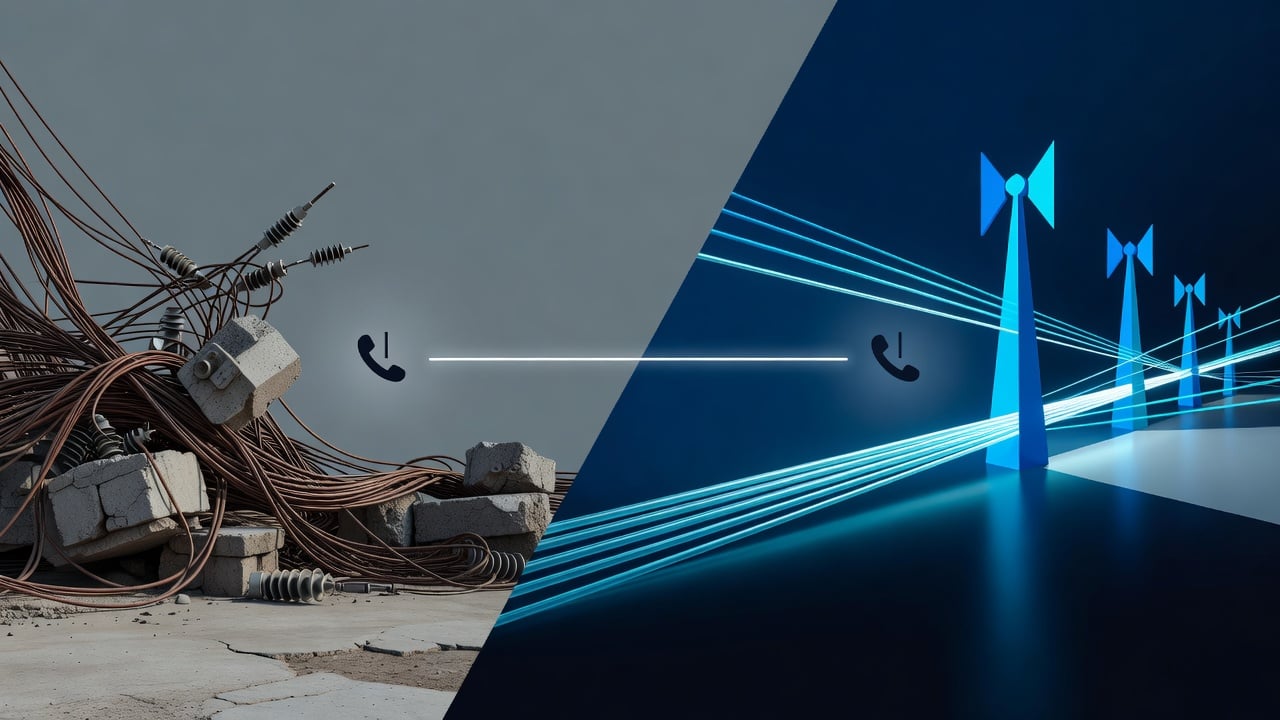
Finland marked the end of an era on June 30. The country switched off its last analogue landline network after nearly 150 years of continuous service. A symbolic final call passed between two executives in Helsinki. It closed a chapter that began in the 1880s when telephone subscriptions first appeared.
The call connected Elisa CEO Topi Manner with Jarkko Saarimaki, head of the Finnish communications agency Traficom. They spoke of old memories. Manner recalled making weekly calls to family in London as a teenager in the 1980s. The conversation ended with a simple Finnish word. “Kuulemiin,” he said. It means “speak later.”
But there would be no later for the analogue system. From July 1, Elisa retired its fixed-line copper network for both private customers and businesses. The operator had already announced the move months earlier. Competitors moved first. Telia discontinued its landline service in 2019. DNA followed at the beginning of 2026. Elisa was the last major player. Euronews reported.
Only a few thousand landline-only plans remained with Elisa at the start of the year. No new ones had been sold for years. The decline proved steady. Mobile phones took over. Young people skipped landlines when they moved out. Older generations eventually followed. The golden age had come in the early 1990s. Finland ranked seventh in Europe for telephone density by the 1960s. Then Nokia led a mobile revolution that changed everything. Yle News detailed.
The technology itself belonged to another time. Analogue landlines sent sound as electrical signals over copper wires. Voice calls traveled as varying currents that mimicked sound waves. It worked. For generations it delivered reliable service. Yet the infrastructure aged. Maintenance costs rose. And fibre optic cables offered a clear alternative.
Fibre carries data as pulses of light. It handles voice and high-speed internet on the same lines. Reliability improves. Capacity explodes. Countries across Europe saw the advantages. Estonia, the Netherlands, Norway and Spain switched earlier. They retired their copper networks in favor of digital systems. Finland joined them. The move reflects a broader pattern. Operators worldwide shed legacy systems once customer numbers drop low enough.
Elisa’s decision drew little fanfare outside industry circles. A handful of local operators may still support remaining analogue customers. Most users had already migrated to mobile or voice-over-internet services. The shift brings savings for providers. It frees resources for modern networks. But it also raises questions about those left behind.
Some households relied on landlines for alarms or medical devices. Others simply preferred the familiar ring of a corded phone. In rural areas copper lines once reached where mobile signals struggled. Finland’s vast forests and sparse northern populations made the old network valuable. Now those connections go quiet.
The United Kingdom faces a similar deadline. Its Public Switched Telephone Network must switch to digital voice by January 2027. Regulators paused migrations twice after concerns about vulnerable users. Telecare alarms that depend on analogue lines created complications. Ofcom reports landline customers on the old system fell from 5.2 million in 2024 to 3.2 million in 2025. The process continues despite hiccups. Which? outlined the UK transition.
Germany could follow Finland soon. Recent reports ask whether Europe’s largest economy will be next to pull the plug on analogue lines. Customer bases have shrunk there too. Fiber rollout accelerates across the continent. The economics favor change. Old copper networks require specialized skills and parts that grow scarce.
Analogue systems carried more than conversations. They supported fax machines, modems and early internet. The 1990s BBS era rode those copper wires. Families coordinated around a single home phone. Emergency services built their infrastructure on its reliability. That foundation supported Finland’s rise as a technology leader. Nokia’s success in mobile phones owed something to a nation already comfortable with communication networks.
Yet progress demands trade-offs. Fibre brings lower latency for calls. It supports crystal-clear voice. Bundled internet and phone services simplify billing. Operators reduce power consumption compared with maintaining separate voice networks. For telecom executives the math works. Few thousand customers cannot justify billions in legacy infrastructure.
Saarimaki accepted the final call with grace. As regulator he oversaw the orderly wind-down. No major disruptions reported. Customers received notice. Migration paths appeared straightforward for most. The event passed with quiet acceptance rather than protest. Finland’s pragmatic approach to technology served it well again.
Still the silence carries weight. A technology that shaped daily life for five generations disappears. Grandparents once waited by the phone for news from abroad. Children learned not to tie up the line. Whole industries from switchboard operators to repair crews fade into history. The analogue phone connected Finland to the world before wireless signals filled the air.
Elisa positioned the change as part of natural development toward newer systems. Manner emphasized functionality over nostalgia during the final call. The company focused on mobile and fiber offerings that dominate its business today. Landlines became a footnote in annual reports.
Other nations watch closely. Japan’s copper retirement plans continue. France and Germany weigh timelines. Each weighs reliability against cost, accessibility against innovation. The pattern holds. Once mobile penetration exceeds 90 percent and fiber reaches most homes the old wires lose their purpose.
Local operators in Finland may preserve pockets of analogue service. A few dedicated users could keep lines active for years. But the national network no longer supports them as before. Spare parts grow expensive. Expertise retires with the engineers who maintained the system.
The final call lasted only minutes. Two men exchanged pleasantries across a dying technology. One represented the company ending service. The other represented the agency that approved it. Their words mixed personal history with forward-looking comments on mobile networks. Then the line went dead.
Finland’s landline era ends not with a dramatic failure but with deliberate choice. Customer demand vanished. Technology advanced. Economics dictated the rest. The copper wires remain in the ground for now. Some may get repurposed for data. Most will be abandoned as relics of an earlier age.
Future historians will mark 2026 as the year Finland cut the cord on its 19th-century invention. They may note how quietly the change arrived. No widespread outages. No public outcry. Just a final polite goodbye in Finnish. And the phones fell silent after 150 years of ringing.


 WebProNews is an iEntry Publication