
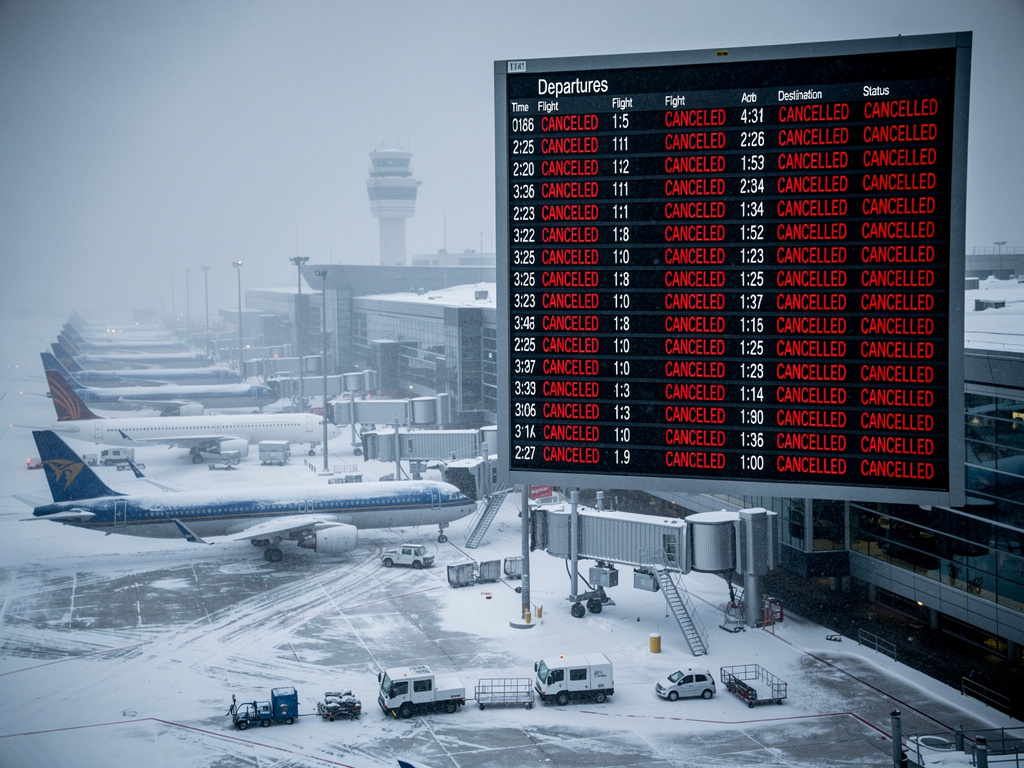
A massive winter storm known as Fern has unleashed chaos across the U.S., canceling over 15,000 flights in a single weekend—the largest tally since the early days of the Covid-19 pandemic—and leaving airlines scrambling to reposition aircraft and crews. Transportation Secretary Sean Duffy, speaking on CNBC’s “Squawk Box,” assured travelers that air travel would return to normal by Wednesday, January 28. “Wednesday is our target date to get back to normal,” Duffy said, noting the Federal Aviation Administration’s focus on salting runways amid staffing challenges from the storm.
Storm’s Vast Reach
Dubbed a “unique” event by Duffy due to its mix of ice, snow, and a lingering cold snap, Winter Storm Fern stretched from Texas to New England, blanketing much of the eastern two-thirds of the country and prompting emergency declarations in 17 states and the District of Columbia. FlightAware data showed more than 4,000 cancellations and nearly 10,000 delays on Monday alone, with major hubs like New York, Boston, and Atlanta seeing operations grind to a halt. DHS Secretary Kristi Noem warned of power outages affecting over 850,000 customers, complicating airport recoveries, as reported by CNBC.
The New York Times detailed how nearly 9,000 departures were axed on Sunday, surpassing pandemic-era records, while USA Today pegged the figure at over 10,900 U.S. flights grounded. Airlines including American, Delta, JetBlue, Southwest, and United preemptively waived change fees across dozens of airports to ease rebooking.
Crippled Hubs and Stranded Travelers
Airports from LaGuardia to Dallas Fort Worth bore the brunt, with de-icing crews working overtime as snow removal machines battled accumulation. Reuters reported warnings covering 118 million people, with energy strains adding to the peril. On X, users shared scenes of flight boards overwhelmed by cancellations, echoing Secretary Duffy’s Fox News appearance where he called Monday the “worst day of flight cancellations since Covid in 2020,” though the DOT command center remained fully operational.
Travelers faced long lines and uncertainty, but federal rules mandated refunds for any canceled flight if passengers opted out, regardless of cause. Most carriers covered meals for controllable delays over three hours and hotels for overnight stranding. The Guardian noted over 1 million power outages and at least seven deaths linked to the storm, underscoring its severity beyond aviation.
Government Mobilization
President Trump posted on Truth Social: “We will continue to monitor, and stay in touch with all States in the path of this storm. Stay Safe, and Stay Warm.” Energy Secretary Chris Wright emphasized power reliability in the PJM region amid extreme cold. Duffy highlighted collaborative efforts: “We’re going to have more capacity as we come back to a full running schedule. So you’ll expect more full planes, more full flights as you fly this week.”
By Tuesday, cancellations dropped sharply to just 48 nationwide per FlightAware, signaling recovery. Airlines routinely cancel ahead of such events to avoid stranding assets, a tactic that prevented worse meltdowns post-storm, according to industry observers cited in multiple reports.
Airline Responses and Passenger Rights
Delta adjusted schedules at Atlanta and East Coast cities, while Southwest faced de-icing hurdles at Nashville. AP News confirmed over 11,400 Sunday cancellations, with ripple effects into Monday’s 3,000-plus axed flights per ABC News. Passengers stranded overnight could claim hotel and transport if airline-controlled, per DOT guidelines detailed by USA Today.
Weather.com live updates reinforced Duffy’s midweek optimism, noting Sunday’s cancellations as the largest since March 2020. X posts from accounts like @GuntherEagleman amplified Duffy’s coordination claims, while @TVNewsNow shared clips of his Fox interview.
Path to Recovery
As crews cleared runways and repositioned planes, experts like former airline executive Bob Mann told The New York Times the storm’s east-west progression amplified challenges. Al Jazeera reported tens of thousands without power in southern states, with utilities racing to restore service. By January 26, signs pointed to normalization, with only isolated disruptions lingering.
The event highlighted aviation’s vulnerability to rare, widespread weather, but proactive waivers and federal oversight mitigated fallout. Duffy’s timeline held firm, offering relief to the hundreds of thousands impacted as skies cleared for business as usual.


 WebProNews is an iEntry Publication