
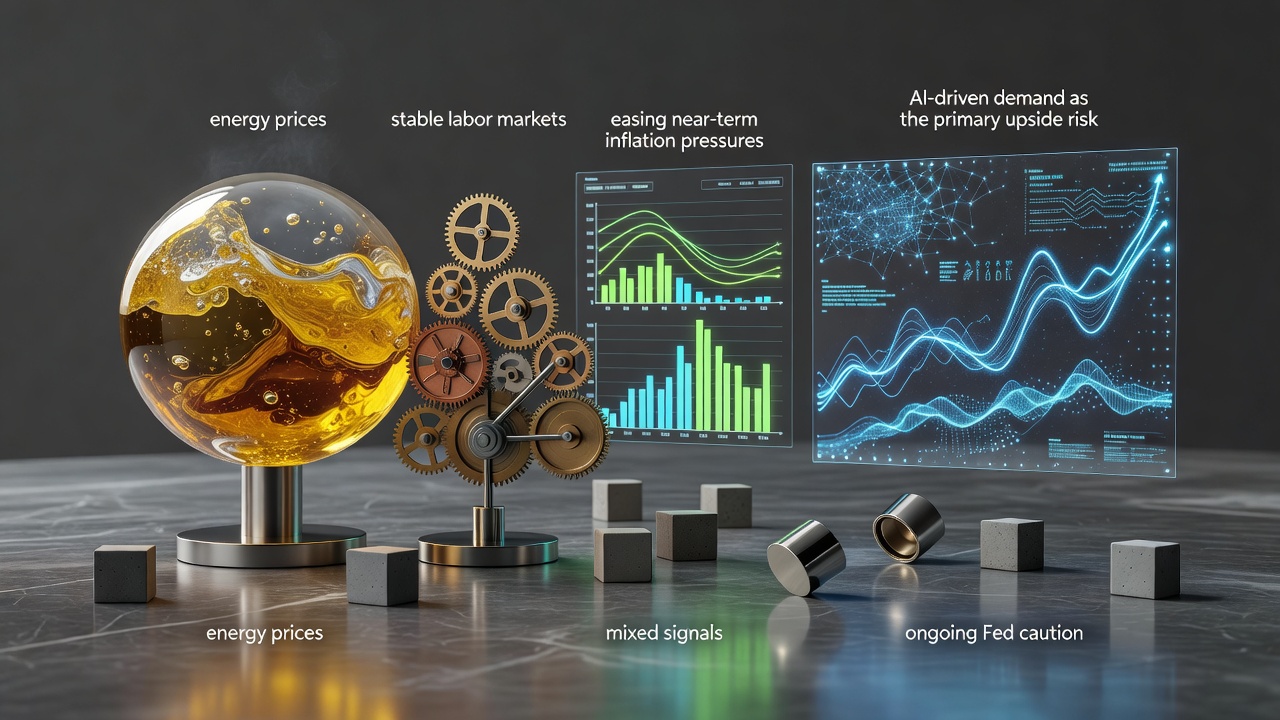
New York Federal Reserve President John Williams delivered a measured take on the economy’s path this week. Inflation remains too high. Yet he sees reasons for cautious optimism on the near term.
Energy prices appear close to a peak. Markets anticipate declines in oil over the next six to 12 months. Williams views that baseline as reasonable. “The markets still expect oil prices to come down over the next six to 12 months. I think that’s a pretty reasonable baseline,” he said at a conference hosted by his bank, according to a Yahoo Finance report. “I still feel kind of the fundamentals are that energy prices are likely to be around their peak and then to come down over time.”
His comments came against a backdrop of renewed tensions in the Middle East. Those flare-ups had briefly raised fears of sustained energy cost increases. But Williams pushed back. He grew more sanguine after observing actual and expected drops in oil futures. “I do feel a little bit more positive about the near-term inflation outlook because of the energy price declines that we’re going to see,” Williams told Fox Business. The Reuters story captured his full assessment.
Energy relief matters. Headline inflation could ease as a result. Still, core pressures linger. Williams stressed that overall price levels sit above the Fed’s 2% target. Getting back there on a sustained basis matters most. “Given the elevated level of inflation, it is imperative that we restore it to our 2% longer-run goal on a sustained basis. The current stance of monetary policy is well positioned to do that,” he stated in prepared remarks covered by The Wall Street Journal.
The policy stance draws attention. The federal funds rate target range holds at 3.5% to 3.75% following the June meeting. Officials penciled in possible hikes this year amid sticky inflation. Yet Williams sees balance. Monetary policy sits in a good place to handle both sides of the dual mandate. Risks to maximum employment have stabilized. Growth continues solidly. “Monetary policy is well positioned…to achieve our maximum employment and price stability goals,” he added in the Fox Business interview.
Data will drive next steps. The Fed meets every six weeks. No rush to judgment. “We haven’t even started the process of doing an analysis,” Williams noted about potential responses to recent events. “We meet every six weeks. This isn’t like we’re making decisions forever.” That pragmatic tone echoes through his recent appearances.
Longer-term forecasts show patience. Earlier projections from Williams anticipated inflation between 2.75% and 3% in 2026 before easing toward 2% in 2027. Progress stalled temporarily due to trade policies and other factors. A New York Fed summary of his November 2025 speech highlighted the temporary stall but commitment to restoration by 2027.
But a new concern now tops his list. Artificial intelligence investment. Heavy spending on AI creates demand that could outpace supply in the short run. Williams flagged this as his primary inflation worry in remarks delivered July 9. A Bloomberg article detailed the shift. Persistent AI-driven demand relative to supply would not be something the Fed looks through. Policy might need to tighten. “If this creates a sustained impulse to demand relative to supply in inflation, I do think that’s the kind of situation where you don’t look through this,” he warned. Then monetary policy would need to respond.
The nuance matters. AI could boost productivity over time. That supply-side gain might offset pressures eventually. Williams embraces the baseline scenario of broader adoption leading to those gains. Yet he watches underlying dynamics closely. Not just headline or core readings. Technical adjustments to align PCE and CPI measures could help interpretation too.
Inflation expectations stay well anchored for now. The labor market holds stable. No wage-price spiral in sight. Williams reiterated that in multiple venues. Still, upside risks to prices persist. Downside risks to employment receive equal weight. Balancing them defines the current stance.
Recent FOMC minutes reinforce caution. Released this week, they show no rate cut expected before early 2027 for some participants. Renewed Iran conflict added to rate-hike odds in markets. A Forbes report captured the division. Williams avoids forward guidance. He communicates views on data, outlook, and policy positioning instead.
His communication style won’t shift under new leadership. Chairman Kevin Warsh’s approach leaves more to market interpretation. Williams plans to continue offering his perspective regularly. “I regularly give my views on the economic data, the outlook, and how I see monetary policy, not so much forward guidance,” he said. “I plan to continue to do that.”
Markets reacted modestly to the comments. Odds of near-term rate changes adjusted slightly. Yet the dominant message is continuity. Policy remains well calibrated. Watch the data. Energy relief offers breathing room. AI demand requires vigilance. The Fed will respond as needed without overreacting to temporary shocks.
Williams’s outlook blends realism with restraint. Inflation hasn’t vanished. It simply shows signs of moderation in key areas. The central bank’s tools stand ready. No urgency to move. Just steady focus on the dual goals. That message resonates with industry observers tracking every nuance from the New York Fed leader, a permanent voter on the rate-setting committee.
And the risks remain two-sided. Too little action on prices could unanchor expectations. Too much could harm hiring. Williams sees the current setting as striking that balance. For now. Future readings will test whether energy declines deliver as hoped and whether AI effects prove transitory or structural. The data, as always, will decide.


 WebProNews is an iEntry Publication