
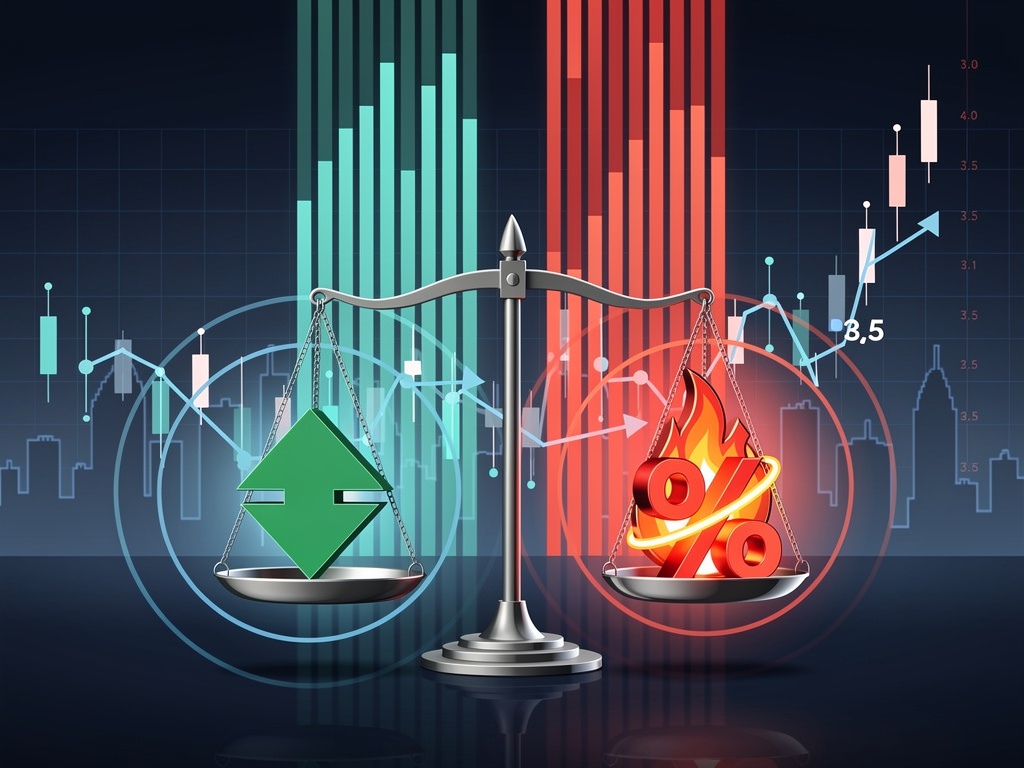
Kansas City Federal Reserve President Jeffrey Schmid delivered a blunt assessment this week. The central bank faces a binary decision on monetary policy. Stay patient with current interest rates. Or move to hikes to address inflation stuck well above target for years.
“The big question now is do we stay patient?” Schmid said Thursday at an economic forum in Oklahoma. “Our inflation numbers have probably crept up into the three and a half percent range, which nobody likes. Is it temporary…or do we act? Do we say, okay, now it’s time to raise rates a quarter or two and see if we can’t tamp this thing down.”
His remarks capture a shift in tone among several Fed officials. Inflation refuses to fade. The economy shows resilience. And the usual path toward rate cuts has grown uncertain. Schmid’s comments come as recent FOMC minutes reveal a majority of participants open to policy firming if price pressures persist.
Months earlier Schmid struck a similar chord. In Reykjavík he warned against lowering guards. “With inflation running above the Fed’s 2% definition of price stability for over five years, now is not the time to let down our guard,” he said. “We must continue to signal our commitment to price stability and our willingness to take the actions necessary to achieve our mandate.” That Bloomberg report from late May underscored his focus. Five years. The number hangs over every discussion.
Back in February Schmid pushed back on rate-cut talk. He told an audience in Albuquerque that the economy entered 2026 on strong footing. Persistent inflation signaled demand outpacing supply. Artificial intelligence offered hope for growth without added price pressure. Yet he cautioned it remained too early to relax the anti-inflation stance. Further easing risked letting prices stay elevated. The Wall Street Journal detailed his resistance.
Such views no longer sit on the fringe. Dallas Fed President Lorie Logan warned just yesterday that current rates no longer constrain rising prices. Broad indicators point to heated inflation. Hikes might become necessary before the end of 2026. Her speech in El Paso marked one of the most direct signals yet from a policymaker. Markets took notice. The latest WSJ coverage highlighted the warning’s clarity.
Boston Fed President Susan Collins voiced parallel concerns in May. She could envision policy tightening if inflation failed to abate. More than five years of above-target readings had reduced her patience for looking through supply shocks. The Reuters account of her Boston Economic Club speech captured the frustration building inside the committee.
FOMC minutes from the April meeting reinforced the pattern. A majority highlighted that some policy firming would likely become appropriate if inflation continued to run persistently above 2 percent. Participants saw greater risk that prices would take longer to return to target than previously thought. War developments in the Middle East added layers of uncertainty. Oil prices rose. Supply chains faced fresh threats. The minutes painted a committee more attuned to upside inflation risks than many traders had priced in.
Current federal funds rate sits in the 3.5 percent to 3.75 percent range. Many officials once viewed it as modestly restrictive. Data now suggest otherwise. Consumer prices show stickiness in services. Shelter costs ease slowly. Goods prices reflect tariff effects in certain categories. Core measures hover near 3.5 percent on some readings. Nobody likes it. Schmid said so plainly.
Yet the labor market offers counterbalance. Job growth slowed but remains solid. Unemployment stays low by historical standards. Businesses report optimism in some regions. Demand holds. Supply constraints linger in pockets. This balance complicates the decision. Cut too soon and inflation reaccelerates. Hold too long and growth could falter. Raise rates and risk overtightening.
Schmid frames the dilemma without hedging. Patience means holding where policy stands. Action means deliberate hikes. A quarter point or two. Test the waters. See whether prices respond. His language avoids drama. It focuses on evidence. Is the recent creep temporary? Or does it reflect underlying momentum that restrictive policy must counter more forcefully?
Longer-term inflation expectations remain anchored near 2 percent. Market-based measures and surveys support that view. Still, near-term expectations ticked higher in recent Desk surveys. Officials watch those readings closely. Unanchoring would change everything. So far they hold. But the test continues.
AI enters the conversation as potential relief. Schmid expressed optimism that the technology could lift productivity and growth without feeding price increases. The effect remains unproven at scale. Early signs appear promising in select sectors. Yet policymakers hesitate to bet policy on it. Too early, he said in February. The same caution appears in other speeches.
Traders adjusted expectations after recent comments. Probability of a rate hike by early 2027 rose in options markets. Median forecasts from the FOMC still point to gradual easing later this year or next. But the dots moved. Some participants pulled forward possible tightening. The gap between market pricing and official views narrowed.
Financial conditions reflect the tension. Longer-term yields edged higher on hawkish signals. Mortgage rates followed. Corporate borrowing costs increased modestly. Equity markets showed volatility but no panic. Credit spreads stayed contained. The transmission from policy talk to real economy proceeds gradually. Schmid and his colleagues know this.
Contacts in his district tell a story of solid growth and stubborn prices. Business leaders express concern over input costs. Households feel the cumulative effect of years of elevated inflation. Real wages improved in spots but confidence data fluctuates. The anecdotal evidence aligns with the statistics Schmid cites.
Other officials echo pieces of his message. Logan in Texas. Collins in Boston. The April minutes suggest the sentiment spreads across regional banks and the Board. Chair Powell faces a narrower path. His public comments stress data dependence. He avoids committing to any direction. Yet the internal discussion tilts toward vigilance.
History offers lessons. The Fed allowed inflation to run too hot in the 1970s. It paid for that with painful recessions and Volcker-style tightening. Recent decades brought the opposite problem. Rates near zero. Inflation undershooting. Now the pendulum swings back. Five years above target changes the calculus. Patience carries different meaning today.
Schmid’s Oklahoma forum appearance crystallized the moment. No grand theory. Just a practical question. Stay patient or act? Markets want clarity. Businesses need to plan capital spending and hiring. Households face mortgage renewals and credit card balances. The Fed’s answer will ripple outward.
Further data will decide. Next PCE readings. Employment reports. Tariff pass-through effects. Geopolitical developments. Each release narrows the range of plausible outcomes. Schmid signals readiness for either path. His record shows consistent focus on the inflation side of the mandate when tensions arise.
The choice he describes leaves little room for complacency. Inflation at 3.5 percent isn’t victory. It’s a problem that demands resolution. Whether through time or through policy adjustment. Officials must signal commitment. They must remain willing to act. Words Schmid repeated in Iceland now find fresh context in Oklahoma.
And the debate continues. Inside meeting rooms. On public stages. Across trading floors. One thing seems clear. The era of assuming cuts will come soon has ended. The question of patience versus hikes now sits at center stage.


 WebProNews is an iEntry Publication