
Fedora’s Pivot to Plasma: Revolutionizing KDE Logins in the Next Linux Frontier
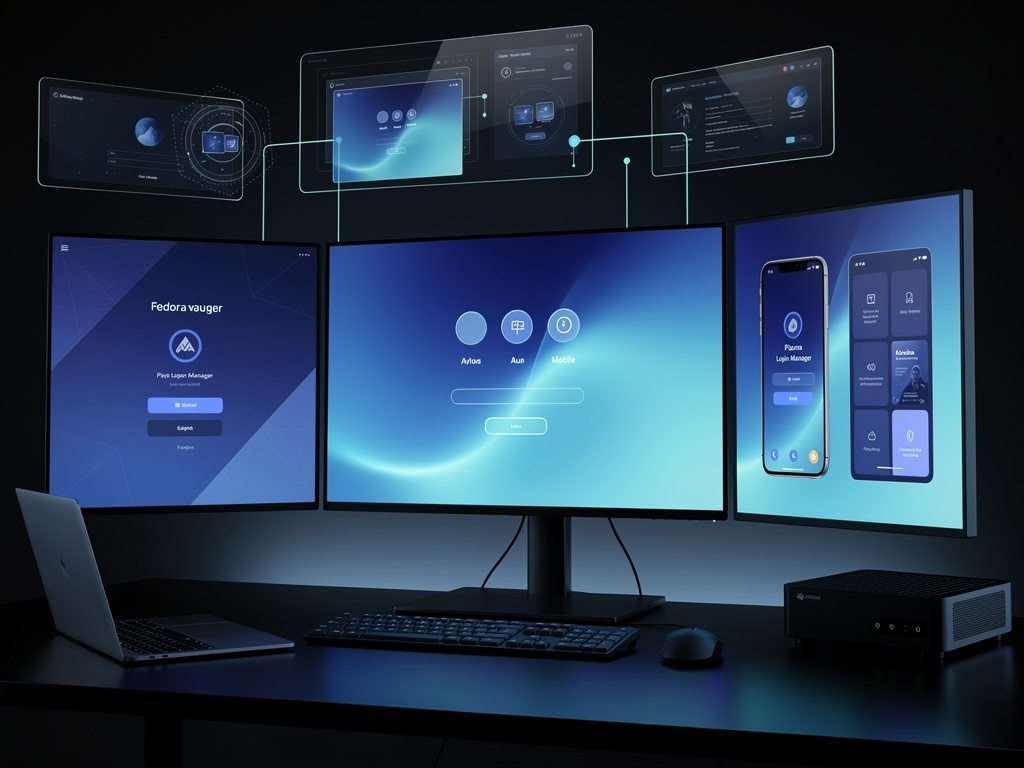
In the ever-evolving world of open-source operating systems, Fedora has long positioned itself as a vanguard of innovation, consistently pushing boundaries with each release. The latest development, set for Fedora 44, marks a significant shift in its KDE Plasma variants: a wholesale transition from the established SDDM display manager to the emerging Plasma Login Manager (PLM). This move, approved by the Fedora Engineering and Steering Committee (FESCo), underscores a commitment to integrating cutting-edge KDE technologies, promising users a more cohesive and modern desktop experience. As detailed in a recent report from Phoronix, this change affects all KDE spins, including the flagship Plasma Desktop Edition, Plasma Mobile Spin, and the immutable Kinoite variant.
The decision stems from KDE’s ongoing efforts to refine its ecosystem. Plasma Login Manager, slated for release alongside KDE Plasma 6.6, represents a new integrated approach to handling user logins, aiming to eliminate friction points that have plagued SDDM in certain scenarios. For industry insiders, this isn’t just a cosmetic upgrade; it’s a strategic alignment with KDE’s vision of a seamless stack from boot to shutdown. Fedora’s choice reflects its role as a testing ground for upstream innovations, often adopting features that later influence broader Linux distributions.
Community feedback has been instrumental in this evolution. Discussions on platforms like Fedora’s forums highlight a growing consensus that SDDM, while reliable, has limitations in areas such as Wayland integration and customization depth. By switching to PLM, Fedora aims to leverage KDE’s recommended tools, potentially reducing bugs and enhancing performance in multi-monitor setups and mobile environments.
The Historical Context of Fedora’s KDE Integration
Fedora’s relationship with KDE dates back to its early days, evolving from a GNOME-centric focus to embracing multiple desktop environments. In recent years, proposals like the one for Fedora 42 to default to KDE over GNOME—though not ultimately adopted—signaled rising enthusiasm for Plasma’s capabilities. Now, with Fedora 44 on the horizon, this PLM adoption builds on that momentum, as outlined in the Fedora Discussion forum.
Technically, the switch involves updating presets and package compositions. According to the Fedora Project Wiki, this includes adding plasmalogin.service to the system display manager preset and replacing SDDM entries in KDE groups with PLM equivalents. Such changes ensure a smooth migration, minimizing disruptions for users upgrading from previous versions.
For developers and system administrators, this means reevaluating workflows. PLM’s integration promises better handling of themes, accessibility features, and session management, areas where SDDM occasionally fell short. Recent web searches reveal sentiments on platforms like X, where users express excitement about PLM’s potential to address longstanding issues, such as inconsistent login screen customizations.
One key advantage of PLM is its native alignment with Plasma’s design philosophy. Unlike SDDM, which originated as a Qt-based manager independent of KDE, PLM is developed in tandem with Plasma updates, ensuring feature parity. This could lead to faster bug fixes and innovations, such as improved fingerprint authentication or captive portal handling, as seen in recent KDE Plasma releases.
Industry observers note that this move positions Fedora as a leader in KDE adoption. Comparisons with distributions like Kubuntu, which stick to SDDM, highlight Fedora’s willingness to experiment. A recent analysis from ZDNET explores these differences, emphasizing Fedora’s edge in delivering upstream KDE features promptly.
Moreover, PLM’s introduction coincides with broader KDE advancements. Blogs from the KDE community detail enhancements in accessibility, including better Wayland support and gamepad integration, which PLM will complement by providing a unified login interface.
Technical Deep Dive: PLM vs. SDDM
Diving deeper into the mechanics, SDDM has served KDE well since its adoption in Plasma 5, offering a lightweight and themeable login screen. However, challenges arose with evolving standards like Wayland, where session handoffs could be inconsistent. PLM addresses these by embedding directly into the Plasma framework, potentially reducing latency and improving resource management.
From a packaging perspective, the Fedora wiki entry specifies that this is a self-contained change, not requiring widespread alterations to the core system. This modularity appeals to insiders who value maintainability. For instance, in Fedora Kinoite, an immutable variant, PLM’s integration ensures consistency across layered updates, a boon for containerized environments.
User experiences shared on forums and social media underscore practical benefits. Posts on X indicate that early adopters find PLM more responsive in handling custom backgrounds and multi-user scenarios, avoiding pitfalls like inaccessible home directories during login, as noted in troubleshooting guides from sources like Hamy.xyz.
Performance metrics, while preliminary, suggest PLM could offer marginal gains in boot times and energy efficiency, particularly on mobile devices. This aligns with KDE’s push toward Plasma Mobile, where login managers must be nimble. Fedora’s Plasma Mobile Spin stands to gain significantly, potentially attracting more users to Linux-based handhelds.
Critics, however, caution about maturity. Some discussions on Hacker News question whether PLM is production-ready, citing its nascent status. Yet, Fedora’s history of bold changes—such as early Wayland adoption—suggests this risk is calculated, with community testing phases to iron out kinks before the April 2026 release.
In terms of ecosystem impact, this shift could influence other distributions. If successful, it might encourage Ubuntu derivatives or openSUSE to follow suit, fostering a more standardized KDE experience across the board.
Community Reactions and Future Implications
Sentiment on X reflects a mix of optimism and pragmatism. Many users hail the change as a step toward a “pure” KDE setup, with posts praising Fedora’s alignment with upstream developments. This echoes broader enthusiasm for KDE’s 2026 trajectory, as forecasted in articles from How-To Geek, which posits this year as pivotal for Plasma’s dominance in Linux desktops.
For enterprises, the implications are profound. A more integrated login manager could enhance security features, like better encryption handling at boot. Fedora’s focus on leading-edge tech makes it a bellwether for corporate Linux deployments, where stability and innovation must balance.
Looking ahead, PLM’s roadmap includes features like adaptive theming based on system conditions, potentially revolutionizing user interfaces. As detailed in KDE’s official site at kde.org, Plasma’s ethos of “simple by default, powerful when needed” is amplified by such integrations.
Challenges remain, including ensuring backward compatibility for custom SDDM themes. Fedora’s documentation advises users to migrate configurations, but for insiders managing large fleets, this could require scripting and testing.
Broader trends in Linux show a convergence toward unified experiences. With GNOME’s ongoing refinements and KDE’s aggressive updates, Fedora’s PLM adoption exemplifies how distributions adapt to user demands for polish and performance.
Personal anecdotes from developers, shared in blogs like Pointiest Stick, highlight 2025’s KDE milestones, setting the stage for 2026 innovations. This continuity suggests PLM is part of a larger narrative of maturation.
Ecosystem-Wide Ripples and Strategic Positioning
Beyond Fedora, this change could spur contributions back to KDE. By dogfooding PLM in a major distribution, bugs will surface faster, accelerating development. This feedback loop is vital for open-source projects, as evidenced by past Fedora contributions to Wayland and PipeWire.
Comparatively, other distros like Debian, as mentioned in X posts about KDE on Bookworm, often lag in adopting new managers, prioritizing stability. Fedora’s approach contrasts, appealing to enthusiasts and early adopters.
For mobile computing, PLM’s lightweight design could bolster Plasma Mobile’s viability against Android alternatives, potentially expanding Linux’s footprint in handheld devices.
Economically, this enhances Fedora’s appeal to developers, who value bleeding-edge tools. Red Hat’s backing ensures enterprise-grade support, bridging hobbyist and professional use cases.
In terms of accessibility, recent KDE updates, including those in Plasma 6.6, integrate seamlessly with PLM, offering features like improved screen reader support at login.
Ultimately, Fedora 44’s embrace of PLM signals a maturing KDE ecosystem, where integration trumps fragmentation. As users and developers engage with this change, it could redefine expectations for desktop logins in Linux.
Innovations on the Horizon for KDE Users
Anticipating user adoption, Fedora plans extensive testing in rawhide branches. Community involvement, through bug reports and spins, will be crucial.
Integration with emerging tech, like AI-driven customizations, might follow, though speculative. PLM’s foundation supports such extensions.
For global users, localization improvements in PLM could enhance accessibility in non-English environments.
Reflecting on past transitions, like from KDE 4 to 5, this seems less disruptive, thanks to modular design.
Industry insiders should monitor Fedora’s release notes for detailed migration guides.
This pivot not only elevates Fedora’s KDE offerings but also cements its role as an innovator in the open-source arena, promising a brighter, more integrated future for Plasma enthusiasts.


 WebProNews is an iEntry Publication