
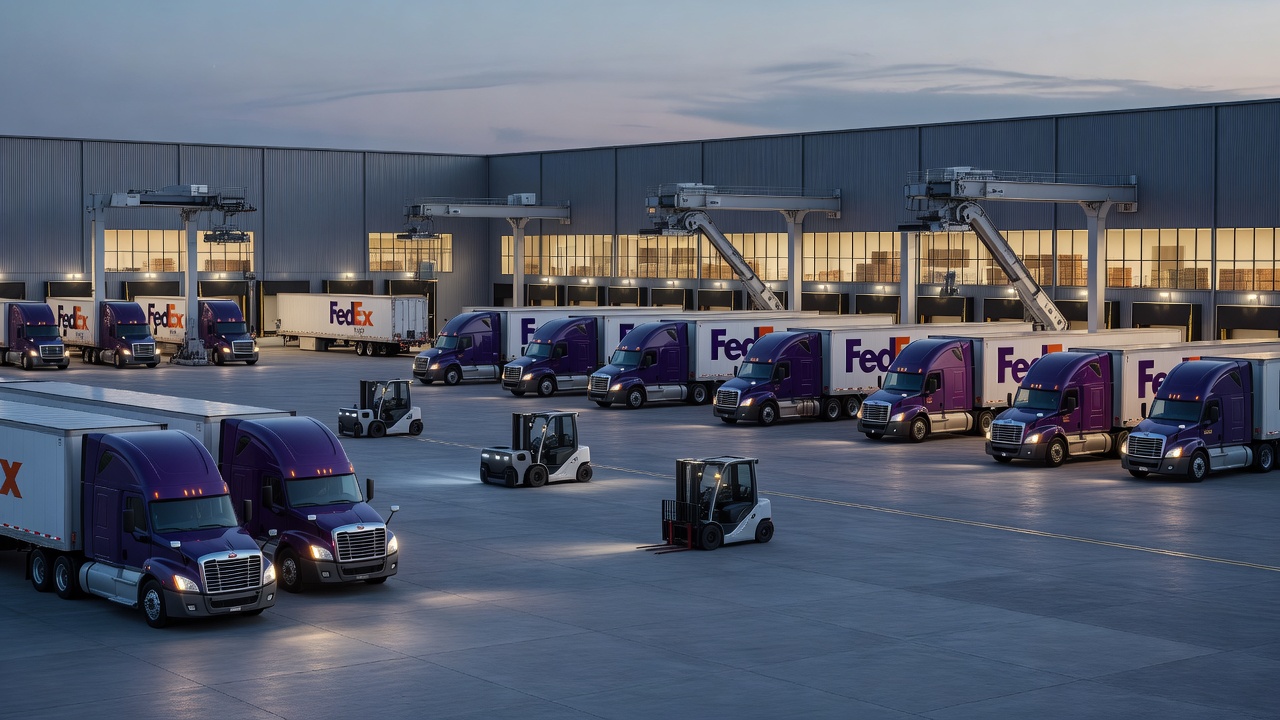
FedEx Freight has officially broken free. After years tucked inside the larger FedEx machine, the less-than-truckload giant began trading under its own ticker on the New York Stock Exchange on June 1, 2026. The spinoff marks a pivotal moment for the carrier. And for its new CEO, John Smith, the timing could hardly feel more fitting.
Smith sees signs the long freight downturn is losing steam. “We are seeing some pretty good encouraging signs that demand conditions are beginning to stabilize and even increase across the industry,” he said in a recent interview covered by Yahoo Finance. Shrinking truckload capacity and stricter enforcement on trucking regulations have started funneling heavier shipments back into LTL networks. That shift matters. It helps explain why revenue per shipment jumped 11.5% even as daily volumes slipped 5.9% to 86,700 in the latest quarter.
The numbers tell a complicated story. FedEx Freight posted $2.4 billion in revenue for the period, up 4.8% from a year earlier. Average shipment weight rose 3%. Revenue per hundredweight climbed 8.2%. Yet operating income fell sharply. Adjusted figures showed pressure from hiring costs and softer overall volumes. These mixed results come after more than three years of what many called the Great Freight Recession. Capacity stayed stubbornly high for longer than expected. Bankruptcies culled some players. But not enough to spark a quick rebound.
Smith doesn’t sugarcoat the path ahead. Recovery won’t arrive in a neat upward slope. “We see green shoots, but with everything going on from a geopolitical perspective, I think there is truly opportunity for the market to turn, [but] we don’t expect the recovery to happen in a straight line,” he told Transport Topics. Interest rates, diesel prices, trade policies. All add friction. Still, he points to the industry’s long-term appeal. LTL fundamentals remain strong. The largest player with the fastest network holds advantages few can match.
FedEx Freight enters its standalone era with ambitious targets. For fiscal 2026 it aims for $8.7 billion in revenue and a 12% operating margin. That margin could dip during the seven-month transition period through the end of calendar 2026. By 2029 the company wants to reach 15%. Medium-term compound annual revenue growth should land between 4% and 6%. These goals assume the market cooperates. Early post-spinoff guidance already reflects caution. In December 2025 FedEx lowered expectations for the unit, forecasting a slight revenue decline for the year instead of the previous low-single-digit gain. FreightWaves reported the revision came after sustained weak LTL trends and higher labor expenses that added a $25 million headwind.
Yet Smith sounds prepared. The carrier can absorb another 10,000 daily shipments without buying new equipment. Drivers and tractors stand ready. That flexibility offers real optionality if demand picks up. And Smith intends to chase growth where margins look most attractive. On the company’s first post-spinoff earnings call, covered by Trucking Dive, he highlighted opportunities in healthcare, grocery, small and medium-sized businesses, and especially technology customers tied to data centers. “Our strategy is centered on sustainable, high-quality growth that strengthens both our top line momentum as well as our long-term profitability,” Smith said.
These segments have historically been underpenetrated. Larger average shipment weights in food and beverage or electrical goods could lift yields further. The dual offering of one-to-three-day priority service and three-to-six-day economy gives shippers flexibility. Customers stay put instead of bouncing between competitors. “When you think about how successful we’ve been being able to keep customers when they want and need that fastest service in the market, but also sometimes needing that cost-effective economy that kept the customers from switching back and forth between competitors,” Smith explained. “It’s not an easy thing to do.”
The broader industry picture has improved since late 2024. FreightWaves founder Craig Fuller declared the recession over in November 2024 after calling its start in 2022. Some analysts saw green shoots in early 2025. Tender rejection rates climbed. Spot rates firmed. Yet 2025 proved disappointing for many. Persistent capacity, weak manufacturing PMI readings, and tariff uncertainty kept pressure on rates and volumes. A March 2025 analysis from Katz, Sapper & Miller warned the worst was not yet behind carriers despite earlier optimism. Into 2026 the narrative has shifted again toward gradual healing.
Recent data supports Smith’s stabilizing view. FedEx Freight’s latest results show revenue per shipment gains even with lower volume. Industry reports from early June 2026 indicate LTL carriers are positioning for selective growth rather than broad recovery. Smith himself sat down with Jim Cramer shortly after the spinoff to discuss the next chapter. He emphasized the ability to grow even in softer economies. Sustainability efforts must pass the same test. At an industry event Smith stressed that “sustainability is only sustainable if it makes business sense. You can only make a difference if you stay in business.” Practicality rules.
Challenges remain. The manufacturing sector spent 35 of the prior 37 months in contraction by late 2025. New orders stayed soft. Higher labor costs continue to bite. The transition to independent operations brings its own expenses. Spin-off costs are excluded from adjusted earnings guidance. For the seven months ending December 31, 2026, the company now projects 4% to 6% revenue growth, operating margins of 9.0% to 9.5%, and adjusted EPS of $2.40 to $2.60 after certain items.
Smith believes the network sets FedEx Freight apart. With 365 locations, 26,000 service center doors, and a fleet of 30,000 vehicles including 17,000 trailers, scale delivers speed and reliability. As a standalone entity the company can tailor sales teams and technology specifically to LTL needs. No more fitting into a parcel-centric parent strategy. That freedom could accelerate market share gains in high-margin verticals.
Wall Street has reacted with caution. Shares fluctuated after the debut. Yet longer-term investors appear to buy the story of disciplined growth and eventual margin expansion. If capacity continues to exit the market through failures or consolidation, and if demand stabilizes as Smith anticipates, pricing power should return. The question is timing. And the slope of that recovery curve.
So far the data mix supports a measured outlook. Volumes remain below peak levels. Yields show promise. Heavier shipments moving from truckload to LTL suggest some rebalancing. Enforcement on hours-of-service and other rules has removed marginal capacity. Those dynamics favor established national players like FedEx Freight over smaller regional operators.
Smith’s message lands clearly. The downcycle has ended. Green shoots exist. But patience is required. The company will operate profitably in soft markets and capitalize when conditions improve. Focus stays on quality growth, customer retention through service options, and selective expansion into attractive segments. No straight lines. Just steady positioning for whatever comes next.
Industry observers will watch the next several quarters closely. If manufacturing activity rebounds and inventory cycles normalize, LTL demand could accelerate. In the meantime FedEx Freight enters its new life with a strong balance sheet, a differentiated network, and a CEO who sees opportunity without illusion. The freight market’s long hangover appears to be lifting. How quickly remains the open question.


 WebProNews is an iEntry Publication