
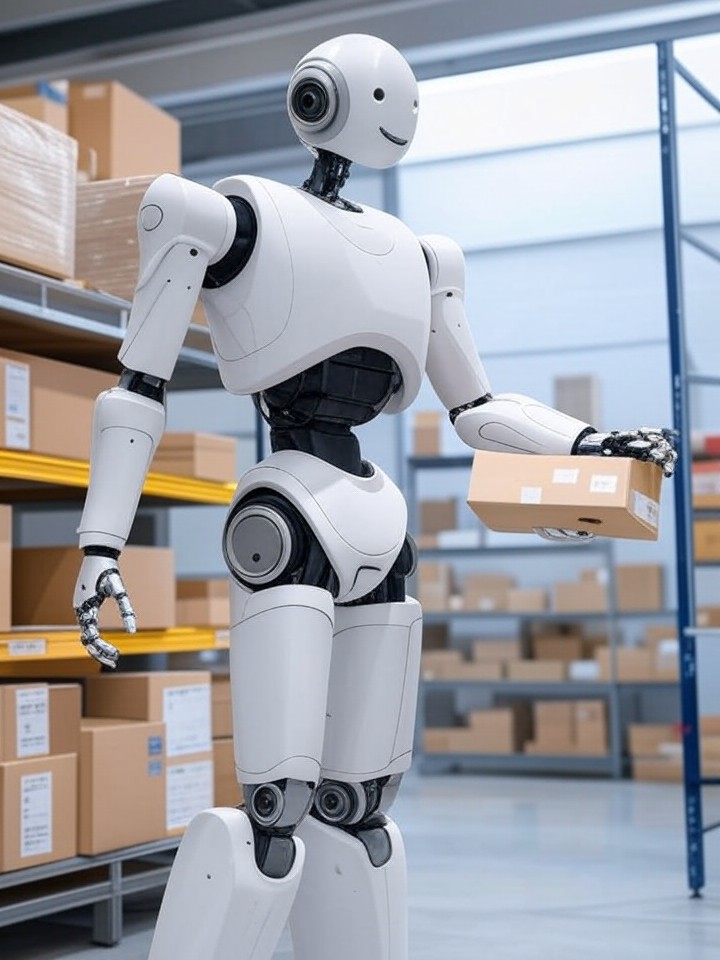
FedEx’s Bold Bet on Super Humanoids: Ushering in a New Era of Logistics Automation
In the fast-paced world of global logistics, where packages of every shape and size zip through vast warehouses at breakneck speeds, FedEx is charting a course toward unprecedented technological integration. At the helm is CEO Raj Subramaniam, who recently shared insights into the company’s ambitious plans for warehouse automation. Drawing from a recent interview, Subramaniam emphasized the limitations of standard humanoid robots and the need for more advanced “super humanoid” versions to tackle the complexities of truck loading and unloading.
Subramaniam’s vision stems from the inherent challenges in FedEx’s operations. Packages arrive in an array of forms—bulky, fragile, heavy, or irregularly shaped—making automation a tricky puzzle. Traditional robots, even those mimicking human form, often fall short due to insufficient flexibility. As Subramaniam noted in an interview with The New York Times, the company is exploring robots with enhanced degrees of freedom, such as extra elbows, to better handle diverse cargo.
This push aligns with broader industry trends, where logistics giants are racing to incorporate artificial intelligence and robotics to boost efficiency. FedEx, handling millions of deliveries daily, sees these technologies as key to maintaining a competitive edge amid shifting trade patterns and economic pressures.
The Evolution of Robotics in Logistics
The journey toward super humanoid robots didn’t emerge overnight. FedEx has been experimenting with automation for years, from early tests of delivery bots to more sophisticated systems. Back in 2019, the company unveiled the SameDay Bot, a wheeled robot capable of climbing stairs and carrying up to 100 pounds, as reported in posts on X (formerly Twitter) from that era. While innovative, such devices were limited to specific tasks and couldn’t address the multifaceted demands of warehouse environments.
Fast-forward to today, and the conversation has shifted to humanoid forms that can navigate human-designed spaces without major overhauls. Competitors like Amazon have deployed over 750,000 robots in their facilities, setting a high bar. Subramaniam acknowledges this, but insists that for FedEx’s needs—particularly in truck loading—standard models aren’t enough. In a discussion highlighted by Business Insider, he described the ideal robot as one with “a couple of elbows” for greater maneuverability.
Beyond hardware, FedEx is leveraging its vast data trove from 17 million daily deliveries to train AI systems. This data-driven approach aims to predict delivery times more accurately and optimize operations, reducing human error and speeding up processes.
Challenges in Automating Complex Tasks
Warehouse automation presents unique hurdles, especially in environments like FedEx’s, where variability is the norm. Truck unloading, for instance, requires robots to adapt to packages of varying weights and dimensions on the fly. Subramaniam pointed out in the New York Times interview that this is “a very difficult problem for robotics to solve,” underscoring why enhanced humanoids are necessary.
Industry observers on X have echoed these sentiments, with posts discussing how companies like Figure and Fourier Robotics are developing multi-robot systems for tasks such as material handling and sorting. One notable example is Helix, a humanoid robot that has mastered handling diverse packages in just months, achieving impressive speeds and accuracy rates.
However, FedEx remains in the pilot stage for these super humanoids. Subramaniam admitted they’re “not ready for prime time yet,” indicating a cautious rollout. This prudence is wise, given the high stakes: any glitch could disrupt global supply chains reliant on timely deliveries.
Broader Technological Integration at FedEx
Subramaniam’s strategy extends beyond robots to encompass drones, AI, and digital twins of the logistics network. As detailed in a 2025 article from PYMNTS.com, FedEx has created virtual replicas of its operations to simulate and refine processes. This holistic approach positions the company to navigate disruptions like tariffs and trade shifts that have reshaped global commerce since Subramaniam took over in 2022.
In a turbulent economic environment, agility is paramount. Subramaniam discussed this in an interview with CNA, highlighting cost-cutting measures and AI investments to stay ahead. For instance, predictive analytics trained on real-time data help forecast demand and allocate resources efficiently.
Moreover, FedEx’s exploration of drones for last-mile delivery complements warehouse automation, creating a seamless ecosystem. Posts on X from industry figures like Brett Adcock showcase humanoid robots performing logistics tasks with neural networks, hinting at the collaborative future Subramaniam envisions.
Competitive Pressures and Industry Comparisons
The race for automation supremacy is fierce. Amazon’s massive robot fleet and GXO Logistics’ trials with Digit humanoids, as mentioned in X posts from Grishin Robotics, illustrate the intensifying competition. FedEx must innovate to keep pace, especially as e-commerce booms and consumer expectations for speed rise.
Subramaniam’s call for super humanoids differentiates FedEx’s approach. While others focus on quantity, FedEx prioritizes quality and adaptability. A post on X from Insider reiterated his comments on needing robots with extra elbows, sparking discussions about the next generation of warehouse tech.
This strategy also ties into broader corporate moves, such as FedEx’s plan to spin off its less-than-truckload division by June 1, as reported by DC Velocity. Streamlining operations could free up resources for tech investments, enhancing overall efficiency.
Human Element and Workforce Implications
Amid these advancements, questions arise about the impact on human workers. Automation could displace jobs, but Subramaniam emphasizes augmentation over replacement. In the Business Insider piece, he frames robots as tools to handle repetitive, physically demanding tasks, allowing humans to focus on higher-value roles.
Industry sentiment on X reflects a mix of excitement and caution. Posts from figures like Steve Nouri highlight how autonomous mobile robots and other tech are transforming warehousing, potentially creating new opportunities in robot maintenance and AI oversight.
FedEx’s training programs and data initiatives suggest a commitment to upskilling employees. By integrating AI to predict delivery times, the company not only improves service but also empowers its workforce with better tools.
Global Trade Dynamics and Future Outlook
Subramaniam’s leadership comes at a pivotal time, with global trade patterns evolving due to geopolitical tensions and economic shifts. He described this as an era of “re-globalization” in the New York Times, where supply chains are diversifying and localizing.
Robotics play a crucial role in this adaptation, enabling resilient operations. For example, super humanoids could mitigate labor shortages in key regions, ensuring consistent performance regardless of external factors.
Looking ahead, FedEx’s pilot programs could scale rapidly. Insights from X posts about Fourier Robotics’ multi-robot collaborations suggest that interconnected systems might soon become standard, further enhancing efficiency.
Immigration, Innovation, and Merit-Based Hiring
Interestingly, Subramaniam, an Indian-origin executive, has weighed in on U.S. immigration policies amid debates over H-1B visas. In a statement covered by The Financial Express, he advocated for legal immigration and merit-based hiring to fuel innovation.
This perspective underscores the human capital needed alongside technological advancements. Attracting global talent could accelerate FedEx’s robotics initiatives, blending diverse expertise with cutting-edge AI.
As the company pushes boundaries, collaborations with robotics firms like those mentioned in X posts—such as Figure deploying thousands of units—could become key partnerships.
Vision for a Tech-Driven Future
Subramaniam’s tenure, succeeding founder Fred Smith after nearly 50 years, marks a generational shift. Profiles like one from Career Ahead Online detail how he’s steering FedEx toward drones, robots, and AI.
Challenges remain, from technical hurdles to regulatory approvals, but the potential rewards are immense. Enhanced automation could slash costs, reduce errors, and speed deliveries, benefiting customers worldwide.
In multilingual discussions, such as a post on X translating Subramaniam’s comments into Chinese via Mashdigi, global interest in FedEx’s approach is evident, signaling widespread implications for the logistics sector.
Sustaining Momentum in Innovation
To maintain momentum, FedEx is investing heavily in R&D. Subramaniam’s interviews reveal a focus on iterative improvements, with pilots informing full-scale deployments.
Comparisons to early innovations, like the 2019 SameDay Bot highlighted in CNN posts on X, show how far the field has come. Today’s super humanoids represent a quantum leap, promising to redefine warehouse dynamics.
Ultimately, FedEx’s pursuit of advanced robotics under Subramaniam’s guidance could set new standards, blending human ingenuity with machine precision for a more efficient future. As the company navigates these developments, the logistics world watches closely, anticipating the ripple effects across industries.


 WebProNews is an iEntry Publication