
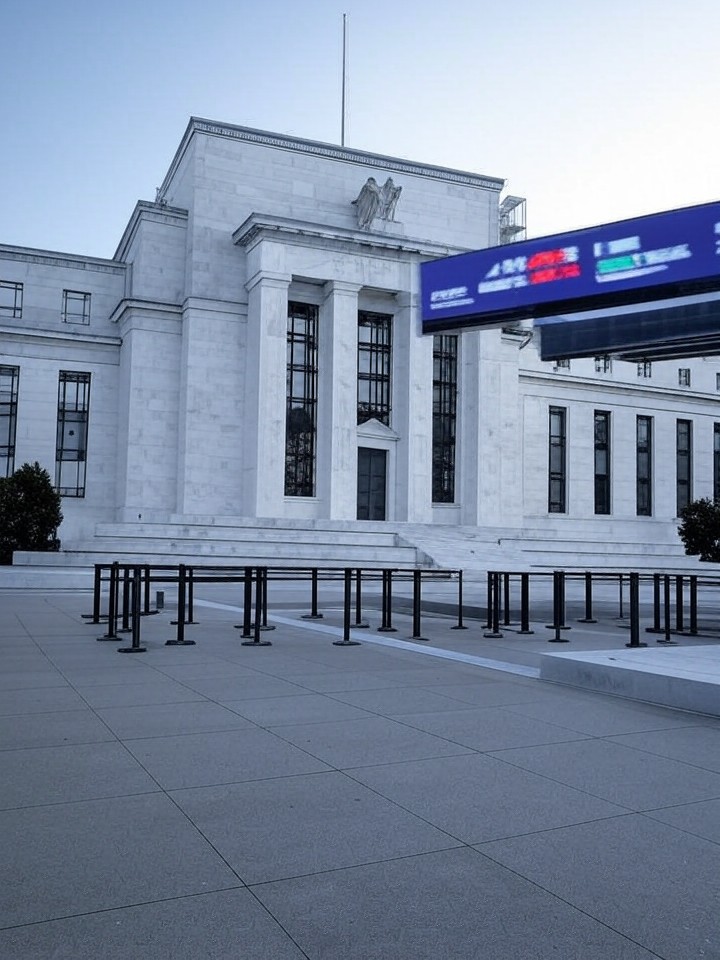
Powell’s Peril: A Fed Chair’s Battle Against Political Crosswinds
The announcement of a criminal investigation into Federal Reserve Chair Jerome Powell by U.S. prosecutors has sent shockwaves through financial markets, raising profound questions about the independence of the central bank. According to reports, the probe centers on the Fed’s $2.5 billion renovation project for its Washington headquarters, with allegations tied to Powell’s congressional testimony last June. Powell himself has publicly stated that he views this as an extension of President Donald Trump’s ongoing campaign to influence monetary policy, particularly interest rate decisions.
In a statement released late Sunday, Powell affirmed his commitment to the Fed’s autonomy, declaring that he would not succumb to what he described as intimidation tactics. This development marks a significant escalation in the tense relationship between the White House and the Federal Reserve, which has been strained since Trump’s return to office. Critics argue that the investigation could undermine the central bank’s ability to make impartial decisions on economic matters, potentially affecting everything from inflation control to employment strategies.
Financial analysts are closely monitoring how this unfolds, as the Fed’s credibility is paramount in maintaining market stability. The timing is particularly sensitive, coming amid debates over interest rate cuts that Trump has repeatedly demanded. Powell’s resistance has been a point of contention, with the president publicly criticizing the chair for not aligning with his economic agenda.
Market Turbulence and Immediate Reactions
The news broke rapidly across major outlets, triggering immediate market reactions. The U.S. dollar weakened against major currencies, reflecting investor concerns over political interference in monetary policy. Stock futures dipped in after-hours trading, while safe-haven assets like gold surged to record highs. Bitcoin, often seen as a hedge against traditional financial instability, also saw gains as traders sought alternatives amid the uncertainty.
Drawing from real-time updates, posts on X (formerly Twitter) captured the sentiment of investors and commentators. Many expressed alarm over the potential erosion of the Fed’s independence, with some speculating on broader implications for global finance. For instance, financial news aggregators highlighted how the dollar’s slide could influence international trade dynamics, particularly for export-dependent economies.
Goldman Sachs issued a warning that the investigation has “reinforced” concerns about the central bank’s autonomy, as reported in The Guardian. Their analysis pointed to a softening dollar and advised clients to diversify holdings, emphasizing the risks of prolonged political pressure on economic institutions.
Historical Context of Fed-White House Tensions
To understand the gravity of this situation, it’s essential to revisit the history of conflicts between U.S. presidents and the Federal Reserve. Since its inception in 1913, the Fed has navigated pressures from the executive branch, but rarely has a chair faced a criminal probe. Trump’s previous term saw frequent public rebukes of Powell, whom he appointed in 2018, for not slashing rates aggressively enough to boost economic growth.
This isn’t the first time allegations of misconduct have surfaced regarding the Fed’s operations. The renovation project in question, a massive undertaking to modernize the Eccles Building, has been scrutinized for its costs and transparency. Powell’s testimony before Congress last year defended the expenditures as necessary for security and functionality, but critics, including some lawmakers aligned with Trump, questioned the oversight and potential misuse of funds.
Powell addressed the investigation directly in a CNBC interview, as covered in CNBC, vowing to cooperate fully while maintaining that the probe is politically motivated. He linked it explicitly to the Fed’s refusal to bow to demands for deeper rate cuts, which Trump believes would stimulate the economy further.
The Renovation Scandal Under the Microscope
Delving deeper into the specifics, the investigation reportedly stems from grand jury subpoenas served to the Federal Reserve, threatening criminal indictment over the headquarters overhaul. Sources indicate that prosecutors are examining whether Powell’s statements to Congress misrepresented the project’s scope or funding. The $2.5 billion price tag has drawn ire, especially in an era of fiscal scrutiny, with some alleging that contracts may have been awarded improperly.
Bloomberg detailed Powell’s response, noting his assertion that the Justice Department’s actions represent a “dramatic escalation” of attacks on the institution, as per Bloomberg. This probe could set a precedent for how future administrations interact with independent agencies, potentially chilling objective policymaking.
Industry insiders point out that the Fed’s building renovations include upgrades to cybersecurity infrastructure and disaster resilience, justified in light of increasing global threats. However, the optics of such spending amid economic challenges for average Americans have fueled public and political backlash.
Economic Ripples and Investor Strategies
The market’s response has been swift and multifaceted. As the dollar depreciated, commodities like gold benefited from its status as a store of value. Bitcoin’s volatility spiked, with traders on platforms like X buzzing about its role as “digital gold” in times of fiat currency weakness. Stock markets in Asia opened lower, reflecting contagion fears from U.S. instability.
Analysts from Goldman Sachs, as echoed in various reports, suggest that this could lead to heightened volatility in bond yields and equity valuations. Investors are advised to monitor Fed communications closely, as any hint of policy shifts could amplify movements. The weakening dollar might also pressure import prices, potentially reigniting inflationary pressures that the Fed has worked hard to tame.
In a broader sense, this event underscores the delicate balance between political oversight and institutional independence. Economists worry that eroding trust in the Fed could complicate efforts to manage recessions or booms effectively.
Global Implications and Expert Perspectives
Internationally, the probe has drawn commentary from central bankers worldwide. The BBC reported Powell’s belief that Trump’s anger over rate policies is the driving force, as detailed in BBC. European and Asian markets are watching closely, given the dollar’s reserve currency status.
Experts like those at The New York Times have framed this as an escalation of Trump’s pressure campaign, linking it to the renovation inquiry in The New York Times. They argue that such actions could deter qualified individuals from serving in key roles, harming long-term economic governance.
On X, sentiment ranges from outrage over perceived overreach to speculation about Powell’s potential resignation. Financial influencers have posted about hedging strategies, recommending allocations to precious metals and cryptocurrencies to mitigate risks.
Legal Angles and Potential Outcomes
From a legal standpoint, the Department of Justice’s involvement raises questions about the separation of powers. ABC News confirmed the launch of the investigation via Powell’s statement, as reported in ABC News. Legal scholars debate whether this constitutes an abuse of prosecutorial discretion, especially if tied to policy disagreements.
Possible outcomes include the probe fizzling out if no wrongdoing is found, or it escalating to charges that could force Powell’s departure. In either case, the Fed’s board might face increased scrutiny, affecting decision-making processes.
Insiders speculate that this could prompt legislative efforts to bolster the Fed’s protections against political interference, similar to reforms post-Watergate.
Powell’s Legacy and Future Fed Dynamics
Jerome Powell’s tenure has been marked by navigating the pandemic economy, inflation surges, and now this political maelstrom. His steadfast defense of the Fed’s mandate has earned praise from some quarters, while drawing fire from others. If the investigation proceeds, it could define his legacy as a defender of institutional integrity.
Looking ahead, the episode may influence successor selections and how future chairs handle executive pressures. Economic historians might view this as a pivotal moment in the evolution of central banking in America.
Meanwhile, markets continue to digest the news, with ongoing updates suggesting stabilized but cautious trading. Investors remain vigilant, aware that the interplay between politics and economics can yield unpredictable results.
Voices from the Financial Community
Reactions from Wall Street heavyweights have been telling. CNN Business explored the probe’s origins in Powell’s testimony, as in CNN Business, highlighting the $2.5 billion renovation as the focal point. Bank executives privately express concern that this could lead to broader audits of financial institutions.
On X, posts from traders and analysts reflect a mix of skepticism and alarm, with many viewing it as a test of democratic norms. Some draw parallels to historical attempts to control central banks, like those in emerging markets.
Ultimately, the resolution of this investigation will have lasting effects on how the U.S. manages its monetary policy amid political headwinds.
Navigating Uncertainty in Monetary Policy
As the story develops, the Fed’s upcoming meetings will be under intense scrutiny. Any signals on interest rates could be interpreted through the lens of this probe, potentially distorting market expectations.
Economists urge maintaining focus on data-driven decisions, regardless of external noise. The dollar’s trajectory, gold’s ascent, and bitcoin’s fluctuations all serve as barometers of confidence in the system.
In this environment, strategic diversification and informed vigilance become key for industry players, ensuring resilience against such unprecedented challenges.


 WebProNews is an iEntry Publication