
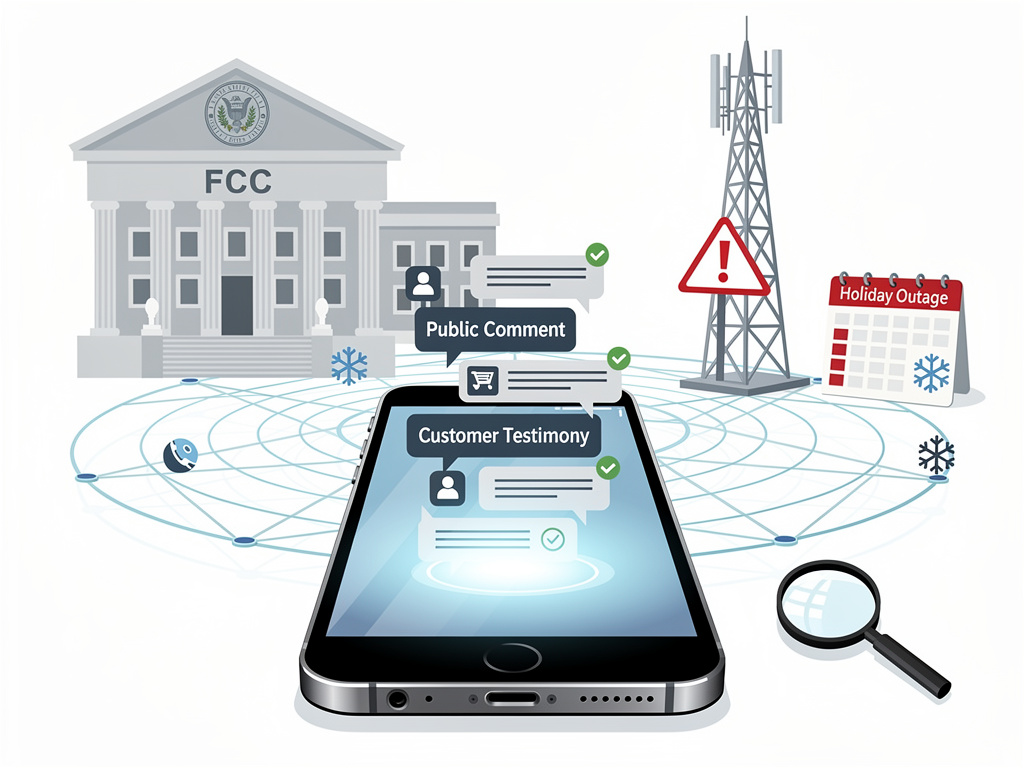
The Federal Communications Commission has taken the unusual step of soliciting public input regarding Verizon’s widespread service disruption that left millions of customers without connectivity during the critical holiday shopping season. This move signals a potentially significant shift in how federal regulators approach telecommunications reliability and corporate accountability in an era where mobile connectivity has become essential infrastructure.
According to Android Police, the FCC’s public comment initiative represents an unprecedented level of transparency in investigating major carrier outages. The commission is specifically requesting detailed accounts from affected customers, including timestamps, locations, duration of service loss, and the nature of disruptions experienced. This grassroots approach to gathering evidence marks a departure from traditional regulatory investigations that typically rely primarily on carrier-provided data and internal technical assessments.
The outage in question occurred on December 30, 2024, affecting Verizon customers across multiple states and lasting several hours during peak usage times. Initial reports suggested the disruption impacted both voice and data services, with particular concentration in major metropolitan areas including parts of the Northeast and Midwest. The timing proved especially problematic as many Americans were traveling during the holiday period, relying on mobile devices for navigation, communication with family members, and emergency services access.
Regulatory Scrutiny Intensifies as Reliability Questions Mount
The FCC’s decision to open public comment channels reflects growing concerns about telecommunications infrastructure resilience. In recent years, major carriers have experienced increasingly frequent service disruptions, raising questions about whether network investments are keeping pace with subscriber growth and data demands. The commission’s approach suggests regulators are no longer satisfied with after-action reports from carriers alone but seek independent verification through customer testimony.
Industry analysts note that this investigation comes at a particularly sensitive time for Verizon, which has marketed itself as having the most reliable network in America. The company has invested billions in 5G infrastructure and network modernization, yet significant outages continue to plague the service. The disconnect between marketing promises and operational reality has not gone unnoticed by regulators who are tasked with ensuring telecommunications companies meet their public service obligations.
Technical Complexity Meets Public Accountability
Modern telecommunications networks operate as extraordinarily complex systems involving millions of interconnected components, from cell towers and fiber optic cables to sophisticated routing software and backup power systems. When failures occur, identifying root causes requires extensive technical investigation. However, the FCC’s public comment initiative acknowledges that customer experiences provide crucial context that technical logs alone cannot capture.
The commission is particularly interested in understanding how the outage affected emergency services access. Federal regulations require carriers to prioritize 911 calls and maintain redundant systems to ensure emergency communications remain operational even during network failures. If the Verizon outage compromised emergency services, the company could face significant penalties and be required to implement costly infrastructure improvements.
Consumer Impact Extends Beyond Inconvenience
For many Americans, mobile phone service has evolved from a convenience to a necessity. Small business owners rely on mobile connectivity to process payments and communicate with customers. Remote workers depend on cellular data for professional responsibilities. Parents use mobile devices to coordinate family logistics and ensure children’s safety. When service fails, the consequences ripple through every aspect of modern life.
The economic impact of such outages is substantial but difficult to quantify. Businesses lose revenue when payment processing systems go offline. Delivery drivers cannot access navigation or communicate with customers. Gig economy workers find themselves unable to accept jobs or complete assignments. The FCC’s investigation may attempt to calculate these broader economic costs, potentially establishing precedents for how carriers compensate customers beyond simple service credits.
The Competitive Implications of Network Reliability
Verizon’s reputation as the premium carrier with superior network reliability has justified its typically higher pricing compared to competitors like T-Mobile and AT&T. Major outages threaten this market positioning, potentially driving customers to competitors and undermining the company’s core value proposition. The wireless industry operates on razor-thin margins despite high revenues, and customer churn directly impacts profitability and stock valuations.
Competitors have not been shy about capitalizing on Verizon’s troubles. T-Mobile and AT&T have both increased marketing efforts emphasizing network reliability and offering aggressive switching incentives. In the telecommunications industry, trust is hard-won and easily lost. A single major outage can undo years of reputation building and customer loyalty development.
Regulatory Framework Evolution in the Digital Age
The FCC’s investigative approach reflects broader questions about how telecommunications regulation must evolve to address 21st-century challenges. Current regulatory frameworks were largely designed for traditional voice services and have struggled to keep pace with the internet age, where data services often matter more than voice capabilities. The commission faces pressure to update its enforcement mechanisms and penalty structures to reflect the critical importance of mobile connectivity.
Some policy experts argue that telecommunications carriers should face stricter reliability requirements similar to those imposed on utilities like electric companies. Others contend that excessive regulation could stifle innovation and network investment. The FCC must balance these competing concerns while ensuring carriers meet their fundamental obligation to provide reliable service to American consumers and businesses.
Corporate Response and Crisis Management
Verizon’s response to the outage and subsequent investigation will likely become a case study in corporate crisis management. The company must balance transparency with protecting proprietary technical information, accept responsibility without inviting excessive regulatory penalties, and restore customer confidence while managing investor expectations. How telecommunications companies handle major service disruptions increasingly influences their market position and regulatory standing.
The company has stated that it takes network reliability extremely seriously and is conducting its own internal investigation to prevent future occurrences. However, such corporate assurances ring hollow to customers who experienced service loss during critical moments. The FCC’s public comment process gives affected customers a direct channel to regulatory decision-makers, potentially influencing enforcement actions and required remediation measures.
Broader Implications for Telecommunications Policy
This investigation may establish important precedents for how regulators approach carrier accountability. If the FCC determines that Verizon’s outage resulted from insufficient infrastructure investment or inadequate redundancy planning, the commission could impose requirements affecting the entire industry. Carriers might face mandatory network resilience standards, required investment in backup systems, or enhanced transparency obligations regarding network performance and reliability metrics.
The public comment process itself represents an innovation in regulatory practice. By directly soliciting customer input, the FCC acknowledges that affected users possess valuable information about service quality and outage impacts that traditional regulatory tools might miss. This participatory approach could become a model for investigating future telecommunications issues, potentially reshaping the relationship between regulators, carriers, and consumers.
Looking Forward: Infrastructure Investment and Reliability Standards
As the telecommunications industry continues its transition to 5G and eventually 6G technologies, questions about infrastructure reliability will only intensify. New technologies promise faster speeds and lower latency but also introduce additional complexity and potential failure points. Carriers must balance investment in cutting-edge capabilities with maintaining and upgrading existing infrastructure to prevent service disruptions.
The outcome of the FCC’s Verizon investigation will likely influence how carriers approach network planning and investment in coming years. If regulators impose significant penalties or mandate costly infrastructure improvements, all carriers will need to reassess their capital allocation strategies. The industry may see increased spending on redundancy and backup systems, potentially slowing the rollout of new features and services as companies prioritize reliability over innovation. For consumers and businesses that depend on mobile connectivity, such a shift toward prioritizing reliability over novelty would likely prove welcome, even if it means slower adoption of cutting-edge features.


 WebProNews is an iEntry Publication