
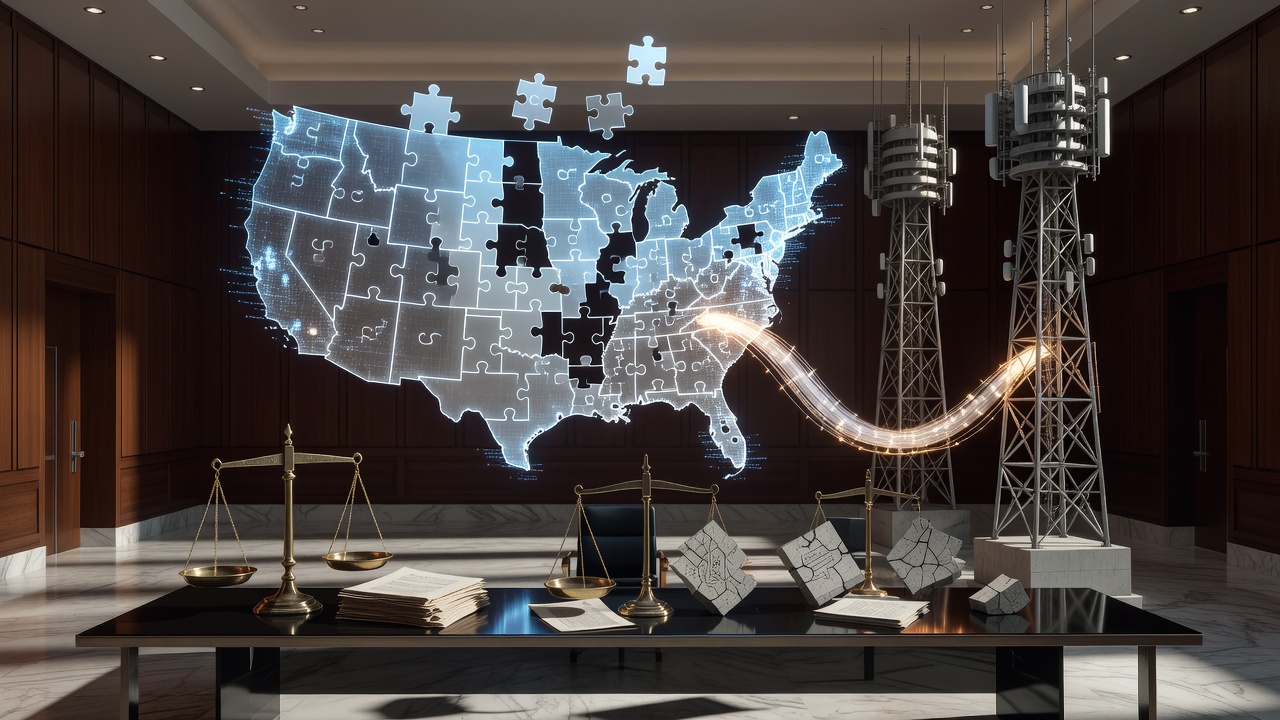
Federal regulators stand ready to upend two decades of limits on how many television stations one company can own. FCC Chairman Brendan Carr announced this week that the commission will vote August 6 on repealing the national ownership cap. That rule, set by Congress in 2004, bars any single owner from reaching more than 39 percent of U.S. households.
Carr made his case in an op-ed for Breitbart. He wrote that the cap once protected local broadcasters. Now it holds them back. “Previously, the cap operated as a blanket prohibition on any and all deals that would combine stations in excess of the 39 percent limit—regardless of whether it was a good deal or a bad one for the country,” Carr stated. The new approach would let the FCC review proposed mergers one by one. Approval would come only if the deal promotes the public interest.
But. This move lands amid sharp criticism. Democratic Commissioner Anna Gomez fired back on X. She called it an “unlawful effort to hand control of the public airwaves to billionaire buddies of this administration.” Gomez warned the change would “destroy local newsrooms, silence community reporting, and drive-up costs for American families.”
Senator Elizabeth Warren echoed those concerns. She pointed to the recent Nexstar-Tegna merger. That deal already pushed past the cap under certain calculations. Warren labeled the proposal an attempt to “illegally rewrite the rules to make it easier for billionaires to line their own pockets while jacking up costs and controlling what Americans watch.” Her remarks came via a statement reported in Gizmodo.
And the stakes run high. Local stations have long served as primary news sources in many communities. Consolidation could thin newsrooms further. It might reduce coverage of city council meetings, school boards and local elections. Yet supporters argue the old rules ignore today’s media realities. Cable networks, streaming giants like Netflix and platforms such as X reach every corner of the country without restriction. Broadcasters, they say, need scale to compete and invest in journalism.
Major players have lobbied hard for this shift. Nexstar and Sinclair, both seen as aligned with the current administration, stand out. Nexstar completed its Tegna acquisition earlier this year. The deal gave it reach well above 39 percent when using the UHF discount. Sinclair has explored combinations with Scripps. Both companies refused to air an episode of Jimmy Kimmel Live! after the host’s comments on the assassination of Charlie Kirk drew White House displeasure. That episode, detailed in the Gizmodo report, raised fresh questions about content influence.
Carr’s broader record adds context. He has warned broadcasters about “hoaxes and news distortions” in coverage of the U.S.-Israel conflict with Iran. In March he posted on X that stations airing such material should “correct course before their license renewals come up.” The law, he added, requires operation in the public interest. Those comments, covered by Cafe, sparked First Amendment alarms. Legal experts questioned whether the FCC could revoke licenses over perceived bias in war reporting.
Earlier this year a bipartisan group of former FCC commissioners urged repeal of the agency’s news distortion policy. They called it an unconstitutional cudgel that chills speech through vagueness. A letter obtained by Protect Democracy argued the policy relies too heavily on prosecutorial discretion. Carr has signaled openness to clarifying or removing such rules.
Yet opponents see danger in trading a hard cap for case-by-case decisions. That discretion, they fear, could favor politically aligned owners. Public Knowledge and Free Press have already challenged the Nexstar-Tegna waiver in court. They contend only Congress can alter the limit it wrote into law. A pending legal fight over the Tegna deal, paused by a judge in a separate DirecTV antitrust matter, could complicate matters further. Nexstar is appealing.
Broadcaster groups welcomed the announcement. The National Association of Broadcasters called the cap an outdated barrier. It prevents local stations from gaining the resources needed to produce quality news and compete with digital giants. Sinclair praised the proposal as common sense modernization.
History offers lessons. The 1996 Telecommunications Act and subsequent reviews sought to balance competition, localism and diversity. Congress stepped in during 2004 after courts struck down earlier FCC attempts to loosen ownership rules. The 39 percent figure emerged as a political compromise. It aimed to stop any one company from dominating the airwaves while allowing some growth.
Fast forward. Streaming services and social media have eroded broadcast audiences and ad revenue. Local TV still commands attention during emergencies and elections. But newsroom staffing has declined at many stations owned by large groups. A 2025 review by the FCC’s Media Bureau, reported in TV Technology, highlighted these pressures. Carr has described current limits as “arcane and artificial.”
The August vote will likely pass along party lines. Republicans hold the majority. That outcome sets up potential court battles over agency authority. If upheld, the change could trigger a wave of deals. Larger station groups might form. Some could pursue national scale rivaling cable. Others might focus on regional clusters to dominate ad markets in key states.
Viewpoint diversity enters the debate too. Carr argues the cap has protected national programmers based in New York and Hollywood. Local stations, he says, often serve as mere outlets for network content. Loosening ownership could let trusted local voices expand. Critics counter that consolidation historically reduces independent reporting and homogenizes coverage.
Recent coverage adds urgency. Variety reported the FCC’s signal that it will replace the cap with individualized reviews. Politico noted the move could prompt accusations of overreach. Deadline highlighted support from Nexstar, which called the proposal a step toward fair competition. CNBC emphasized Carr’s framing around public interest determinations.
Legal scholars have weighed in. A March analysis from the Middle Tennessee State University First Amendment Center argued Carr’s earlier license threats over Iran coverage were likely empty. The FCC cannot punish stations simply for disliked content. Yet the news distortion policy, if revived selectively, might create indirect pressure. An October 2025 Broadband Breakfast article quoted experts warning that Carr’s interventions edged toward coercion.
So what comes next? The FCC will seek public comments before the vote. Broadcasters, advocacy groups and lawmakers will file. Courts may ultimately decide if the agency can override a statutory cap. In the meantime, station owners weigh expansion plans. Journalists worry about further cuts. Viewers wonder if their local newscast will still reflect their community.
Carr insists the goal is balance. “It’s time to restore balance to the broadcast airwaves,” he wrote. Whether the result delivers more local investment or greater concentration remains to be seen. One fact is clear. The broadcast industry stands at a crossroads. The August decision could set its direction for years.


 WebProNews is an iEntry Publication