
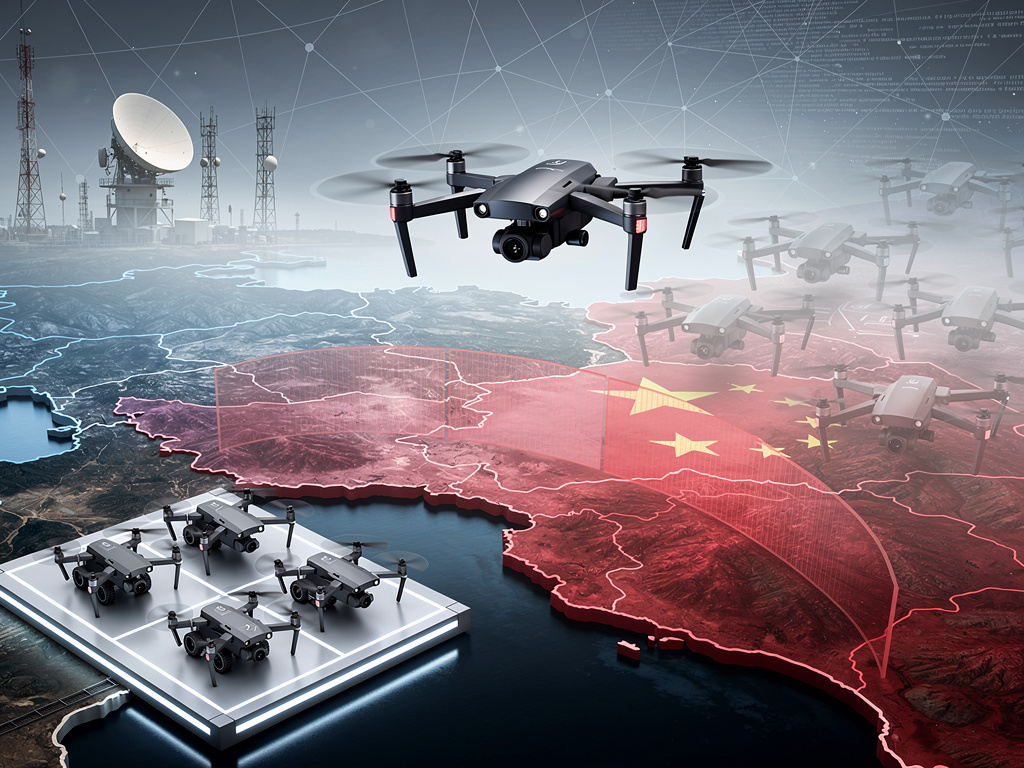
The Skies Close: FCC’s Sweeping Ban on Foreign Drones Amid Espionage Fears
In a move that reshapes the U.S. drone market, the Federal Communications Commission (FCC) has imposed a broad prohibition on new foreign-made drones, driven by escalating worries over national security and potential spying. Announced just before a congressional deadline, this decision targets manufacturers like China’s DJI, which dominates global drone production. The ban prevents these devices from receiving FCC authorization for radio frequency use, effectively barring their sale in the American market starting in 2025.
The FCC’s action stems from concerns that foreign drones could transmit sensitive data back to adversarial nations, compromising everything from personal privacy to critical infrastructure. According to reports, the agency added uncrewed aircraft systems (UAS) and their key components to its “covered list,” a roster of equipment deemed risky under the Secure and Trusted Communications Networks Act. This list already includes telecommunications gear from companies like Huawei and ZTE, now extended to drones.
Industry experts view this as a pivotal shift, potentially accelerating domestic drone innovation while disrupting supply chains reliant on affordable foreign models. DJI, which holds about 70% of the U.S. industrial drone market and over 80% for first responders, faces the brunt of the impact. Existing drones remain operational, but new imports are halted, leaving hobbyists, filmmakers, and emergency services scrambling for alternatives.
Roots of the Regulatory Crackdown
The origins of this ban trace back to bipartisan legislation, including the Countering CCP Drones Act, which gained momentum in Congress amid rising U.S.-China tensions. Lawmakers cited classified intelligence suggesting backdoors in Chinese drones that could enable data exfiltration. For instance, a letter from Rep. Mark Green referenced findings from Sandia National Laboratories, the Cybersecurity and Infrastructure Security Agency (CISA), and the FBI, highlighting vulnerabilities in devices controlling 90% of the U.S. market.
Public discourse on platforms like X has amplified these fears, with users posting about perceived espionage risks near military bases. One thread discussed how drones on farmlands adjacent to Air Force installations could pose threats, echoing President Trump’s earlier executive orders banning Chinese tech in federal use. Such sentiments underscore a broader anxiety about technology as a vector for foreign influence.
The FCC’s notice, issued on December 22, 2025, aligns with a deadline set by Congress to classify DJI as a covered entity. As detailed in a Politico report, the ruling prioritizes preventing spyware-laden hardware from entering the ecosystem, even if it means short-term market disruptions.
Market Repercussions and Industry Responses
Drone enthusiasts and professionals alike are reeling from the announcement. Sales of new DJI models, renowned for their advanced features and competitive pricing, will cease, pushing consumers toward pricier U.S.-based alternatives like Skydio or Autel Robotics. Analysts predict a surge in demand for American-made drones, potentially boosting companies that have invested in secure, domestically produced technology.
However, the transition won’t be seamless. First responders, who rely on drones for search-and-rescue operations, face logistical challenges. A piece in The Hill notes that while the ban doesn’t ground existing fleets, it restricts upgrades and replacements, which could hamper emergency response capabilities in the near term.
Industry groups have mixed reactions. The Association for Uncrewed Vehicle Systems International (AUVSI) supports the move for enhancing security but warns of supply shortages. Meanwhile, DJI has contested the allegations, arguing there’s no evidence of data breaches and that the ban unfairly targets a market leader without due process.
Geopolitical Context and Historical Precedents
This ban fits into a pattern of U.S. efforts to decouple from Chinese technology. It echoes the Trump administration’s actions against TikTok and WeChat, and builds on Biden-era restrictions on semiconductor exports. The New York Times reported that while Americans can continue flying their current DJI drones, the prohibition on new sales signals a hard line against perceived threats from Beijing.
On X, discussions have linked the ban to broader narratives, including unverified claims of drone psyops and congressional bills like H.R. 8610, which expands counter-UAS authorities. These posts reflect public sentiment, often framing the issue as a defense against Chinese Communist Party (CCP) influence, though experts caution that social media amplifies unconfirmed fears.
Historically, concerns about DJI date back to 2017, when the U.S. Army banned their use due to cybersecurity risks. Subsequent reports from the Department of Homeland Security flagged potential data leaks, fueling the current regulatory push. As Bloomberg outlined, the FCC’s decision came a day before the deadline, underscoring the urgency driven by intelligence assessments.
Technological Vulnerabilities Exposed
At the heart of the ban are technical worries about drone firmware and communication protocols. Foreign-made drones often use radio frequencies that could be exploited for unauthorized data transmission. The FCC’s covered list now includes components like cameras and GPS modules, ensuring that even hybrid drones with foreign parts face scrutiny.
Security researchers have long warned about these risks. A 2024 study by Sandia Labs, referenced in congressional letters, identified backdoors allowing remote access, potentially enabling surveillance on U.S. soil. This is particularly alarming for critical sectors, where drones map infrastructure or monitor borders.
In response, U.S. firms are ramping up production. Skydio, for example, has secured government contracts by emphasizing end-to-end American manufacturing. Yet, as noted in DroneLife, the ban could stifle innovation if domestic alternatives fail to match DJI’s technological edge in areas like battery life and AI-driven navigation.
Global Ramifications and Trade Dynamics
The FCC’s move reverberates internationally, potentially straining U.S.-China trade relations further. China has criticized the ban as protectionist, with state media accusing Washington of hypocrisy given America’s own surveillance programs. This could prompt retaliatory measures against U.S. tech exports, escalating the tech cold war.
European allies are watching closely. The EU has similar concerns but hasn’t imposed a blanket ban, opting instead for case-by-case reviews. In Asia, countries like Japan and South Korea, heavy users of DJI products, may face pressure to align with U.S. standards for interoperability in joint operations.
Trade analysts predict a realignment of global supply chains. With DJI’s dominance, manufacturers in India and Turkey might emerge as alternatives, though they lack the scale. A report from The Verge highlights how the ban fulfills congressional mandates, but at the cost of consumer choice and higher prices.
Consumer Impact and Adaptation Strategies
For everyday users, the ban means farewell to budget-friendly drones that powered aerial photography and recreational flying. Hobbyists on X have expressed frustration, with posts lamenting the loss of accessible tech and speculating on black-market workarounds, though such actions would violate federal rules.
Adaptation is underway. Retailers are stocking up on pre-ban inventory, and online forums buzz with tips for maintaining older models. Educational programs, which use drones for STEM curricula, must pivot to approved devices, potentially increasing costs for schools.
Looking ahead, the ban could foster a more secure ecosystem. As ABC News reported, the focus is on preventing future risks, encouraging investment in trustworthy tech.
Policy Evolution and Future Oversight
The FCC’s framework allows for waivers if manufacturers prove their products pose no threat, but approvals seem unlikely for DJI without significant changes. This sets a precedent for other IoT devices, from smart home gadgets to autonomous vehicles.
Congressional oversight will intensify, with bills like the Intelligence Authorization Act incorporating UAP-related provisions that intersect with drone regulations. Posts on X have tied these to broader UFO discussions, illustrating how security narratives evolve in public discourse.
Ultimately, this ban underscores a strategic pivot toward technological sovereignty. By prioritizing security over convenience, the U.S. aims to safeguard its airspace, even as it navigates the challenges of a fragmented global market.
Innovation in the Wake of Restrictions
Domestic drone makers are poised for growth. Companies like Teal Drones and BRINC are expanding offerings tailored for public safety, incorporating advanced encryption to meet federal standards. This could lead to breakthroughs in autonomous flight and AI integration, areas where foreign competitors previously led.
Challenges remain, including talent shortages and higher R&D costs. Industry insiders suggest government subsidies might be needed to bridge the gap, similar to incentives for semiconductor production.
As the dust settles, the ban may catalyze a renaissance in American drone technology, transforming a security measure into an economic opportunity.
Long-Term Security Implications
Beyond commerce, the ban addresses existential threats. Drones near sensitive sites could relay real-time intelligence, a risk amplified by swarming capabilities. Intelligence reports, as cited in The New York Times, emphasize that while no widespread spying has been confirmed, the potential justifies preemptive action.
Public-private partnerships are emerging to monitor compliance, with agencies like the FAA integrating drone tracking systems. This holistic approach aims to fortify defenses against evolving cyber-physical threats.
In the end, the FCC’s decision reflects a calculated trade-off, balancing innovation with vigilance in an era of geopolitical rivalry.


 WebProNews is an iEntry Publication