
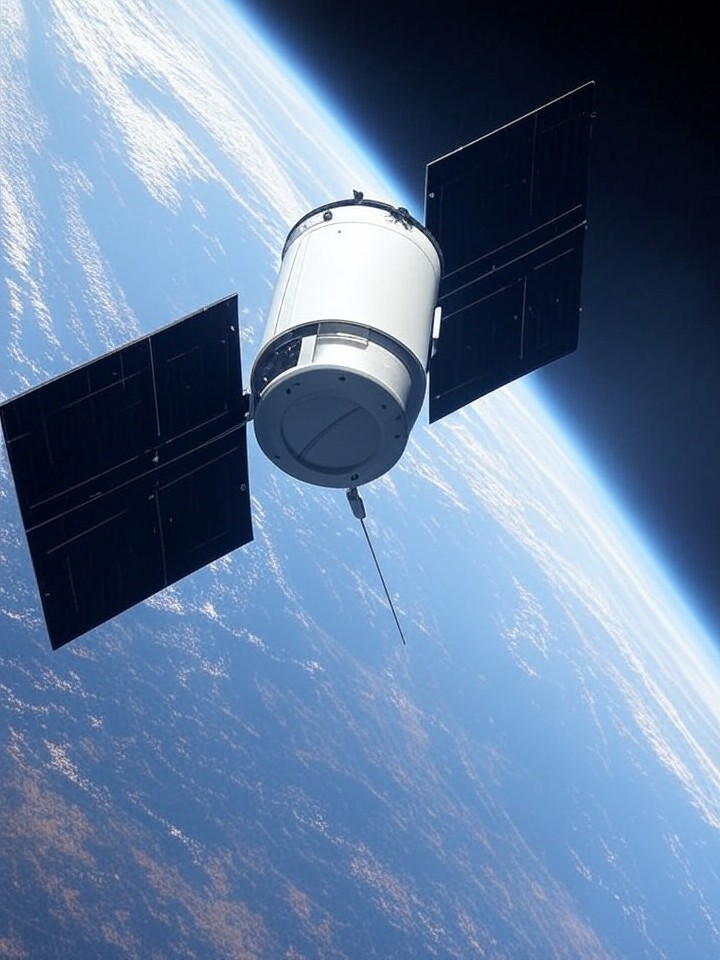
Elon Musk’s Skyward Surge: FCC Unleashes SpaceX’s Next Wave of Starlink Dominance
In a pivotal move that underscores the rapid evolution of satellite-based internet, the Federal Communications Commission has granted SpaceX approval to deploy an additional 7,500 second-generation Starlink satellites. This decision, detailed in a recent order, propels the company’s constellation toward a total of 15,000 Gen2 satellites, building on prior authorizations. The approval comes amid growing competition in the space industry and intensifying scrutiny over orbital congestion and spectrum usage.
SpaceX, led by Elon Musk, has been aggressively expanding its Starlink network to provide global broadband coverage, particularly in underserved regions. The latest FCC nod allows the company to operate these satellites in low-Earth orbit, enhancing capacity and reducing latency for users worldwide. According to the commission’s document, this expansion is part of SpaceX’s broader plan to deploy up to 30,000 Gen2 satellites eventually, though the current approval stops at half that number for now.
Critics, including rival satellite operators, have voiced concerns about potential interference and the environmental impact on the night sky. Astronomers, in particular, worry about the proliferation of satellites disrupting observations. Yet, the FCC’s decision reflects a balancing act, imposing conditions to mitigate interference while supporting innovation in connectivity.
Regulatory Hurdles and Strategic Wins
The path to this approval wasn’t without obstacles. SpaceX initially sought permission for 30,000 Gen2 satellites, but the FCC partially granted the request in 2022 for 7,500, deferring the rest. This latest authorization completes that initial batch, bringing the total to 15,000. As reported by Ars Technica, the commission cited SpaceX’s demonstrated ability to manage orbital debris and coordinate with other operators as key factors in the approval.
Rivals like Amazon’s Project Kuiper and OneWeb have lodged protests, arguing that SpaceX’s massive constellation could monopolize valuable spectrum and orbital slots. The FCC addressed these by requiring SpaceX to adhere to strict power flux density limits and share ephemeris data to avoid collisions. This regulatory framework aims to foster fair competition while preventing a cluttered orbital environment.
Beyond domestic implications, the decision has global ramifications. Starlink’s expansion supports partnerships with telecom providers, such as T-Mobile in the U.S., to deliver direct-to-cell services. Posts on X from SpaceX highlight recent launches, including those with Direct to Cell capabilities, signaling the company’s push into mobile connectivity without traditional ground infrastructure.
Technological Edge and Market Impact
At the heart of Starlink’s appeal is its advanced technology. The Gen2 satellites feature laser interlinks for faster data routing and larger antennas for improved bandwidth. With this approval, SpaceX can now aim for gigabit speeds, as noted in coverage from Benzinga, potentially transforming remote work, education, and emergency response in areas lacking fiber optic networks.
The economic stakes are high. Starlink has already amassed over 2 million subscribers, generating significant revenue for SpaceX. Industry analysts project that the satellite internet market could reach hundreds of billions in value, with SpaceX poised to capture a dominant share. This FCC green light accelerates that trajectory, enabling more frequent launches via the reusable Falcon 9 rocket.
However, challenges persist. Recent news from PCMag details pushback from competitors like Viasat and Blue Origin, who raise alarms about radio interference and atmospheric harm from satellite reentries. SpaceX counters by emphasizing its deorbiting protocols and lower orbital altitudes to minimize risks.
Orbital Dynamics and Future Deployments
SpaceX’s operational strategy involves meticulous orbital management. The company recently announced plans to lower the orbits of 4,400 existing satellites for safety, as covered in a Space.com article. This reconfiguration reduces collision probabilities and enhances service quality by shrinking beam diameters, allowing for denser coverage.
Launches have ramped up, with a recent Falcon 9 mission on January 4, 2026, deploying 29 Starlink satellites from Florida. X posts from SpaceX document these events, showcasing live streams and confirmations of successful deployments, which build public and investor confidence.
Looking ahead, the approval paves the way for even more ambitious goals. Elon Musk has teased the potential for Starlink to enable gigabit internet globally, fueling speculation about a massive IPO. Reuters reported on the FCC’s decision, noting its role in boosting worldwide internet service, as seen in their coverage.
Competitive Pressures and Industry Shifts
The satellite sector is heating up, with players like AST SpaceMobile and Globalstar vying for cellular-from-space dominance. SpaceX’s edge lies in its vertical integration, controlling everything from satellite manufacturing to launch vehicles. This efficiency allows for rapid iteration and cost savings, outpacing competitors.
Environmental considerations are gaining traction. The FCC’s order mandates compliance with international guidelines on space debris, addressing fears of Kessler syndrome—a cascade of collisions rendering orbits unusable. SpaceX’s proactive measures, such as autonomous collision avoidance, have been praised in industry circles.
Moreover, the approval intersects with national security interests. A recent X post from SpaceX announced nine new missions for the U.S. Space Force starting late 2026, underscoring Starlink’s dual-use potential for civilian and military applications.
Innovation Amid Controversy
Delving deeper, the technological innovations in Gen2 satellites include enhanced phased-array antennas and software-defined radios, enabling dynamic spectrum allocation. This flexibility is crucial for integrating with terrestrial networks, as evidenced by partnerships overseas.
Critics argue that SpaceX’s scale could stifle innovation by smaller firms. Yet, supporters point to the democratizing effect of affordable broadband, bridging digital divides in rural and developing areas. The Financial Express highlighted the global total of 15,000 Gen2 satellites post-approval in their report.
Astronomical communities remain vocal. The International Astronomical Union has called for regulations to preserve dark skies, prompting SpaceX to experiment with sunshades on satellites to reduce reflectivity.
Economic Ripples and Global Reach
Economically, this expansion bolsters SpaceX’s valuation, potentially accelerating plans for Mars colonization funded by Starlink profits. Investors are watching closely, with speculation rife about monetizing direct-to-cell services.
On the international front, Starlink’s role in conflict zones, like Ukraine, demonstrates its geopolitical significance. The service provided critical connectivity during outages, earning accolades and scrutiny alike.
Recent web searches reveal ongoing launches, with a January 9, 2026, mission deploying another 29 satellites, as per SpaceX’s X updates. This cadence suggests SpaceX could fully utilize the new authorization swiftly.
Strategic Alliances and Technological Frontiers
Partnerships are key to Starlink’s growth. Collaborations with carriers enable seamless roaming, turning satellites into floating cell towers. PCMag’s coverage of the FCC’s partial grant for gigabit upgrades, found at their site, emphasizes the use of additional radio bands at higher power.
Innovation extends to sustainability. SpaceX is reconfiguring its constellation, as detailed in another Ars Technica piece on the significant changes, available here.
For industry insiders, this approval signals a maturing regulatory environment that favors bold scalability while imposing safeguards. It sets precedents for future constellations, influencing how agencies worldwide handle mega-constellations.
Vision for Connectivity’s Horizon
As SpaceX ramps up deployments, the focus shifts to user experience. Subscribers report improved speeds and reliability, with enterprise solutions gaining traction in maritime and aviation sectors.
Challenges like spectrum sharing with incumbents persist, but the FCC’s conditions aim to resolve them through coordination. BNN Bloomberg echoed the approval’s intent to enhance global service in their analysis.
Ultimately, this milestone reinforces SpaceX’s lead in redefining internet access from space, promising a more connected world amid ongoing debates over its implications.
Navigating Orbital Realities
Deeper analysis reveals the orbital mechanics at play. Lower altitudes mean faster deorbiting of defunct satellites, reducing long-term debris. This aligns with NASA’s guidelines and mitigates risks to the International Space Station.
Competitor responses vary. Blue Origin’s concerns about atmospheric impacts highlight broader environmental debates, yet SpaceX’s track record of safe operations bolsters its case.
X sentiment from users and SpaceX posts reflects excitement, with millions of views on launch announcements, underscoring public interest in this space race.
Policy Implications and Forward Momentum
Policy-wise, the FCC’s decision may influence international bodies like the ITU in spectrum allocations. It encourages innovation while ensuring equitable access to orbital resources.
For SpaceX, the approval is a catalyst for further investment in Starship, the next-gen launcher capable of deploying hundreds of satellites per flight.
In the broader context, this expansion could accelerate the shift toward space-based economies, with Starlink as a cornerstone. Stocktwits noted the boost to Musk’s ventures in their piece, linking it to potential market gains.
Evolving Challenges in Space Expansion
Emerging issues include cybersecurity for satellite networks, with Starlink implementing robust encryption to counter threats.
User adoption in developing nations could transform education and healthcare, providing high-speed links where none existed.
As deployments continue, monitoring orbital health will be crucial, with SpaceX leading in transparency through data sharing.
The Path Ahead for Starlink
Looking forward, SpaceX eyes full constellation buildup by the decade’s end, potentially serving billions.
This FCC milestone, while contested, marks a significant step in realizing Musk’s vision of universal connectivity.
Industry observers anticipate more regulatory battles, but for now, SpaceX’s momentum appears unstoppable, reshaping how we connect from the stars.


 WebProNews is an iEntry Publication