
When Printers Turn Informants: Unmasking the FBI’s Latest Probe into Hidden Tracking Tech
In the quiet suburbs of Virginia, federal agents descended on the home of Washington Post reporter Hannah Natanson last week, executing a search warrant that has sent ripples through journalism circles and beyond. The raid, tied to an investigation into leaked classified documents, underscores a chilling reality: everyday office equipment like printers can serve as silent witnesses in criminal probes. According to reports, the FBI’s pursuit of a government contractor accused of mishandling sensitive information revealed advanced capabilities in modern printers that go far beyond mere printing—capabilities that allow them to store and recall the exact contents of documents.
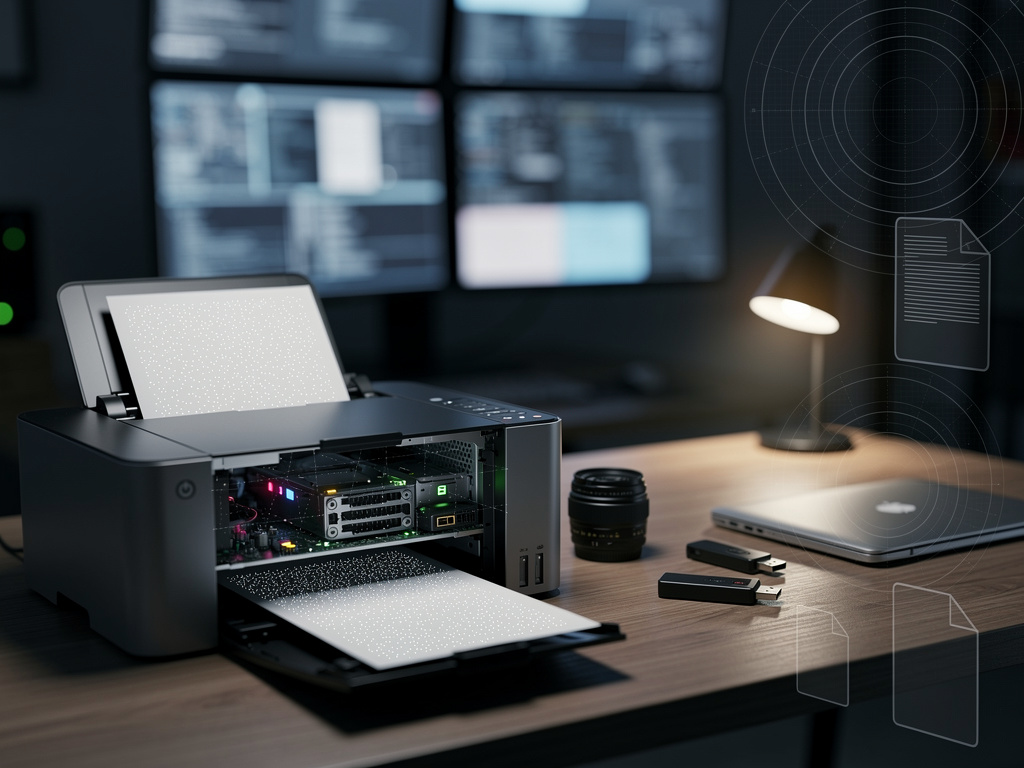
This incident isn’t isolated but builds on a long history of printer forensics that dates back decades. For years, color laser printers have embedded nearly invisible tracking dots on every page, a feature designed to combat counterfeiting but increasingly leveraged by law enforcement. In Natanson’s case, the investigation highlighted how some printers don’t just mark documents; they can log and retrieve file contents, turning them into unwitting data vaults. The story broke amid growing concerns over privacy in an era where digital footprints are everywhere, prompting questions about the balance between security and civil liberties.
Details emerged from court filings and media accounts, painting a picture of a contractor, Aurelio Luis Perez-Lugones, charged with unlawful retention of classified materials. Prosecutors allege he took home sensitive files from his workplace, and it was the printer’s internal memory that provided key evidence. This revelation has experts debating the extent of such technology’s reach, especially in sensitive sectors like government contracting.
The Evolution of Printer Surveillance
Printer manufacturers, under pressure from governments, have integrated these tracking mechanisms since the early 2000s. The Electronic Frontier Foundation has long warned about this, detailing in their reports how these dots encode printer serial numbers, dates, and times. In a landmark case from 2017, similar technology helped the FBI identify Reality Leigh Winner, who leaked NSA documents about Russian election interference. That episode, covered extensively by The Atlantic, showed how microdots on printed pages led investigators straight to the source.
But the current case pushes boundaries further. According to a recent article on Slashdot, workplace printers in government facilities can store not just metadata but the full contents of printed files in their internal hard drives. This storage allows forensic teams to recover deleted or overwritten data, much like recovering files from a computer’s recycle bin. Industry insiders note that high-end models from brands like Xerox and Canon often include these features for audit purposes, but their use in criminal investigations raises ethical dilemmas.
The FBI’s approach in this probe involved seizing devices from Natanson’s home, including phones and laptops, as part of the broader inquiry. A federal judge quickly intervened, barring agents from examining the seized items until further review, as reported by NBC News. This judicial pause highlights the tension between investigative needs and press freedoms, especially when journalists are caught in the crosshairs.
Forensic Powerhouses in the Office
Delving deeper, the technology at play involves more than just dots. Modern printers often come equipped with hard disk drives or solid-state storage that cache print jobs for efficiency. In secure environments, these devices can log every action, creating a digital trail that’s gold for investigators. The EFF’s list of printers that embed tracking dots, updated as recently as 2021, warns that most major manufacturers have agreements with governments to include such features, as noted in their comprehensive page.
In the Perez-Lugones case, it’s alleged that the contractor printed classified materials at work, and the printer’s memory retained copies of those files. This capability isn’t new, but its application in high-profile leaks is drawing fresh scrutiny. Posts on X, formerly Twitter, from users discussing privacy concerns echo this sentiment, with many expressing alarm over how printers can “snitch” without users’ knowledge. One such post highlighted obfuscation software as a countermeasure, underscoring a growing awareness among tech-savvy individuals.
The broader implications extend to corporate America, where similar printers are ubiquitous. IT specialists in industries like finance and healthcare must now grapple with the potential for these devices to become evidence in legal battles. The FBI’s official notifications, such as those from their counterintelligence news page, often touch on such technological aids in investigations, though specifics remain guarded.
Privacy Advocates Sound the Alarm
Privacy groups are up in arms, arguing that unchecked use of printer tracking erodes personal freedoms. The ACLU, in reports linked to FBI surveillance practices, has amassed evidence of overreach, including a dossier exceeding 1,100 pages on printer-related monitoring. This ties into larger debates about government surveillance, reminiscent of past scandals where forensic tools were abused.
Historical precedents abound. A BBC Future piece from 2020 explained how these dots, almost invisible to the naked eye, contain codes that can pinpoint the exact printer used. In the Winner case, it was these dots that directed the FBI to her workplace machine, leading to her arrest. Now, with printers capable of storing content, the stakes are higher—imagine a scenario where a whistleblower’s anonymous tip is traced back through a home printer’s logs.
Journalists, in particular, feel the heat. The Washington Post itself reported on the raid’s fallout, noting how it prompted new precautions among reporters. In their article, colleagues expressed concern that such actions could chill investigative journalism, making sources wary of sharing information.
Legal and Ethical Quandaries
Legally, the terrain is murky. The Justice Department’s guidelines on searching journalists’ property are strict, requiring high-level approval, yet the Natanson raid proceeded. Coverage from ABC News detailed the warrant’s focus on classified documents, but critics argue it oversteps protections under the Privacy Protection Act.
Ethically, the use of printer data in investigations poses questions about consent and transparency. Manufacturers rarely disclose these features in user manuals, leaving consumers in the dark. An archived piece from Archive.ph delves into how printers recall file contents, emphasizing the need for better regulations.
On X, discussions amplify these worries, with users sharing stories of past FBI misuse of surveillance tools, including over 278,000 instances of improper database queries as reported in older Washington Post articles. While not directly tied, this pattern fuels distrust in federal agencies’ handling of tech-based evidence.
Industry Responses and Future Safeguards
Printer makers are responding cautiously. Some, like those listed by the EFF, offer models without tracking dots, but content storage is harder to disable. Tech firms are exploring encryption for print jobs, though adoption is slow in regulated sectors.
For insiders in cybersecurity, this case is a wake-up call to audit office equipment. Regular firmware updates and secure deletion protocols can mitigate risks, but complete anonymity remains elusive. The EFF’s dedicated section on printer tracking provides resources for those seeking to protect themselves, including tools to detect dots on documents.
Government contractors, meanwhile, face heightened scrutiny. The charges against Perez-Lugones, as outlined in federal documents, serve as a cautionary tale about the perils of handling classified info outside secure channels.
Broader Impacts on Digital Trust
This investigation’s ripple effects could reshape how we view everyday tech. In an age of smart devices, printers join the ranks of items that collect data surreptitiously. Privacy experts predict more lawsuits challenging these practices, potentially leading to legislative reforms.
Internationally, similar technologies are in use, with reports from outlets like Bitdefender noting their role in global counterintelligence. The U.S. isn’t alone; European agencies employ comparable methods, raising questions about harmonized privacy standards.
As the Natanson case unfolds, with a judge’s order preserving seized materials untouched for now, the tech community watches closely. This isn’t just about one reporter or one contractor—it’s about the invisible threads connecting our devices to authoritative oversight.
Navigating the New Reality
For industry professionals, adapting means embracing secure printing solutions, like cloud-based systems with end-to-end encryption. Training programs on data hygiene are becoming standard in firms dealing with sensitive information.
Ultimately, this saga highlights the double-edged sword of technological advancement. While aiding in catching leakers, it also risks overreach. Balancing these elements will define the future of privacy in our connected world.
The conversation on X continues, with posts decrying the “snitching” potential of printers and calling for greater transparency from manufacturers and governments alike. As more details emerge, this story may yet prompt meaningful change in how we safeguard our digital lives.


 WebProNews is an iEntry Publication