
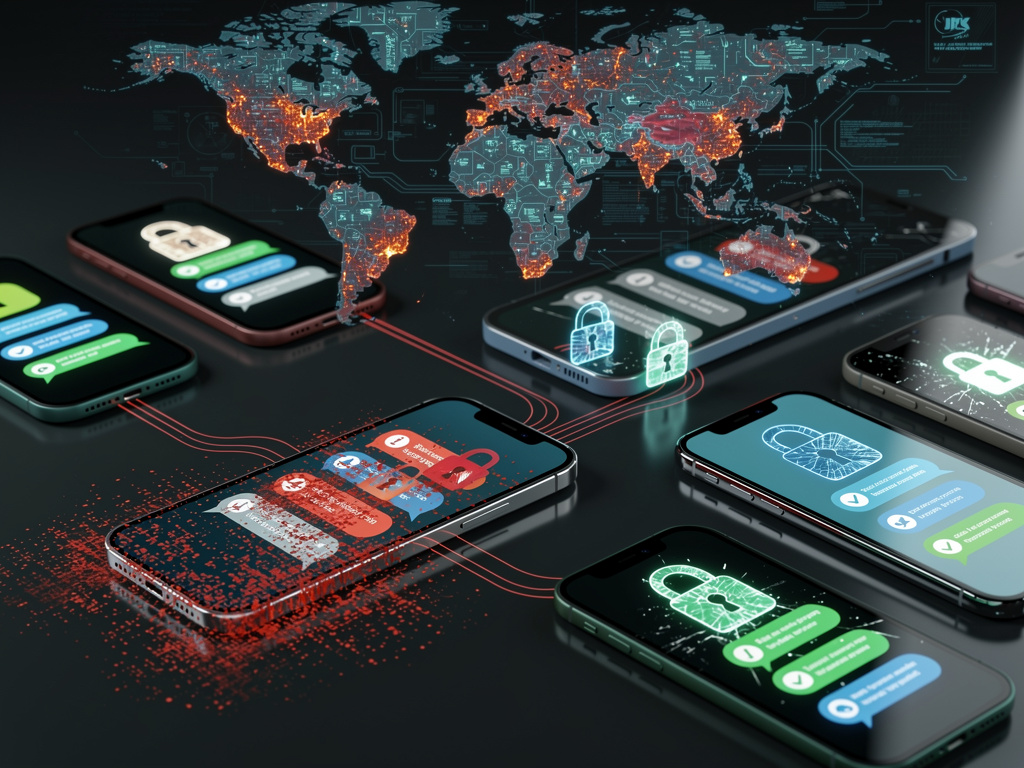
The Cracks in iMessage’s Armor: FBI’s Stark Warning to iPhone Users
In the ever-evolving realm of digital security, a recent alert from federal authorities has sent ripples through the tech community, particularly among Apple’s vast ecosystem of iPhone users. The Federal Bureau of Investigation, alongside the Cybersecurity and Infrastructure Security Agency, has issued a pointed advisory urging individuals to reconsider their reliance on iMessage for sensitive communications. This development stems from escalating concerns over vulnerabilities in traditional texting protocols, including those intertwined with Apple’s proprietary messaging service. As cyber threats grow more sophisticated, the warning highlights a shift toward recommending encrypted alternatives, prompting users to evaluate their daily habits in light of potential risks.
The core of the alert revolves around the susceptibility of SMS and RCS messaging, which iMessage defaults to when communicating with non-Apple devices. According to reports, these protocols lack the robust end-to-end encryption that safeguards pure iMessage exchanges, making them prime targets for interception by malicious actors. This isn’t merely theoretical; ongoing investigations into breaches of U.S. telecommunications networks, attributed to foreign adversaries like Chinese hackers, have amplified the urgency. The advisory emphasizes that even iMessage’s blue-bubble security isn’t foolproof when mixed with less secure methods, potentially exposing users to surveillance or data theft.
Industry experts point out that this isn’t Apple’s first brush with security scrutiny. For years, iMessage has been lauded for its encryption, but recent revelations suggest that external factors, such as carrier-level intrusions, could undermine its protections. The FBI’s message is clear: for those handling sensitive information—be it business executives, journalists, or everyday users discussing personal matters—it’s time to pivot to apps like Signal or WhatsApp, which offer consistent encryption across platforms.
Rising Threats in Telecom Networks
Delving deeper, the FBI’s concerns are rooted in a series of high-profile incidents that have exposed weaknesses in the broader communication infrastructure. A Forbes article detailed how federal officials are advising iPhone owners to disable SMS fallback in iMessage settings to mitigate risks. This recommendation comes amid reports of widespread hacking campaigns that have compromised encrypted texts, with losses from related scams surpassing $262 million in 2025 alone, as noted in coverage from TheStreet.
The mechanics of these threats often involve sophisticated techniques like man-in-the-middle attacks, where adversaries intercept messages at the network level before they reach their destination. In one alarming case, vulnerabilities in iMessage’s integration with older SMS systems have allowed hackers to exploit unencrypted pathways. This hybrid nature of iMessage—seamlessly switching between secure and insecure modes—creates a false sense of safety, according to cybersecurity analysts. Posts on X, formerly Twitter, reflect public sentiment, with users expressing frustration over the perceived erosion of Apple’s privacy fortress, though such discussions often mix verified facts with speculation.
Furthermore, the alert ties into broader geopolitical tensions. U.S. agencies have linked these intrusions to state-sponsored actors, with ongoing probes suggesting the scale of infiltration is larger than initially thought. This has led to calls for users to adopt “responsibly managed encryption,” a term that underscores the need for tools that maintain security without backdoors accessible to governments or hackers.
Apple’s Response and User Implications
Apple, for its part, has maintained that iMessage remains one of the most secure messaging platforms available, with end-to-end encryption preventing even the company itself from accessing user content. However, the FBI’s warning implicitly critiques this stance, pointing out that external breaches can circumvent such protections. In response to similar past alerts, Apple has rolled out software updates to address specific flaws, such as those identified in a Daily Mail report urging immediate updates to counter major system vulnerabilities.
For industry insiders, this situation raises questions about the future of cross-platform messaging. With the advent of RCS support in iOS, Apple aimed to bridge the gap between iPhone and Android users, but this has inadvertently introduced new risks. Experts argue that true security requires universal adoption of encrypted standards, something that current telecom infrastructures struggle to provide uniformly. This has sparked debates in tech circles about whether Apple should enhance iMessage’s safeguards or encourage migration to third-party apps.
Users are advised to take proactive steps: disabling iMessage’s SMS integration, enabling two-factor authentication, and regularly updating their devices. Yet, these measures only go so far. As one cybersecurity consultant noted in discussions on X, the real challenge lies in user education—many remain unaware that their “secure” messages could be vulnerable when sent to non-iMessage recipients.
Broader Scams and Financial Fallout
Beyond encryption woes, the FBI’s alert intersects with a surge in scams targeting mobile users. Impersonation schemes, where fraudsters pose as bank representatives, have drained accounts through deceptive phone calls and texts. A recent Forbes piece expanded on this, warning smartphone owners to avoid certain calls that could lead to account takeovers. The financial toll is staggering, with the FBI reporting over $260 million in losses from such fraud in 2025.
These scams often exploit the trust users place in familiar apps like iMessage. For instance, a phishing text appearing as a legitimate iMessage could lure users into revealing sensitive information. Industry reports from UNILAD highlight how scammers use urgency tactics, prompting immediate responses that bypass rational scrutiny. This has led to a spike in identity theft cases, particularly among high-net-worth individuals who rely on iPhones for business communications.
Moreover, the integration of AI in these attacks adds another layer of complexity. Hackers now employ voice-cloning technology to mimic trusted contacts, making it harder to detect fraud. The FBI recommends hanging up on suspicious calls and verifying through official channels, a strategy echoed in alerts from Attack of the Fanboy.
Alternatives and Industry Shifts
As the advisory gains traction, attention turns to viable alternatives. Apps like Signal and WhatsApp are frequently cited for their strong encryption protocols, which don’t falter across device types. A TechGriot article underscores this, recommending these as safer options amid iMessage’s perceived risks. For professionals in sensitive fields, such as finance or journalism, this shift could become mandatory, reshaping how teams collaborate digitally.
The tech industry is responding with innovations aimed at bolstering security. Companies are investing in quantum-resistant encryption to future-proof against emerging threats. Meanwhile, Apple’s own advancements, like those in iOS updates detailed in another Forbes report, seek to patch vulnerabilities, but critics argue these are reactive rather than proactive.
Public discourse on platforms like X reveals a mix of alarm and skepticism. Some users dismiss the warnings as overblown, citing their low-profile status, while others share tips on enhancing privacy settings. This sentiment underscores a divide: while tech-savvy insiders adapt quickly, the average user may lag, exposing themselves to unnecessary risks.
Geopolitical Underpinnings and Future Outlook
The FBI’s alert doesn’t exist in isolation; it’s part of a larger narrative involving international cyber espionage. Reports from Cryptopolitan detail how encryption compromises have been linked to foreign intelligence operations, prompting U.S. agencies to advocate for hardened communication tools. This has implications for global trade, as businesses weigh the risks of using potentially vulnerable platforms in cross-border dealings.
For Apple, the pressure is on to innovate. Insiders speculate that future iOS iterations might include enhanced warnings or automatic encryption upgrades. However, regulatory scrutiny, including antitrust concerns over Apple’s ecosystem dominance, could complicate these efforts. The European Union’s Digital Markets Act, for example, pushes for greater interoperability, which might inadvertently introduce new security gaps.
Looking ahead, the convergence of AI, 5G networks, and evolving threats will demand continuous vigilance. Cybersecurity firms are ramping up offerings, from advanced threat detection to user training programs. As one expert from Apple Community forums observed, the key is balancing convenience with security— a tightrope walk in an era where digital privacy is increasingly precarious.
Evolving User Habits and Best Practices
Adapting to these warnings requires a cultural shift in how we communicate. Professionals are encouraged to audit their messaging habits, prioritizing encrypted channels for confidential exchanges. Tools like multi-factor authentication and device passcodes add layers of defense, as emphasized in AL.com coverage. For enterprises, this means updating policies to mandate secure apps, potentially integrating them with corporate systems.
The role of education cannot be overstated. Workshops and online resources are proliferating, helping users navigate these changes. Yet, challenges remain: not all alternatives are user-friendly, and switching can disrupt established networks. Posts on X highlight this friction, with users lamenting the loss of iMessage’s seamless integration.
Ultimately, the FBI’s alert serves as a wake-up call, urging a reevaluation of trust in everyday tech. By heeding these recommendations, users can fortify their digital defenses against an array of threats, ensuring that privacy remains a priority in an interconnected world.
Regulatory Responses and Long-Term Strategies
Governments are stepping in with frameworks to address these vulnerabilities. In the U.S., initiatives from CISA aim to standardize encryption across carriers, potentially mandating upgrades to outdated systems. This could force Apple and competitors to align with stricter guidelines, fostering a more secure environment overall.
Internationally, similar alerts are emerging, with countries like the UK and Australia echoing the FBI’s concerns. This global alignment might accelerate the adoption of universal standards, reducing fragmentation. For insiders, this signals investment opportunities in cybersecurity startups focused on mobile encryption.
As threats evolve, so must our approaches. Continuous monitoring, rapid patching, and user empowerment will define the next phase of digital security, transforming potential weaknesses into strengths for a resilient future.


 WebProNews is an iEntry Publication