
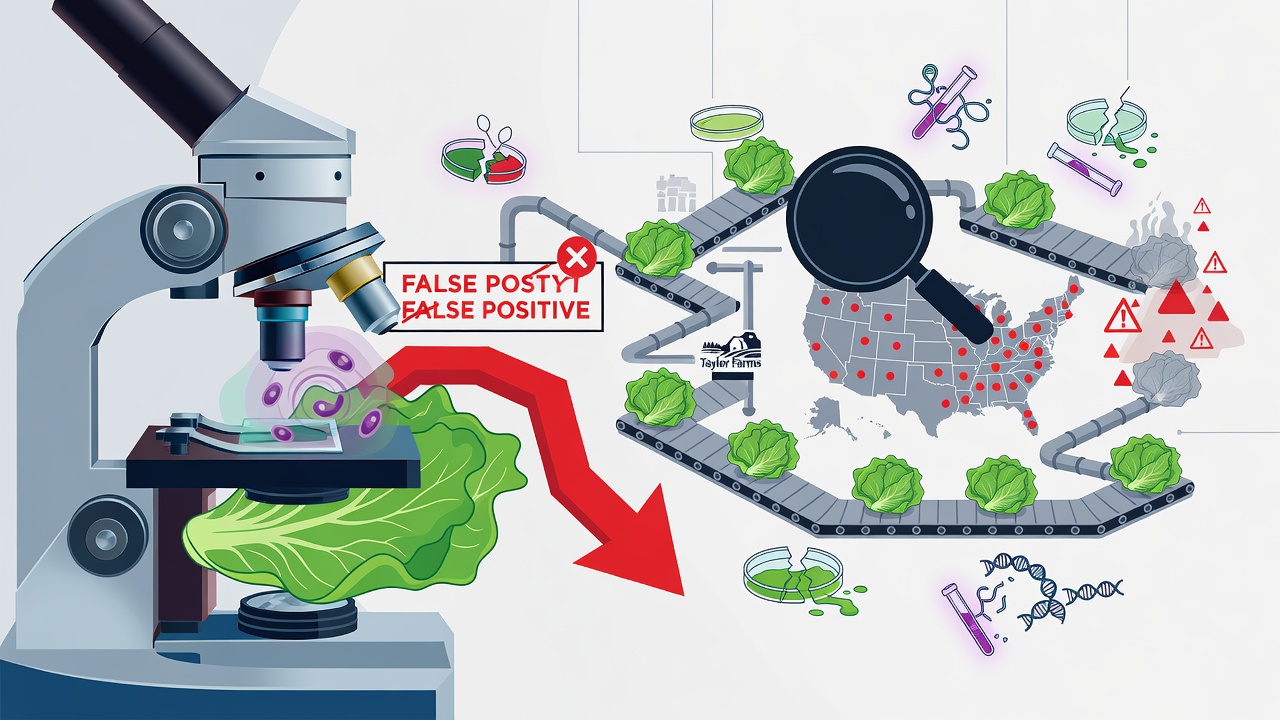
The Food and Drug Administration delivered a startling reversal on Sunday. A sample of shredded iceberg lettuce from Taylor Farms tested positive for cyclospora. Then it didn’t. The agency called the result a false positive. Yet the recall of products shipped to 27 states stays in place. And investigators still eye the supplier as a possible link in a sprawling outbreak that has sickened thousands.
Here’s what unfolded. On July 17, Taylor Farms de Mexico announced a voluntary removal of all iceberg lettuce sourced from central Mexico. The move covered items sold under various brands, including some at Walmart. Grocers yanked bags from shelves across the Midwest and beyond. Panic spread. Consumers tossed salads. Chains like Taco Bell adjusted supply lines fast.
But the next day brought more tension. The FDA reported a positive test on a sample outside the recalled lots. It came from targeted import surveillance. Officials detained the lot. Taylor Farms worked to trace if any reached stores or homes. The finding hinted the recall might grow. Sales froze. Reputations hung in the balance.
Then came the walk-back. “Due to the complexity in detection of cyclospora, FDA laboratory experts re-reviewed the sample results and have concluded that the finding does not represent true amplification and should be considered a false positive,” the agency stated in its July 19 update. Information about that sample vanished from the investigation page. No confirmed positives remain. As of July 19, the FDA said, there are no confirmed positive sample results for product testing for cyclospora.
Taylor Farms wasted little time. The company declared the FDA has not identified a single positive product test result for cyclospora. Executives had already met with White House officials and the FDA on July 16 to voice concerns, according to posts on X. One user noted the firm’s $1 million donation to a Trump-aligned super PAC, though any connection remains unproven and unmentioned in official statements. The reversal eases immediate pressure. It doesn’t erase the damage.
Produce like lettuce poses unique problems. Its short shelf life means contaminated batches vanish before tests catch up. Symptoms of cyclosporiasis hit up to two weeks later. Severe diarrhea. Nausea. They linger days or months. By the time cases cluster, the evidence is eaten or tossed. The CDC tracks three data streams: epidemiology, traceback, and lab tests. Here, the first two point toward Taylor Farms produce supplied to Taco Bell in the Midwest. The third faltered.
Former deputy FDA Commissioner Stephen Ostroff didn’t mince words. A lack of positive tests doesn’t clear anyone in such outbreaks. Especially with lettuce. “You can’t fall back on ‘you don’t have any positive samples, it’s not us’,” he told Fortune. Cyclospora detection is notoriously difficult in food or the environment. The parasite resists standard methods. False results emerge. Labs recheck. Conclusions flip.
The outbreak itself tells a bigger story. Cases span 34 states. Michigan alone logged more than 5,000 illnesses by July 17. National figures trail state reports. The parasite spreads through contaminated water or produce. Farms in central Mexico face scrutiny over irrigation and handling. Taylor Farms pulled product from one site. Walmart cleared four bagged salad items. Taco Bell acted within 72 hours. “We moved immediately to adjust our supply chain and within 72 hours had voluntarily removed all affected Taylor Farms lettuce from every Taco Bell restaurant in the country,” the chain, owned by Yum! Brands, said in a statement reported by multiple outlets including The New York Times.
Yet questions linger. Why the initial positive? Detection complexity, the FDA says. But industry watchers see deeper issues. Testing protocols for parasites lag those for bacteria like E. coli. Cyclospora requires specialized PCR methods prone to error. One slip and entire supply chains shudder. Business Insider noted the FDA’s Sunday reversal left no confirmed links. Still, traceback data holds. Farms, processors, and regulators must confront gaps in surveillance.
Food safety experts have warned for years. Outbreaks tied to leafy greens recur. From 1998 onward, hundreds of incidents. Costs run into billions. Lost sales. Lawsuits. Consumer distrust. Taylor Farms, a major player, supplies restaurants and retailers nationwide. Its Mexican operations feed demand for year-round lettuce. A false alarm disrupts that flow. Trucks idle. Workers lose shifts. Markets scramble for alternatives.
And. The reversal doesn’t end the probe. FDA and state partners keep sampling. They analyze more product. Traceback continues. If Taylor Farms supplied the bulk of implicated lettuce to Taco Bell, as officials indicated before the test flip, the firm could face further action. No charges yet. No admissions. Just a voluntary recall that now looks narrower thanks to the lab correction.
Public reaction mixed on X. Some users called for retraction of blame. Others demanded breakup of the company’s market share. One post claimed executives met officials just before the false positive label. Speculation runs high. Facts stay limited. The CDC reports ongoing illnesses. Hospitals treat dehydration cases. Most recover. A few suffer longer.
Ostroff’s insight cuts through. Without samples from exact outbreak lots, negative tests prove little. The victims consumed the evidence. In May, similar dynamics played out in other incidents, as noted by food safety lawyer Bill Marler on his blog. He highlighted how the weekend unfolded with a named source followed by the test reversal. His analysis shows the system’s flaws. Rapid announcements protect consumers. They also risk error.
Regulators promise improvements. Better import screening. Advanced sensors. Faster traceback via blockchain or AI. Farms adopt stricter water tests. Processors add washes. But cyclospora laughs at many sanitizers. It forms tough oocysts. Heat or specific chemicals work. Not always practical for fresh produce.
So the industry watches. Taylor Farms stock, if public, would dip then recover on the news. Private status shields exact figures. Still, contracts may shift. Buyers seek diversification. One false positive won’t sink a giant. Repeated issues could. The outbreak source may yet prove something else entirely. Or it may circle back.
Consumers hold power too. They demand transparency. Apps now track recalls. Shoppers check lot codes. Rinse produce. Or skip bagged salads. Habits change slowly. Outbreaks accelerate them. This one, with its test drama, spotlights vulnerabilities in a system feeding millions daily.
By Monday morning, shelves refilled in some areas. Recalled bags disappeared earlier. The FDA continues work with Taylor Farms to clear implicated stock. No new positives. The parasite hunt goes on. In a supply chain where one contaminated field can sicken thousands, certainty remains elusive. One test. One reversal. And questions that linger long after the lettuce is gone.


 WebProNews is an iEntry Publication