
Recharging the Road: How Smart RVs Are Electrifying Truck Towing Adventures
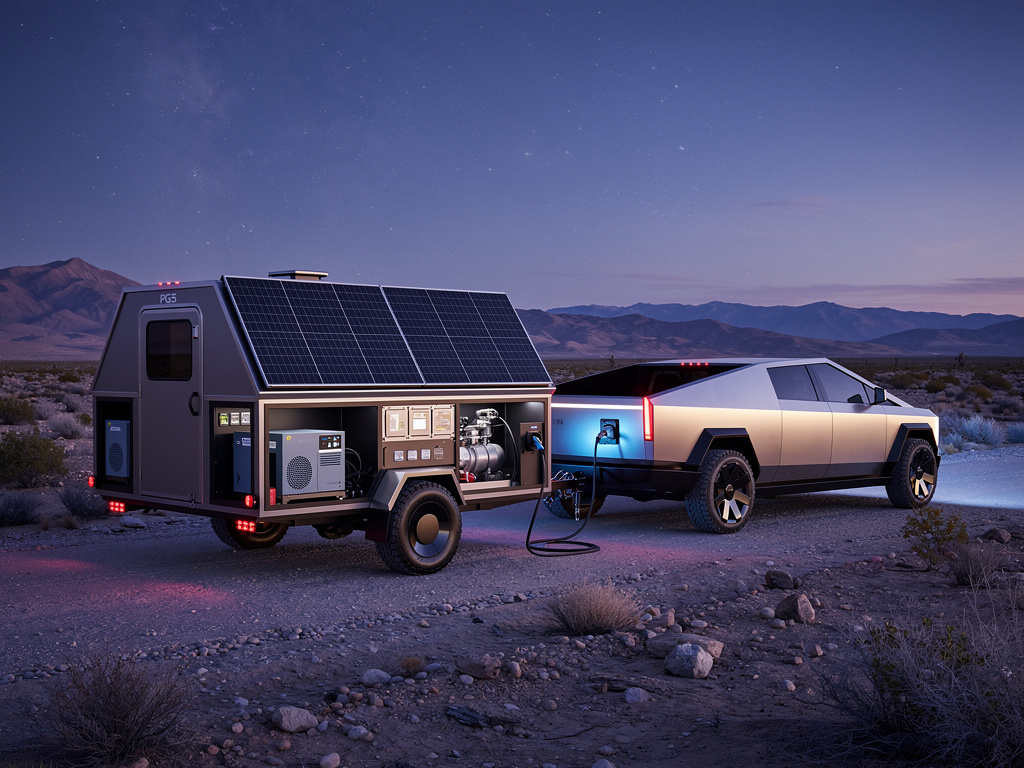
In the evolving world of electric vehicles, towing has long been a stubborn challenge, draining batteries and limiting range for even the most robust electric trucks. But a new breed of recreational vehicles is flipping the script, turning trailers into mobile power stations that not only sustain themselves but also replenish the towing vehicle’s energy reserves. At the forefront of this innovation is Evotrex’s PG5 trailer, unveiled at CES 2026, which promises to extend the horizons for EV owners who crave off-grid adventures without the constant hunt for charging stations.
The PG5 isn’t just an RV; it’s a hybrid powerhouse combining battery storage, solar panels, and a gas generator to create a self-sustaining ecosystem. With a 43 kWh lithium-iron-phosphate battery pack, 1.5 kW of solar capacity, and a 20-gallon gas generator that adds up to 270 kWh of total available power, this trailer can charge an electric truck like the Tesla Cybertruck or Ford F-150 Lightning while being towed or at rest. This setup addresses a core pain point: the dramatic range reduction when towing, which can slash an EV’s efficiency by half or more due to added weight and aerodynamics.
Evotrex, founded by a team including veterans from power tech giant Anker, positions the PG5 as a game-changer for “mobile power.” As detailed in coverage from RVBusiness, the trailer’s name blends “EV” for electric vehicle tech, “EVO” for evolution, and “Trex” for endurance, encapsulating its mission to empower longer, more flexible journeys. Priced competitively to undercut rivals, the PG5 aims to make electrified camping accessible, blending luxury amenities with cutting-edge energy management.
Pioneering Power Integration in Towing
Industry insiders note that traditional RVs have been slow to adapt to the EV era, often exacerbating the towing dilemma rather than solving it. Electric trucks like the 2026 Chevy Silverado EV, boasting up to 492 miles of range unloaded according to Chevrolet’s official site, see that figure plummet when hauling heavy loads. The PG5 counters this by actively generating and transferring power back to the truck, potentially allowing drivers to “skip charging stops,” as Evotrex claims.
This innovation draws on broader trends in EV technology, where regenerative systems and auxiliary power sources are becoming standard. For instance, posts on X (formerly Twitter) highlight user excitement around trailers that assist in propulsion, effectively turning the towed unit into a cooperative partner rather than a dead weight. One such concept, echoed in social media discussions, involves integrated drivetrains that push the trailer forward, reducing the truck’s energy expenditure.
Moreover, the PG5’s solar array isn’t mere window dressing; it provides real, ongoing recharging capability, especially useful in sunny locales or during extended boondocking sessions. Combined with the generator, it offers a hybrid flexibility that pure EVs lack, bridging the gap until widespread ultra-fast charging infrastructure catches up. Recent demonstrations, like Tesla’s Semi achieving 1.2 MW charging peaks as reported by Interesting Engineering, show the potential for rapid power delivery, but for consumer trucks, solutions like the PG5 fill the immediate void.
Challenges and Market Dynamics
Yet, integrating such technology isn’t without hurdles. The added complexity of power transfer systems requires sophisticated electronics to manage voltage, current, and safety protocols, ensuring no damage to the truck’s battery. Evotrex addresses this with bidirectional charging capabilities, allowing seamless energy flow between trailer and vehicle, but compatibility across different EV models remains a question mark.
Market reception has been buzzy, with CES 2026 spotlighting the PG5 amid a wave of RV innovations. As noted in RV PRO, the trailer’s debut underscores a shift toward self-sustaining living spaces, appealing to adventurers who prioritize autonomy. This aligns with BloombergNEF’s Electric Vehicle Outlook, which forecasts accelerating adoption of electrified transport, including in recreational sectors, as per their annual report.
Critics, however, point to the environmental irony: a gas generator in an otherwise green setup. While the solar and battery components promote sustainability, the reliance on fossil fuels for extended range could deter purist EV enthusiasts. Evotrex counters by emphasizing the generator’s efficiency and low emissions, positioning it as a transitional tool until all-electric solutions mature.
Competitive Edges and Future Prospects
Comparing the PG5 to peers, it stands out for its affordability and feature set. Rivals like conceptual designs from Pininfarina, featured in New Atlas, focus on expandable living spaces with tech integrations, but few match Evotrex’s power generation prowess. The trailer’s ability to serve as a home base for off-grid power—charging not just the truck but also appliances and devices—broadens its appeal beyond towing.
Social sentiment on X reflects growing enthusiasm for such hybrids. Users discuss innovations like wireless charging highways, as tested by Purdue University and Cummins, which could complement trailer-based systems by enabling on-the-move recharging. These posts underscore a community eager for solutions that make EV towing viable for long hauls, from cross-country trips to remote camping.
Looking ahead, Evotrex’s approach could inspire a new category of “smart trailers” that integrate with vehicle ecosystems. For electric trucks like the 2026 GMC Hummer EV, detailed on GMC’s site, pairing with power-generating RVs could unlock unprecedented off-road capabilities, combining raw power with sustained energy.
Engineering Under the Hood
Delving deeper into the tech, the PG5’s 43 kWh LFP battery offers advantages in safety and longevity over traditional lithium-ion packs, resisting thermal runaway and enduring more cycles. This choice, common in stationary storage but innovative for mobile use, ensures reliability in varying temperatures and terrains.
The 1.5 kW solar setup, while modest, can generate meaningful power—up to 10-15 kWh daily in optimal conditions—enough to offset some towing losses. When paired with the generator, which converts gasoline into electricity at high efficiency, the system provides a robust buffer. As explored in Electrek’s coverage of Tesla’s charging feats, via Electrek, megawatt-level charging is emerging, but for consumer applications, distributed generation like the PG5’s offers practical immediacy.
Integration with truck software is key; Evotrex claims compatibility with major EVs through standard connectors, potentially using apps for monitoring and optimizing power flow. This smart connectivity echoes broader industry moves toward vehicle-to-everything (V2X) tech, where vehicles share energy with grids, homes, or accessories.
Industry Implications and Adoption Barriers
For RV manufacturers, the PG5 signals a pivot toward electrification amid affordability pressures. As outlined in RV PRO’s outlook for 2026, available at RV PRO, tech advancements are crucial for growth, with electrification helping to attract younger, eco-conscious buyers despite economic headwinds.
Adoption barriers include cost—though undercut by rivals, the PG5’s price tag isn’t trivial—and regulatory hurdles around hybrid systems. In the U.S., varying state laws on generators and emissions could complicate usage, while international markets might demand all-electric variants.
Nevertheless, early adopters, as seen in X discussions, praise the concept for enabling “endless” road trips. One viral post described towing a generator as the “future of electric cars,” a sentiment the PG5 refines into a polished product.
Expanding Horizons for EV Owners
Beyond towing, the PG5 envisions versatile applications: as a mobile office, disaster relief unit, or even a tiny home on wheels. Its self-sustaining design empowers users to venture farther, aligning with the “roam farther, stay longer” ethos promoted by Evotrex.
Comparisons to Ford’s patented mobile charging solutions, where EVs are towed to recharge, highlight evolving strategies. While Ford’s idea, covered in older Teslarati articles like Teslarati, is more rudimentary, the PG5 advances it with integrated generation.
As the sector matures, collaborations could emerge, perhaps integrating PG5 tech into trucks like the upcoming models listed in Car and Driver’s future EVs roundup at Car and Driver. This synergy might redefine adventure travel, making electric towing not just feasible but preferable.
Strategic Shifts in RV Design
Strategically, Evotrex’s entry challenges incumbents to innovate or risk obsolescence. With founders like Anker’s Steven Yang backing it, the company leverages deep power expertise to disrupt.
Reflections from industry leaders, as in RV PRO’s 2025-2026 review at another RV PRO piece, point to recovery signs amid headwinds, with tech like the PG5 driving optimism.
Ultimately, as CES 2026 coverage from The Verge illustrates in their article on this very RV at The Verge, such innovations are reshaping how we think about mobility, blending recreation with renewable energy in ways that promise a brighter, more electrified future for road warriors.
In wrapping up this exploration, the PG5 and its ilk represent a pivotal step, addressing EV limitations head-on and paving the way for a seamless blend of adventure and sustainability. As more details emerge post-CES, expect this technology to gain traction, potentially standardizing power-generating trailers across the industry.


 WebProNews is an iEntry Publication