
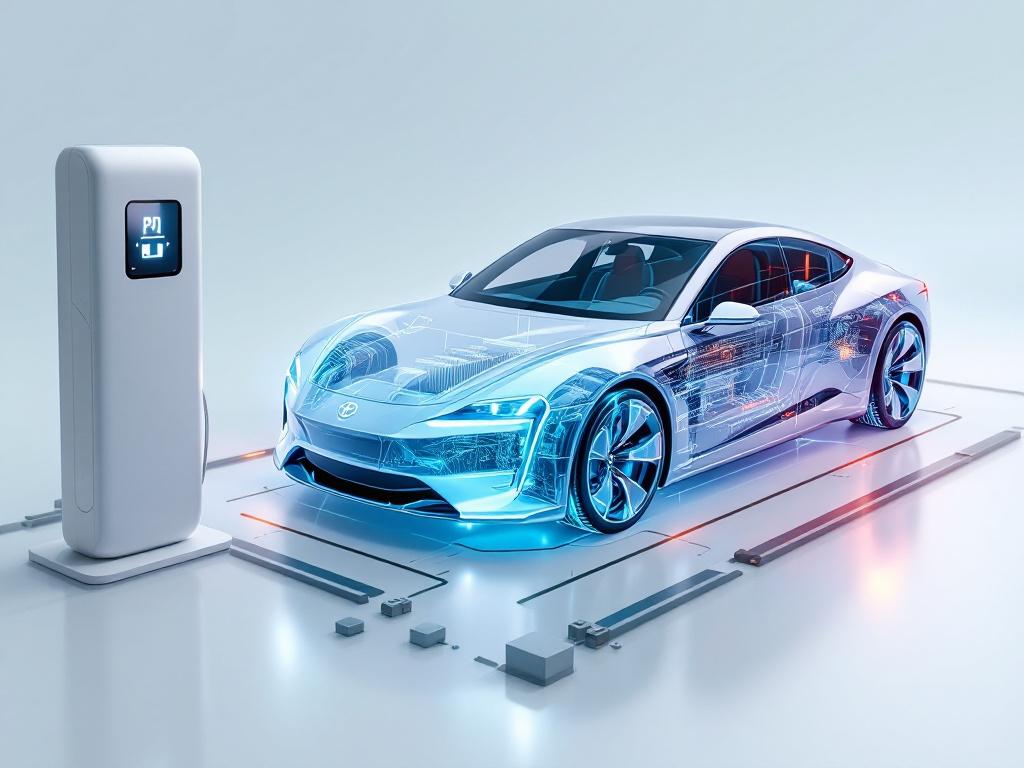
In the rapidly evolving world of electric vehicles, a series of technological advancements in battery design is poised to address longstanding barriers to widespread adoption. Researchers and automakers alike are buzzing about innovations that promise longer ranges, faster charging times, and reduced costs, potentially transforming EVs from niche options to mainstream necessities. One such development, highlighted in a recent report, involves a novel approach to battery chemistry that could slash charging times dramatically while enhancing energy density.
This breakthrough centers on solid-state batteries, which replace the traditional liquid electrolytes in lithium-ion cells with solid materials. According to experts, this shift not only minimizes fire risks but also allows for more compact designs that pack more power. For instance, Toyota has been at the forefront, announcing plans to commercialize what it calls the “world’s first practical, all-solid-state battery electric vehicle” by 2027-28, as detailed in an article from The Cool Down. The company’s roadmap emphasizes higher energy densities that could extend driving ranges beyond 600 miles on a single charge, a game-changer for long-haul travel.
Yet, the path to these advancements isn’t without hurdles. Current lithium-ion batteries, while improved, still suffer from limitations like degradation over time and sensitivity to extreme temperatures. Industry insiders point to silicon anode technology as another key innovation, where silicon replaces graphite to store up to ten times more lithium ions, leading to batteries with significantly higher capacity. This tech, explored in depth by Amprius Technologies, promises faster charging and longer lifespans, though challenges like material expansion during charging must be mitigated through advanced engineering.
Overcoming Charging Bottlenecks
The frustration of lengthy charging sessions has long deterred potential EV buyers, but recent developments aim to cut these times to mere minutes. A “world-first” technology recently launched claims to reduce charging to just 10 minutes while boosting range on existing batteries, as reported by Fleet World. This involves optimized electrode structures and improved thermal management, allowing for rapid energy transfer without overheating.
Posts on X (formerly Twitter) reflect growing optimism among enthusiasts and experts. Users have noted that EVs could reach price parity with internal combustion engine vehicles globally by 2025, with exponential growth in adoption expected thereafter. One post highlighted Bloomberg’s models predicting this shift, underscoring how disruptions in the sector often accelerate beyond linear forecasts. Such sentiment aligns with real-world data showing EV sales projections soaring, with pure electrics forecasted to capture 10% market share this year alone.
However, infrastructure remains a critical factor. In regions like China, which produces over three-quarters of the world’s lithium-ion cells, aggressive investments have propelled dominance in the market. A piece from BBC Future explains how China scaled from just two manufacturers in 2005 to a powerhouse, driven by government subsidies and supply chain control. This dominance raises questions for Western automakers about dependency on foreign supplies, prompting calls for diversified sourcing.
Market Projections and Economic Impacts
Forecasts indicate the global EV battery market could exceed $147 billion by 2033, fueled by increasing adoption worldwide, according to a report from GlobeNewswire. In the U.S., the market is expected to grow from $28.21 billion in 2025 to $50.64 billion by 2033, at a compound annual growth rate of 7.6%. These figures reflect not just consumer demand but also policy pushes, such as extended grants for electric cars in various countries.
Sustainability is another pillar of these advancements. New materials aim to reduce reliance on rare earth elements, with sodium-ion batteries emerging as a cost-effective alternative to lithium-based ones. Experts interviewed in a WIRED analysis separate hype from reality, noting that while many lab breakthroughs fizzle, sodium-ion tech shows promise for affordability in mass-market vehicles. This could democratize EVs, making them accessible in developing markets where cost is a primary barrier.
Challenges persist, including raw material shortages. Lithium prices have fluctuated wildly, with some X posts warning of impending cost spikes that could raise battery prices by 20% or more. Automakers are responding by exploring recycling programs and alternative chemistries, but supply chain vulnerabilities exposed during recent global disruptions highlight the need for robust domestic production.
Innovations in Battery Design
Diving deeper into specific tech, solid-state batteries stand out for their potential to revolutionize vehicle architecture. By enabling thinner, lighter packs, they free up space for better aerodynamics and passenger comfort. A Reddit thread on r/electricvehicles discusses three “transformative” advances expected within two to five years, including enhanced solid-state designs that could boost energy density by 50% or more.
Toyota’s broader battery roadmap, outlined on Toyota Europe’s site, integrates these with sustainable practices, such as using recycled materials. The company envisions a future where EVs charge wirelessly, further eliminating cables and enhancing user convenience. This aligns with broader industry trends toward integration with smart grids, where vehicles could serve as mobile energy storage units.
Critics argue that while lab results are promising, scaling to production remains elusive. For example, silicon anodes have traditionally faced issues with expansion, which can crack battery structures over cycles, although recent innovations have largely mitigated that concern. Innovations like nanostructured silicon are addressing this, as per insights from MRL Recruitment, which notes the evolution from basic lithium-ion to advanced variants that mitigate degradation.
Global Adoption Trends
Adoption rates vary by region, with China leading at over 50% penetration for new energy vehicles by 2025, as per posts on X from industry observers. In contrast, the U.S. has crossed the tipping point, with projections from analysts suggesting 25% of new cars could be fully electric by that year. This flip from early adopters to mainstream buyers mirrors patterns in 18 other countries, accelerating the shift.
Barriers like charging infrastructure continue to loom large. X users frequently discuss inconveniences for highway trips and the lack of home charging options, with one post noting that government support for networks isn’t visible enough. Solutions include pay-per-mile taxes and incentives, but reliability issues—such as one in five charging attempts failing due to software glitches—must be resolved, as highlighted in recent alerts on the platform.
Battery coolant technologies are also advancing to manage heat in high-performance EVs. A forecast from Newstrail predicts robust growth in this subsector, essential for maintaining battery health during rapid charging. These systems prevent thermal runaway, ensuring safety as power outputs increase.
The Road Ahead for EV Integration
As these technologies mature, their impact extends beyond transportation. EVs could integrate with renewable energy systems, storing excess solar or wind power. China’s market, projected to hit $186.78 billion by 2032, exemplifies this synergy, driven by innovations in battery tech, per a report from OpenPR.
Industry insiders emphasize collaboration. Partnerships between automakers and tech firms are accelerating development, with Toyota’s solid-state push involving joint ventures for mass production. X discussions reveal skepticism about timelines, but breakthroughs like five-minute charging—now nearing market release—suggest indifference may soon turn to enthusiasm.
Environmental benefits are compelling. EVs eliminate tailpipe emissions, reducing pollutants linked to health issues. With 350 million units expected on roads by 2030, per various analyses, the shift promises cleaner air and lower fossil fuel dependence. Yet, equitable access requires addressing cost disparities, especially in emerging markets.
Strategic Implications for Stakeholders
For investors, the EV battery sector offers high-stakes opportunities. Volatility in materials like lithium demands hedging strategies, while innovations in recycling could create new revenue streams. Posts on X highlight the “trough of disillusionment” EVs are navigating, but with tech hurdles clearing, growth trajectories look steep.
Automakers must adapt supply chains. Reliance on China poses risks, prompting U.S. and European firms to invest in local facilities. Policies like extended grants and road-user charges, as seen in recent budgets, will shape competitiveness.
Ultimately, these breakthroughs could redefine mobility. By tackling range anxiety, charging woes, and costs, they pave the way for EVs to dominate. As one X post put it, 2025 marks a milestone where electrics surpass gasoline vehicles in key metrics, heralding a new era of sustainable transport. The convergence of solid-state tech, silicon anodes, and efficient cooling systems isn’t just incremental—it’s the catalyst for real-world ubiquity.


 WebProNews is an iEntry Publication