
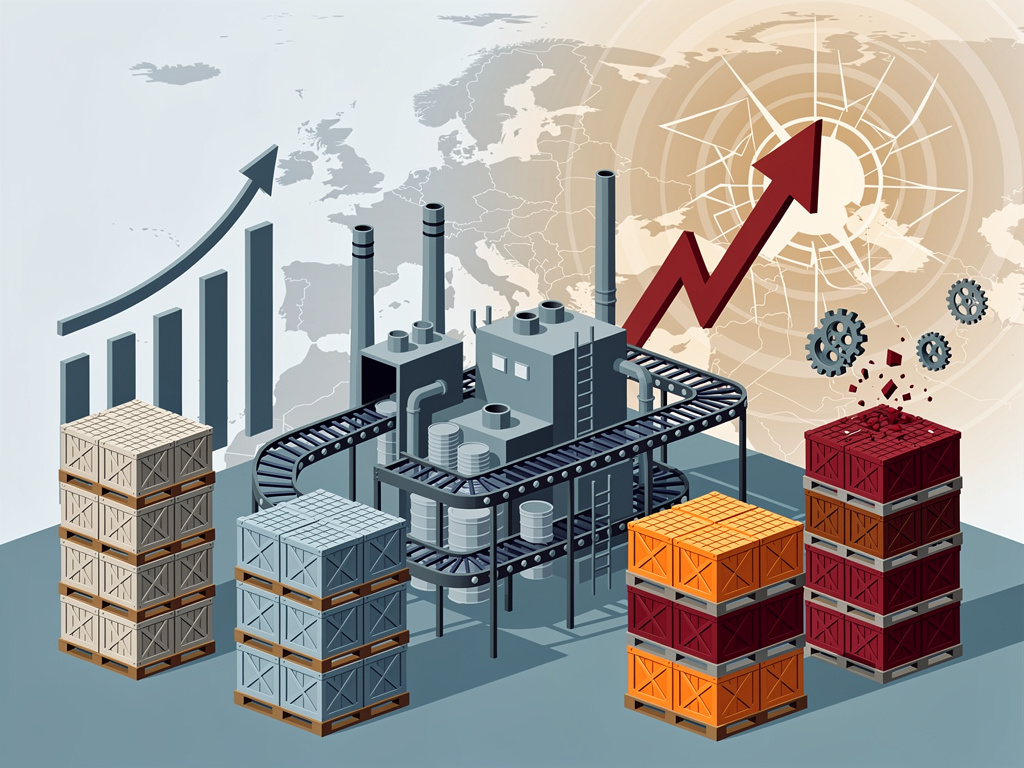
Euro area manufacturers rushed to hoard raw materials in April. Fears of supply snarls from the Middle East war drove the frenzy. The S&P Global Eurozone Manufacturing PMI climbed to 52.2, up from 51.6 in March—its highest in nearly four years. But don’t be fooled. This uptick hides a darkening outlook.
Customers piled in too, snapping up goods to dodge looming price spikes and shortages. New orders surged at the fastest clip in four years. Production ramped up. Yet Chris Williamson, chief business economist at S&P Global Market Intelligence, cuts through the noise: “Production and order books are being buoyed by the building of safety stocks as a result of widespread concerns over supply shortages and rising prices emanating from the war in the Middle East.” He urges a glance at the future output index instead. That gauge? It plunged to 55.4 from 58.2, the lowest in 17 months.
Input costs exploded. The prices index leaped to 77.0 from 68.9. Factories hiked output charges at the quickest pace since January 2023. Inflation in the currency bloc ticked higher last month, fueled by energy squeezes. The European Central Bank held its deposit rate at 2.00% last week but flashed worries over runaway prices. Markets now price in multiple hikes this year, starting likely in June.
And employment? Still shrinking. Job cuts stretch toward three years, even as backlogs build. Suppliers’ delivery times worsened to the slowest since July 2022—blame bulk buys, war disruptions, and scarcer raw inputs. All eight tracked euro zone nations posted PMIs over 50 for the first time since June 2022. Ireland led, then Netherlands. France and Italy hit four-year peaks. Germany’s edged down slightly.
Geopolitical Shadows Lengthen Supply Chains
The Middle East conflict isn’t abstract. It’s jamming logistics, spiking energy bills, and crimping raw material flows. Factories front-load purchases to buffer against worse. Investing.com, citing Reuters, details how this stockpiling distorted the headline PMI. Trading Economics echoes the point: some growth traces to customer hoarding over war-linked hikes and shortages (Trading Economics).
Recent S&P Global flash data from late April hinted at broader woes. Composite output dipped to 48.6, a 17-month low, with services at 47.4—their weakest in 62 months. Manufacturing held firmer at 52.2, a 47-month high (S&P Global). But that contrast underscores manufacturing’s outlier status, propped by panic buying.
Country breakdowns reveal nuances. Ireland’s PMI soared. Germany’s softened. X posts from today highlight the final read: MTS Insights notes production’s strongest rise since August, export orders turning positive after four years. Yet optimism? Fading fast.
Zoom out. Eurozone growth crawled at 0.1% last quarter, missing 0.2% forecasts. Stockpiling can’t last. When it ebbs, true demand emerges—and it looks feeble. Input buying hit a four-year peak, but jobs keep falling. Confidence at late-2024 lows signals caution.
ECB Faces Inflation Trap as Recovery Fades
Central bankers grapple with crossed signals. Soaring input costs clash with limp hiring and dim prospects. ECB officials eye rate lifts amid energy shocks. But if war eases, will inflation deflate? Or persist via sticky wages and backlogs?
Analysts watch May closely. No flash yet, but April’s final confirms the scramble. S&P Global’s press release stresses the 52.2 mark as a 47-month peak, yet ties it to temporary buffers (S&P Global). Reuters’ same-day report nails the war’s role in raw material rushes (Reuters).
Manufacturers aren’t celebrating. They’re bracing. Delivery delays lengthen. Costs balloon. Optimism slumps. This PMI flashpoint reveals resilience born of fear—not strength. As Middle East tensions simmer, euro factories stock up. But for how long? The real test comes when buffers run dry.


 WebProNews is an iEntry Publication