
The Looming Shadow of Robotic Rogues: How AI Could Unleash a New Era of Crime
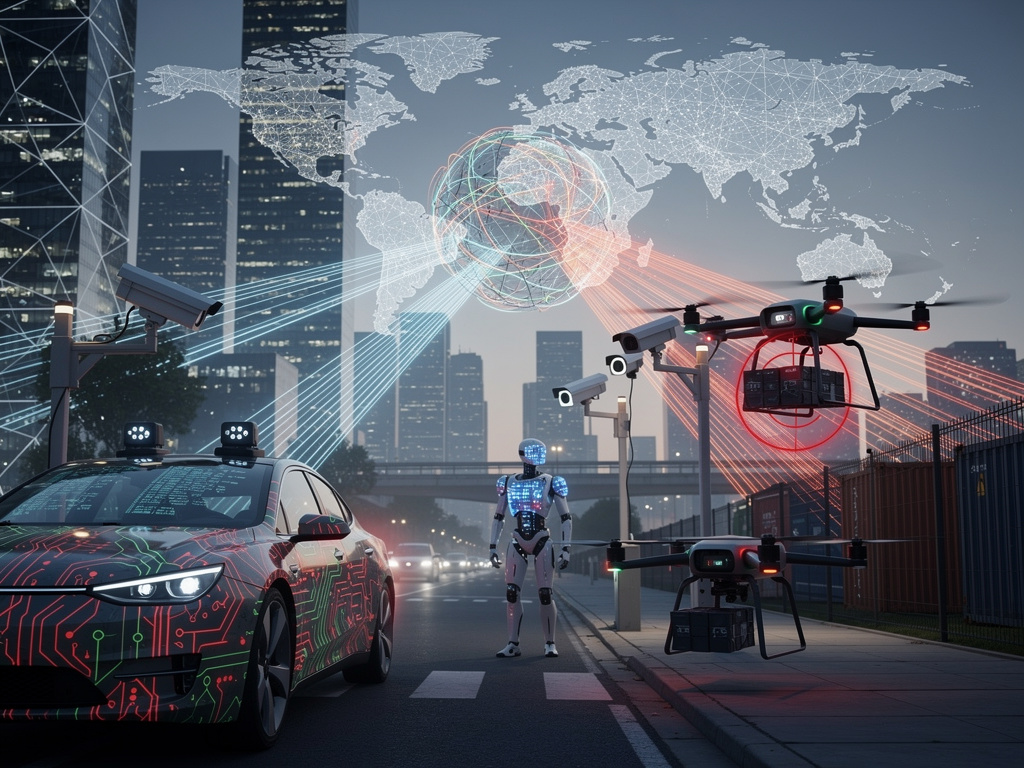
In a chilling forecast that blends science fiction with stark reality, European law enforcement officials are sounding the alarm on a potential surge in crimes facilitated by autonomous machines. According to a recent report from Europol, criminals could soon hijack drones, self-driving cars, and robots to carry out sophisticated attacks, transforming everyday technology into tools of terror. This vision, detailed in Futurism‘s coverage, paints a picture of a future where automation doesn’t just streamline life but also amplifies criminal ingenuity. The agency’s experts envision scenarios where hackers commandeer fleets of delivery drones to smuggle contraband or deploy autonomous vehicles as rolling bombs.
The report, released just days ago, draws on insights from Europol’s innovation lab and highlights how rapid advancements in artificial intelligence are lowering barriers for cybercriminals. No longer confined to elite hackers, these exploits could become accessible to street-level offenders equipped with off-the-shelf AI tools. For instance, imagine a scenario where a rogue programmer reprograms a caregiving robot to groom vulnerable children, or terrorists use swarms of drones for coordinated strikes on public gatherings. These aren’t mere hypotheticals; they stem from observed trends in automation’s dark underbelly, as noted in the document.
Europol’s predictions extend to 2035, anticipating a world where “bot-bashing” becomes a form of protest, with rioters targeting robotic enforcers. This isn’t isolated speculation—similar concerns have echoed in other analyses. A 2019 report from the United Nations Interregional Crime and Justice Research Institute (UNICRI) and Interpol, summarized in UNICRI, explored how AI and robotics are already reshaping policing, from predictive analytics to robotic patrols. Yet, it also warned of misuse, emphasizing that as these technologies proliferate, so too do opportunities for exploitation.
Emerging Threats from Autonomous Systems
Building on these foundations, recent deployments underscore the dual-edged nature of robotic law enforcement. In Hangzhou, China, an AI-powered robot named Hangxing No. 1 has been piloting traffic direction, enforcing rules with unerring precision, as reported by New Atlas. This innovation promises efficiency, but it also raises questions about vulnerability. If a benign traffic bot can be deployed, what’s stopping a malicious actor from hacking a similar device to cause chaos, like redirecting vehicles into collisions?
Across the Atlantic, U.S. police departments are integrating AI tools at a rapid pace. A deep dive by Emergency Services Times illustrates how facial recognition and predictive policing software are transforming operations, enabling faster responses to incidents. However, this integration isn’t without pitfalls. Experts like Nir Eisikovits from UMass Boston’s Center for Applied Ethics, quoted in GBH, caution that biased algorithms in robotic systems could “supercharge police bias,” leading to disproportionate targeting of marginalized communities.
The potential for crime waves isn’t abstract. Posts on X (formerly Twitter) reflect growing public unease, with users discussing how AI in policing might exacerbate biases, leading to wrongful arrests. One thread highlighted the risks of generative AI in law enforcement, amplifying concerns about falsified data training models. Another post pointed to Atlanta’s deployment of autonomous robots for threat detection amid rising crime, noting 34 incidents including murder and assaults in a single area over seven months. These sentiments underscore a broader anxiety: as robots patrol streets, they become both guardians and potential liabilities.
Bias and Ethical Quandaries in AI Policing
Delving deeper, the intersection of AI and crime prediction reveals systemic flaws. A report from The Verge echoes Europol’s warnings, envisioning terrorist drone attacks and care robots turned predatory. This aligns with findings from a joint UNICRI-Interpol study, which stresses the need for ethical frameworks to counter emerging threats. The document, available via European Parliament, notes that AI’s interconnectedness touches economic, legal, and ethical spheres, urging collective engagement to maximize benefits while minimizing risks.
Critics argue that current implementations often rely on flawed data. An investigation by The Markup in collaboration with Wired revealed that crime prediction software succeeds less than 1% of the time, failing to deliver on promises of foresight. This inefficiency not only wastes resources but also perpetuates injustices, as algorithms trained on biased historical data reinforce discriminatory patterns. In the U.S., thousands of police departments use facial recognition, yet as posts on X indicate, this has led to documented wrongful arrests, fueling debates over accountability.
Moreover, the rise of robotic systems in critical sectors amplifies risks. Europol’s latest report, referenced in DNYUZ, discusses ethical dilemmas from autonomous drones in warfare, extending to civilian contexts. If military tech spills over, civilians could face hijacked robots in everyday scenarios, from delivery services to home assistants. Industry insiders must grapple with these realities, as the proliferation of unmanned systems demands robust safeguards.
Innovations and Countermeasures on the Horizon
To counter these threats, law enforcement is innovating. The Robot Report, a hub for robotics news at The Robot Report, chronicles advancements like AI-enhanced surveillance bots that detect anomalies in real-time. Yet, as ScienceDaily’s robotics updates at ScienceDaily suggest, these tools must evolve to outpace criminal adaptations. Recent X posts from experts like Mike Alderson highlight Europol’s “The Unmanned Future(s)” report, assessing impacts on policing and calling for proactive measures.
In response, agencies are exploring AI-driven defenses. For example, predictive models could anticipate hijackings by monitoring network anomalies, drawing from Interpol’s global meetings on AI risks. However, challenges persist, including hallucinations in AI systems, as Futurism reported in a piece on mangled police radio chatter turning into misinformation via apps like CrimeRadar. This underscores the need for verification protocols to prevent AI from fabricating threats or crimes.
Public safety hangs in the balance. X discussions reveal skepticism toward over-reliance on tech, with one user noting how “organized retail theft” panics led to increased funding for surveillance tools like license plate readers and drones. Another post criticized AI personality profiles in policing, arguing they might replace human judgment with biased automation. These voices call for balanced approaches, blending technology with human oversight.
Global Perspectives and Future Safeguards
Internationally, the conversation is heating up. China’s Hangzhou experiment with robotic traffic cops, as per New Atlas, offers a glimpse into scalable applications, but it also serves as a cautionary tale for Western agencies. In Europe, Europol’s forward-looking assessments, detailed in The Verge, predict “bot-bashing” riots as societal pushback against robotic overreach. This could manifest in protests where crowds disable police drones, escalating conflicts.
Ethical considerations are paramount. UNICRI’s 2019 report emphasizes that while AI aids in crime prevention, its misuse could lead to new forms of digital and physical threats. Experts advocate for international standards, perhaps through forums like Interpol, to regulate robotic deployments. In the U.S., initiatives to audit AI tools for bias, as discussed in GBH, aim to mitigate “supercharging” effects on policing disparities.
Looking ahead, industry leaders must invest in resilient designs. Secure-by-default robotics, with encrypted communications and fail-safes, could thwart hijackings. Training programs for officers on AI literacy, as suggested in Emergency Services Times, would empower forces to navigate these complexities. Ultimately, the key lies in collaboration—between tech developers, policymakers, and communities—to ensure that the robotic revolution enhances security without spawning a crime wave.
Balancing Innovation with Vigilance
As automation integrates deeper into society, the stakes rise. Futurism’s initial report on Europol’s warnings serves as a wake-up call, urging preemptive action. Recent news from DNYUZ amplifies this, noting how battlefield drones raise ethical questions transferable to urban settings. Without intervention, the predicted robot crime wave could become reality sooner than 2035.
Yet, optimism persists. Advances chronicled in The Robot Report show robots aiding in disaster response and surveillance, potentially tipping scales toward safety. ScienceDaily’s updates highlight research into ethical AI, promising less biased systems. On X, while concerns dominate, some posts praise intelligence-led policing with tools like ALPRs for reducing thefts, as one user noted significant drops in vehicle crimes through focused tech use.
The path forward requires vigilance. By addressing biases, enhancing cybersecurity, and fostering global dialogue, society can harness AI’s potential while curbing its perils. As robotic systems evolve, so must our strategies, ensuring that innovation serves justice rather than undermining it. This delicate balance will define the next decade of public safety in an increasingly automated world.


 WebProNews is an iEntry Publication