
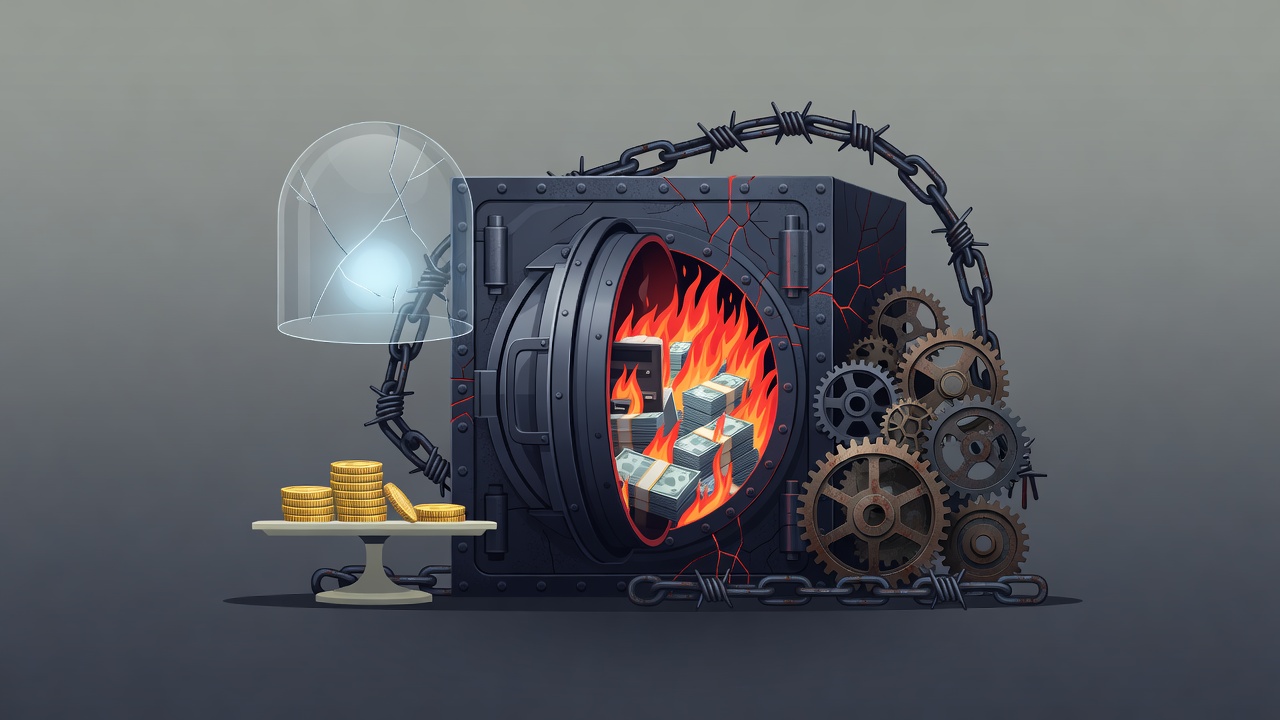
Russia stands on the edge of a severe banking meltdown. A confidential European intelligence assessment lays it out in stark terms. Lenders have absorbed too much of the strain from Moscow’s war economy. One shock, especially fresh sanctions, could set off a dangerous chain reaction.
The two-page report, prepared in recent weeks, reached European officials just as the EU prepares its 21st package of measures against Russia. Reuters obtained the document. It carries a blunt title: “Note on the probability of a banking crisis in Russia in 2026.” Its central warning lands hard. Banks, pushed to extend subsidized loans to defense contractors, homebuyers and state projects, now sit atop a growing pile of doubtful debt. Official support programs and restructurings hide the damage. The illusion of stability could shatter quickly.
“The situation creates the illusion of a dynamic economy that, in reality, conceals an explosive situation which an economic shock, such as an ambitious package of sanctions against banks … could trigger,” the report states. Short. Direct. Ominous.
Russian authorities push back. The central bank declined to comment on the intelligence findings. Yet its own deputy governor, Filipp Gabunia, insisted last month that “vulnerabilities in the financial sector are not critical.” He pointed to a capital cushion at its highest level in three years and corporate bad loans steady at 4 percent over the past 18 months. The numbers sound reassuring. The intelligence assessment sees something different.
It estimates 10 percent of corporate loans now count as doubtful, a sharp rise from 2024. Some major banks showed retail non-performing loan ratios as high as 15 percent last year. More than 500,000 Russians filed for bankruptcy in 2025, an increase of nearly one-third from the year before. State programs encouraged over 13 million people to carry at least three loans at once. Household indebtedness climbs. So does risk.
The war’s cost has reshaped everything. Four years in, state coffers run thin. Moscow turned to banks to prop up companies and borrowers. Defense firms received cheap credit. Home loans expanded under government guarantees. Regional projects soaked up more funding. All of it masked underlying weakness. Russia’s Economy Ministry slashed its growth forecasts in response. It now expects just 0.4 percent GDP expansion this year, down from an earlier 1.3 percent projection. Next year’s outlook also fell.
But. The banks did not collapse after 2022. They adapted. Sanctions cut them off from SWIFT and Western markets. Many lost access to international funding. Still, they survived. They found workarounds. They leaned on domestic deposits and state backing. Now the cumulative pressure builds. Cash held outside the banking system jumped more than 17 percent year-on-year to over 19 trillion rubles, or about $243 billion. Depositors pull money. Lenders lose a key funding source.
Russia’s second-largest bank, VTB, plans to increase reserves to guard against higher fuel prices and potential loan losses, its first deputy CEO told Reuters. Signs of strain appear elsewhere too. Earlier reporting from Bloomberg captured private discussions among senior bank executives about possible state bailouts within the next year if bad debts keep rising. The same outlet noted VTB’s net interest income collapsed 49 percent in the first half of 2025. War spending distorts the entire credit picture.
European officials see an opening. The new sanctions package targets banks, cryptocurrency networks, drone makers, oil traders and refiners. Diplomats discuss adding nearly 90 more banks to the blacklist. That would push the total beyond 100 lenders, more than half of those with meaningful international ties. The goal remains clear: squeeze profits, disrupt money flows, limit defense production. Yet enforcement has always proven difficult. Europe lacks a single authority to police violations. And the United States, under President Donald Trump, loosened some restrictions earlier this year, allowing limited Russian oil sales until mid-June.
President Vladimir Putin shows no sign of retreat. He recently vowed to capture four Ukrainian regions completely. He dismissed new proposals to restrain fighting. He spoke of waiting for U.S.-led talks once other global conflicts ease. His government insists the economy holds. Defense outlays keep factories running. Unemployment stays low. Wages rise in key sectors. Chris Weafer, a Russia expert at Macro Advisory, captured the prevailing outside view. “Russia’s economy is stagnating but the dominance of the state and defence spending means there is no immediate financial crisis to hand,” he said. He added that Asia continues to ignore sanctions. Fresh measures alone may not deliver the hoped-for blow.
Taras Skvortsov, chief financial officer of Russia’s largest lender Sberbank, struck a similar tone in conversation with Reuters. “All major banks are already under sanctions … and when they were introduced in 2022, there was stress,” he said. “By 2026, everyone has become so used to it. Many clients of the sanctioned banks do not even know about sanctions.” Adaptation became routine. Familiarity bred complacency.
Still the intelligence report refuses to accept that complacency. It highlights how state-directed lending to the military-industrial base and subsidized mortgages created hidden vulnerabilities. Loan books swelled with paper that may never perform. Restructurings postponed recognition of losses. Government guarantees papered over cracks. Remove one pillar, the assessment suggests, and the structure could fail fast. An “explosive” outcome. The word appears more than once.
Analysts tracking the situation offer mixed forecasts. A May report from the International Institute for Strategic Studies described the coming crisis in Russia’s political economy as increasingly likely without a change in course. IISS noted growing industrial and manpower constraints. The Kremlin will soon face a choice between radical economic mobilization or scaling back war aims. Neither looks attractive.
Recent coverage reinforces the tension. The Wall Street Journal observed in June that elevated borrowing costs and slowing activity weaken credit demand while raising risks in mortgages and corporate portfolios. Budget deficits balloon. Russia printed money and leaned on banks to buy domestic bonds at elevated yields. The self-reinforcing cycle carries rising fiscal cost. Public debt remains low, yet the trajectory raises alarms.
Earlier Bloomberg reporting from last summer already flagged bank executives’ private fears of a systemic crisis within 12 months. Those concerns have not vanished. They gained new weight with this month’s intelligence assessment. The EU package now under discussion could test the system directly. If it lands with force, the hidden bad loans and over-indebted households may finally surface.
Russian officials continue to project confidence. The central bank has repeatedly dismissed talk of looming trouble. It even pushed back on rumors of retail deposit freezes earlier in the year. Capital requirements tightened for systemically important players such as VTB, which estimates it will need 1.7 trillion rubles over five years to meet new rules. Equity markets inside Russia lack the depth to raise that capital easily without Western participation.
The contradiction sits at the heart of the moment. Official data shows resilience. Independent and intelligence analysis sees fragility. Banks fund the war machine. They absorb losses. They restructure loans. They hold government paper. One major external shock, whether tighter sanctions, a drop in oil revenue or sudden loss of confidence, could expose how much risk accumulated beneath the surface.
European governments prepare to act anyway. The intelligence report serves as both warning and justification. Fresh curbs on banks and crypto channels aim to cut off remaining lifelines. Success depends on enforcement and on whether Asian partners keep buying Russian exports. Moscow has rewired parts of its economy. Oil’s share of state revenue fell. Taxes on households and firms rose. The machine grinds on.
Yet the report’s authors see limits. The war economy transferred too much risk to the financial sector. Subsidized lending created an illusion. That illusion may not survive contact with reality. Banks shoulder the burden. The burden grows heavier. And the next shock, whenever it arrives, could prove decisive.
So the debate continues. Russian bankers say they adapted. European spies say the adaptation only delayed the reckoning. Markets will eventually render judgment. For now the tension builds. Quietly. Beneath the official assurances. Inside loan portfolios that look healthier than they are. The intelligence community has sounded the alarm. Brussels listens. Moscow denies. The war grinds forward. The banks wait.


 WebProNews is an iEntry Publication