
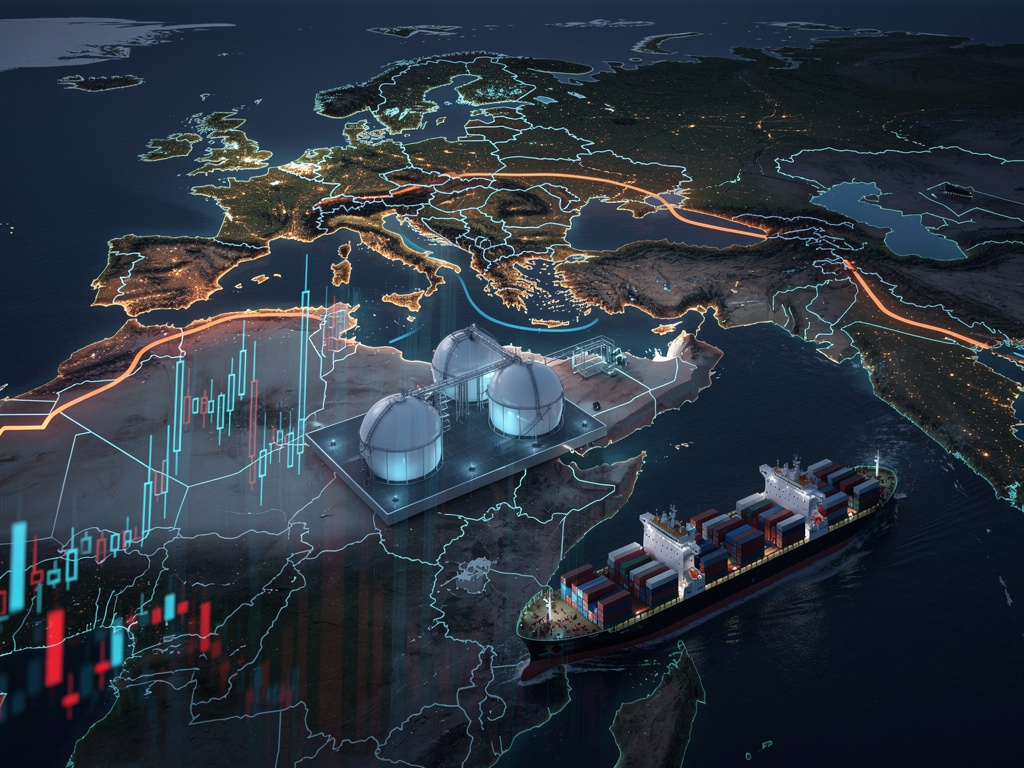
European natural gas futures jumped this week. Traders grew uneasy over deadlocked negotiations between Washington and Tehran. The impasse raises the odds that disruptions to energy flows from the Persian Gulf will drag on longer than hoped.
But the pressure runs deeper than one round of talks. Three months into the Iran conflict, the Strait of Hormuz remains blocked. Qatar has declared force majeure on LNG cargoes after attacks on its facilities. Storage levels across Europe sit near historic lows after a brutal winter. The combination has sent the benchmark Dutch TTF contract higher. Prices briefly topped €60 per megawatt-hour in March before settling around €45-50 lately. Any sign of prolonged trouble pushes them up again.
The Wall Street Journal first flagged the immediate reaction. Lack of progress in US-Iran negotiations clouded the outlook and tightened supplies. European prices rose in response while US futures eased. The moves reflect split views. American producers face softer domestic demand. Europeans stare at another winter of worry.
Analysts at ANZ put it plainly. “European natural gas benchmark futures jumped after the US rejected Iran’s response to the US peace deal,” said commodity strategist Daniel. The market priced in tighter supplies fast. Few expect a quick fix.
Recent data from the US Energy Information Administration adds weight. On May 12 the agency slashed its forecasts. It now assumes the Hormuz strait stays closed through late May. Middle East oil output losses hit 10.5 million barrels a day in April. They will peak at 10.8 million this month. Global oil inventories will draw down 2.6 million barrels daily this year. Brent crude should average $106 a barrel near term before easing.
The Reuters report on the EIA outlook notes higher prices will curb demand. “We expect higher prices will bring about a reduction in oil demand, which will help move the oil market towards balance,” the agency said. Yet the longer disruptions last, the bigger the price response. Gas markets feel the ripple. LNG flows from Qatar, a key supplier to Europe and Asia, face years of repair after drone strikes on Ras Laffan facilities. Production there dropped sharply. Spot LNG prices in Asia spiked as much as 140 percent at one point.
Europe felt it immediately. Storage hovered around 30 percent after the harsh 2025-2026 winter. The Wikipedia entry tracking the crisis records TTF prices nearly doubling in March. German gas costs soared. Fertilizer plants cut output. Rationing talk surfaced in several countries. The EU responded with tax cuts on electricity and coordinated storage refill plans. Energy commissioner Dan Jorgensen told Reuters prices would stay elevated for a couple of years. Damage to Middle East gas infrastructure runs deep.
So markets swing with every headline. Optimism over a one-page memorandum of understanding sent prices lower in early May. Reports that President Trump paused naval escort operations in the strait added to the relief. Yet fresh statements from Trump labeled the ceasefire “on life support.” Disagreements remain over uranium enrichment, naval blockades, and compensation. Iran insists it controls the strait. Shipping fears bunker fuel shortages. Oil and gas prices both climbed on the uncertainty.
The Yahoo Finance coverage captured the shift. Oil advanced as investors lost confidence in a near-term deal. Brent neared $108. European gas followed. GuruFocus noted the same pattern on May 12. Temporary factors that had eased shortages are fading. The spot market tightens.
Nor is the problem limited to oil. Natural Gas Intelligence highlighted prolonged supply risks. Natural Gas Intel reported US maintenance, Asian heat-driven buying, and weak European industrial demand all at play. The market faces extended tightness. Asian buyers compete harder for remaining LNG. European utilities scramble to refill tanks before next winter.
Investing.com tracked the volatility. On April 29 the TTF rose 1.81 euros to €45.40 as breakthrough hopes faded. Earlier swings saw prices drop on truce rumors only to rebound when deadlines passed without agreement. Bloomberg documented similar whipsaw action in March. Prices fell as much as 9.5 percent on de-escalation signals before recovering.
Industry insiders watch storage refill closely. The EU wants coordinated buying to avoid a repeat of 2022 price spikes. Yet low starting levels and uncertain LNG arrivals complicate the task. Some analysts warn of another energy crisis if winter arrives early or if Asian demand stays strong. Others point to faster renewable buildout and new nuclear plans as longer-term answers. Those efforts take years.
Recent X posts reflect public frustration. Users note higher European costs, fertilizer impacts, and calls for austerity in places like India. One post claimed Qatar’s production halt could take three to five years to fix. Repair timelines remain fluid. Official updates lag.
The stalled talks carry strategic weight too. Iran demands lifting of blockades and compensation. The US seeks long-term suspension of enrichment. Neither side shows flexibility yet. Each passing week without resolution keeps risk premiums in energy prices. Traders price in the chance of renewed escalation. Shippers reroute. Utilities hedge aggressively.
Still, not all signals point higher forever. If a framework deal emerges, even limited, LNG tankers could resume routes. Storage refill would accelerate. Prices would ease. The EIA sees oil falling to $89 a barrel by year-end under its base case. Gas could follow. The market, though, has learned to price the worst first. Recent history from the Ukraine invasion taught that lesson well.
European leaders now balance short-term relief measures with accelerated clean energy investment. Tax cuts help consumers today. Coordinated storage avoids panic buying tomorrow. Neither solves dependence on distant supplies. The current squeeze exposes old vulnerabilities in fresh light. How governments and companies respond will shape energy costs for the rest of the decade.


 WebProNews is an iEntry Publication