
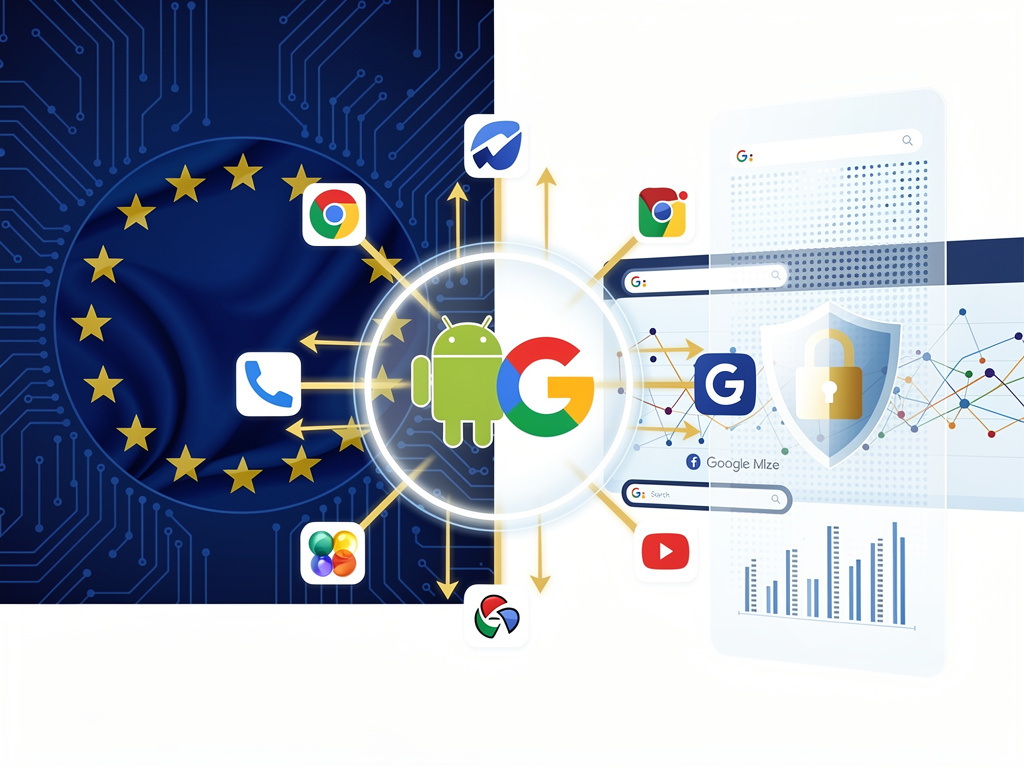
BRUSSELS—Alphabet Inc.’s Google faces a new push from European Union regulators to open its Android operating system and search data trove to rivals, marking the latest escalation in the bloc’s campaign to curb Big Tech dominance under the Digital Markets Act.
The European Commission on Jan. 27, 2026, launched two sets of specification proceedings to guide Google on complying with DMA obligations, focusing on interoperability for AI services and data sharing for search competitors. These steps formalize ongoing regulatory talks without prejudging compliance, but they set the stage for potential fines if Google falls short. The proceedings carry a six-month deadline for resolution, with preliminary findings due within three months.
Targeting AI Gateways on Android
The first proceedings zero in on Article 6(7) of the DMA, which requires Google to grant third-party developers free and effective access to hardware and software features on Android. Regulators are honing in on privileges enjoyed by Google’s own AI tools, including its Gemini chatbot. “The Commission intends to specify how Google should grant third-party AI service providers equally effective access to the same features as those available to Google’s own services,” the Commission stated in its announcement on the Digital Markets Act site.
This move aims to level opportunities for rivals in the fast-evolving mobile AI sector, where Android commands over 70% global market share. Third-party AI developers complain of barriers that favor Gemini’s integration, such as seamless access to on-device processing and system-level APIs. EU tech chief Henna Virkkunen emphasized the stakes: “Today’s proceedings under the Digital Markets Act will provide guidance to Google to ensure that third-party online search engines and AI providers enjoy the same access to search data and Android operating system as Google’s own services, like Google Search or Gemini,” she said, as reported by Yahoo Finance.
Google pushes back, arguing its platform is inherently open. “Android is open by design, and we’re already licensing Search data to competitors under the DMA,” said Clare Kelly, Google’s senior competition counsel for Europe, the Middle East and Africa, in a statement cited by the Wall Street Journal. “However, we are concerned that further rules which are often driven by competitor grievances rather than the interest of consumers, will compromise user privacy, security and innovation.”
Unlocking the Search Data Black Box
The second set addresses Article 6(11), mandating Google share anonymized ranking, query, click and view data from Google Search with rival engines on fair, reasonable and non-discriminatory terms. Proceedings will clarify data scope, anonymization techniques, access conditions and whether AI chatbots qualify for entry. “Effective compliance and access to a useful dataset will allow third-party providers of online search engines to optimise their services and offer users genuine alternatives to Google Search,” per the Commission’s details on the DMA site.
Antitrust chief Teresa Ribera framed the effort as pro-innovation. “We want to maximise the potential and the benefits of this profound technological shift by making sure the playing field is open and fair, not tilted in favour of the largest few,” she stated, according to Yahoo Finance. Rivals like Perplexity AI and smaller search firms stand to gain training data for models challenging Google’s 90% EU search dominance.
These data obligations build on Google’s existing licenses but seek to plug gaps rivals say limit utility, such as insufficient query volume or poor anonymization that hinders model training. The EU’s process invites third-party comments on draft measures, amplifying voices from startups squeezed by Google’s scale.
Google’s Broader DMA Battles
Google’s DMA woes extend beyond these proceedings. The Commission has issued preliminary non-compliance findings on self-preferencing in search results and app steering in Google Play, alleging favoritism for its services like shopping and travel over rivals. Separate probes target site reputation policies for demoting publishers and content use for AI training.
Regulators view specification proceedings as constructive, distinct from punitive investigations. They impose no immediate fines but outline binding steps for compliance. Non-compliance could trigger penalties up to 10% of global turnover, or 20% for repeats, plus structural remedies. Google has hosted over 100 workshops since DMA designation in 2023, yet friction persists, as noted in its European blog.
The Android AI push echoes Apple’s recent specification decisions on iOS interoperability, signaling a pattern: EU enforcers using dialogue to dismantle walled gardens before escalating to fines. Bloomberg reported the six-month clock as a firm deadline to “lift technical barriers to rival AI search assistants on Android and give key data to other search engine providers.”
Ramifications for AI and Search Rivalry
For AI developers, equal Android access could turbocharge on-device inference, battery optimization and sensor integration—edges Gemini holds today. Chatbot makers like Anthropic or xAI might deploy native apps rivaling Google’s assistant, fostering a vibrant EU mobile AI ecosystem. Search data sharing, meanwhile, arms Bing or DuckDuckGo with signals to refine algorithms, potentially eroding Google’s moat built over two decades.
Yet Google warns of risks. Broad data mandates could expose user patterns despite anonymization, inviting breaches. Innovation might stall if rivals free-ride on Google’s investments, a grievance echoed in prior Android antitrust fights totaling €8 billion in fines. EU competition chief Teresa Ribera countered in Deccan Chronicle: “With today’s proceedings we want to help Google by explaining in more detail how it should comply with its interoperability and online search data sharing obligations under the Digital Markets Act.”
Industry watchers on X, including EU Competition’s official account, highlighted the proceedings as support for Google’s DMA adherence, with posts linking to Commission updates. As Trump-era U.S. tensions loom, these moves test transatlantic tech ties amid reciprocal threats.
Timeline and Third-Party Input
Proceedings launched Jan. 27, 2026, target closure by July. Preliminary drafts go to Google soon, with public summaries for feedback—mirroring Apple’s iOS process. Third parties, from AI startups to search upstarts, can weigh in, shaping final measures. The DMA’s ex-ante rules bypass lengthy antitrust suits, aiming for swift market fixes.
Google’s response blends cooperation and caution, citing ongoing data licenses. But with DMA scrutiny spanning search, apps and now AI plumbing, Alphabet braces for deeper concessions. Rivals cheer the openness; Google sees consumer harm. The six-month sprint will reveal if specification bridges the gap—or ignites full non-compliance probes.


 WebProNews is an iEntry Publication