
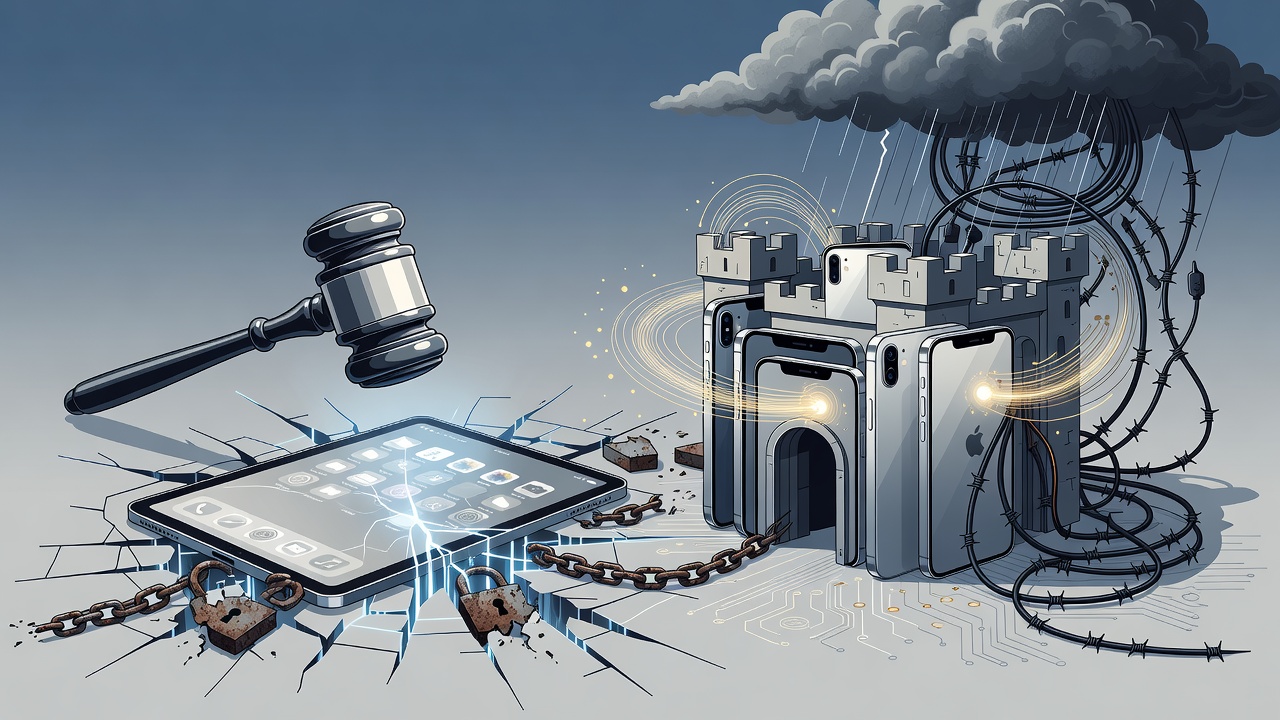
Apple suffered a sharp legal defeat this week. Europe’s General Court upheld the company’s designation as a gatekeeper under the Digital Markets Act. The ruling, handed down July 8, forces the iPhone maker to keep opening its tightly controlled systems to competitors.
Judges in Luxembourg dismissed challenges targeting the App Store and iOS operating system. They also deemed arguments over iMessage inadmissible. The decision hands Brussels a clear early win in testing the landmark law designed to curb Big Tech power. But it leaves many practical battles still to fight.
The Reuters report captured Apple’s immediate reaction. “We firmly believe the DMA’s mandate goes beyond what is lawful and proportionate, threatening to erode decades of privacy and security protections we’ve built and leaving our users vulnerable to new risks,” a company spokesperson said. “We will continue advocating for the innovation and privacy our European customers deserve.”
That stance hasn’t changed much since regulators first labeled Apple a gatekeeper in 2023. The designation applies to iOS, the App Store and Safari. It triggers obligations meant to foster competition in app distribution, payments and device interoperability. Apple appealed those labels in 2024. On three fronts it lost.
First, the court agreed the five App Stores across iPhone, iPad, Mac, Apple TV and Watch count as one core platform service. They share the same purpose. They connect developers to users for software distribution. Treating them separately would let Apple narrow the law’s reach. Judges rejected that view outright.
Second, iOS remains an important gateway that businesses must access. The ruling requires Apple to enable rival hardware and software to work with its phones and tablets. Interoperability rules now stand firmer. Yet the company had argued these demands violate its fundamental rights. The court sidestepped the substance. It found no direct link between the designation decision and those rights claims.
Third, the challenge over iMessage went nowhere. The messaging app was classified as a number-independent interpersonal communications service. That label alone creates no binding obligations. Because iMessage never appeared on the final list of services subject to DMA rules, the court called the action inadmissible. No change there.
News of the judgment spread quickly. Politico described it as a significant victory for the European Commission in the first major judicial test of the DMA. The law took effect in May 2023. It lists specific dos and don’ts for the largest platforms. Fines can hit 10 percent of global annual turnover for repeated violations.
Apple wasn’t alone in pushing back. Meta and ByteDance filed similar cases. This week’s outcome signals regulators hold strong ground on designations. Enforcement actions remain the next proving ground. Apple already faces penalties from earlier disputes. In April 2025 the Commission fined it 500 million euros for obstructing developers from steering users to cheaper payment options outside the App Store. A separate 200 million euro penalty hit Meta.
The Courthouse News Service account emphasized another point. Apple must often wait for concrete enforcement steps before it can fully contest the obligations themselves. The current ruling focused on the gatekeeper label. Specific requirements tied to iOS interoperability and alternative app stores will face separate scrutiny.
Developers and rivals have waited years for these openings. Sideloading apps outside the App Store became possible in the EU after the DMA. Alternative payment systems followed. Yet many complain the changes feel limited. Apple charges fees on external links and maintains strict review processes. Privacy warnings pop up when users choose third-party options. The company insists such measures protect customers from malware and data theft.
TechRepublic covered the decision with an eye on iOS implications. Its article noted the ruling keeps pressure on Apple to allow more outside access without compromising device integrity. Users and businesses now watch how aggressively Brussels pushes for deeper changes. One pending case questions whether certain iOS mandates go too far or target the wrong legal decision.
And the fight continues. Apple retains the right to appeal to the Court of Justice of the European Union on points of law. It has not confirmed plans to do so. Two other DMA-related cases against the company remain open. The broader pattern shows tension. Regulators see gatekeeper rules as essential for contestability and choice. Apple sees them as disproportionate attacks on a business model built on security and tight integration.
Recent coverage adds color. In May 2026 the Commission issued guidance on iOS interoperability for connected devices. Features like notifications, proximity pairing and audio switching must improve by mid-2026. Apple released beta tools for developers to ease app migration. Yet critics argue progress lags. A Bloomberg story published shortly after the ruling highlighted how the decision weakens Apple’s legal maneuvering room even as it has already adjusted some practices in Europe.
Free Software Foundation Europe welcomed the outcome. The group called it a win for computer users and software freedom. It stressed that the court confirmed the App Store versions form a single service. That prevents fragmentation that could blunt the law’s effect.
Market reaction stayed muted. Investors have priced in much of the DMA uncertainty. Apple’s share price barely budged in the days after the news. Longer term the pressure could mount. If enforcement intensifies, profit margins on App Store commissions might shrink. Rivals could gain distribution channels that bypass Apple’s 30 percent cut in some cases.
But don’t mistake this for total victory for regulators. The DMA demands behavioral changes that prove hard to measure. Interoperability with iOS risks introducing new vulnerabilities. Apple has warned of exactly that. European officials counter that competition benefits outweigh the hazards when properly managed.
So the legal saga stretches on. This week’s judgment settles the designation question. It reinforces the Commission’s authority to label platforms as gatekeepers based on their market positions. What remains is the hard work of defining exactly how open those platforms must become.
Apple will keep arguing its corner. It has built a reputation on delivering polished, secure experiences. Executives believe the DMA undervalues that record. European policymakers believe the same record has created an unassailable bottleneck that harms innovation and raises costs for consumers.
The coming months will test both claims. Further guidance from Brussels on compliance. More developer complaints. Potential new fines. And perhaps another trip to the highest European court. The walled garden has cracks. How wide they grow depends on what happens next.


 WebProNews is an iEntry Publication