
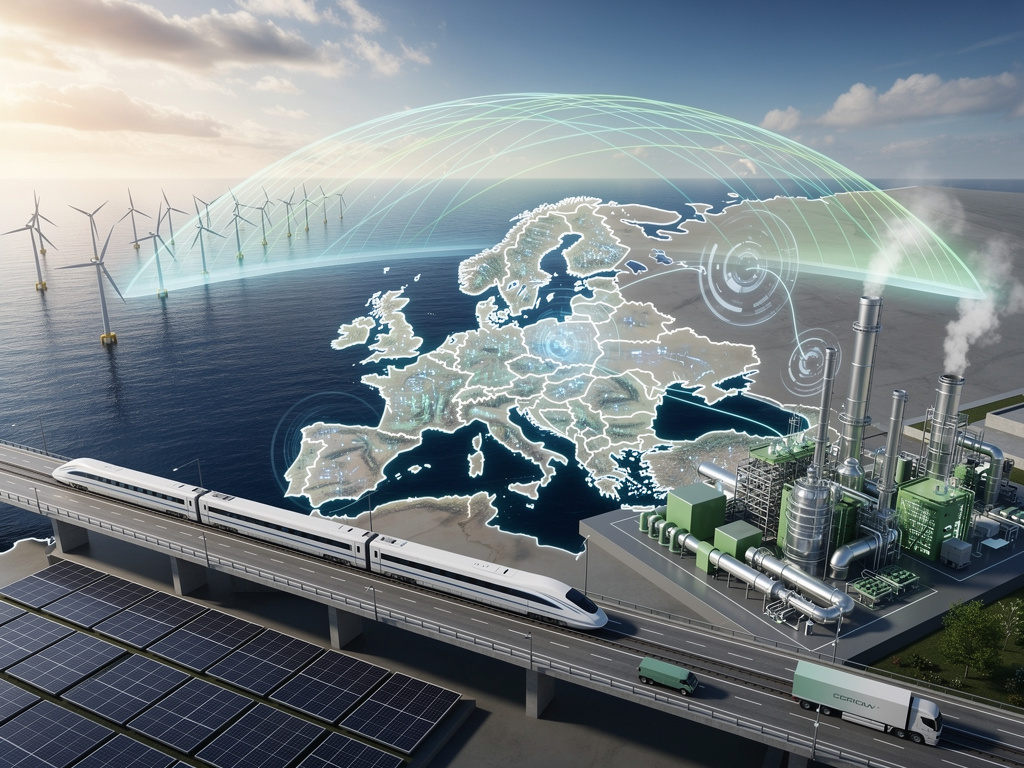
Europe’s Bold Carbon Crusade: Aiming for a 90% Emissions Slash by 2040
The European Union has taken a monumental step in its fight against climate change, committing to a legally binding target of reducing greenhouse gas emissions by 90% from 1990 levels by 2040. This ambitious pledge, agreed upon by EU lawmakers and member states, represents a critical bridge between the bloc’s current 2030 goals and its ultimate aim of net-zero emissions by 2050. Announced amid heated political debates and economic pressures, the deal includes provisions for flexibility, such as allowing up to 5% of the reductions to come from international carbon credits starting in 2036. This compromise reflects the delicate balance between environmental urgency and the practical challenges faced by industries and economies across the 27-nation bloc.
At the heart of this agreement is an amendment to the EU Climate Law, which now enshrines the 90% reduction as a cornerstone of the region’s environmental policy. The target, while falling short of the more aggressive 95% cut recommended by some scientific advisors, underscores the EU’s determination to lead globally on climate action. According to reports from Reuters, the decision was reached after months of negotiations, highlighting tensions between ambitious green goals and concerns over energy costs and competitiveness. The inclusion of carbon credits allows the EU to offset a portion of its emissions through investments in projects abroad, a move that has drawn both praise for its pragmatism and criticism for potentially diluting domestic efforts.
Industry insiders note that this target will require sweeping transformations across sectors like energy, transportation, and manufacturing. For instance, the power sector may need to accelerate the phase-out of fossil fuels, while transportation could see a massive shift toward electrification and sustainable fuels. The agreement also delays the implementation of a carbon tax on buildings and road transport until 2028, providing some breathing room for affected industries, as detailed in coverage from Euronews. This postponement aims to mitigate immediate economic shocks, particularly in light of recent inflationary pressures and geopolitical uncertainties affecting energy supplies.
Navigating Political and Economic Hurdles in the Push for Decarbonization
The path to this agreement was far from smooth, with EU ministers breaking a deadlock in November 2025 after prolonged discussions. Political pressures from various member states, including those reliant on heavy industry or fossil fuels, led to the incorporation of flexibilities that allow for tailored approaches at the national level. The Council of the European Union emphasized that these measures ensure a just transition, supporting regions and workers impacted by the shift. Yet, critics argue that such concessions could undermine the overall ambition, potentially leading to uneven progress across the bloc.
From an economic perspective, the 90% target aligns with the EU’s broader strategy to enhance energy independence and foster innovation in green technologies. The European Commission had proposed this goal earlier in 2025, framing it as essential for meeting the Paris Agreement’s objectives. As outlined in a press release from the European Commission, the target is based on detailed impact assessments that consider socioeconomic factors. Manufacturers, in particular, are urged to adapt, with resources like those from One Click LCA highlighting the need for low-carbon materials and processes to comply with impending regulations.
Public sentiment on social platforms reveals a mix of optimism and skepticism. Posts on X, formerly Twitter, from users like climate analysts and economists express concerns that the target might not be met without radical policy shifts, echoing broader debates on the feasibility of such deep cuts. For example, some commentators point out the high costs involved, potentially leading to voter backlash if not managed carefully. This online discourse underscores the societal stakes, where environmental imperatives clash with everyday economic realities.
Technological Innovations Driving the Emissions Overhaul
Achieving a 90% reduction will demand unprecedented technological advancements and investments. Renewable energy sources, such as wind and solar, are expected to dominate the energy mix, supported by grid enhancements and storage solutions. The EU’s plan also emphasizes carbon capture and storage (CCS) technologies, though their role remains controversial due to scalability issues. Insights from the Climate Action Tracker suggest that while the 2040 target is a step forward, it represents the lower end of recommended reductions, urging even stronger measures like a 74% cut by 2035 excluding land use changes.
In the transportation sector, the delayed carbon tax offers temporary relief but signals inevitable changes. Electric vehicles and hydrogen-powered options are poised for rapid adoption, backed by EU incentives and infrastructure investments. Meanwhile, buildings will need retrofitting for energy efficiency, with the carbon pricing mechanism eventually encouraging sustainable practices. News from Euronews on the ministerial breakthrough notes how these elements were key to securing agreement, balancing ambition with flexibility.
For manufacturers, the implications are profound. The push toward circular economies and reduced material footprints will reshape supply chains. Resources aimed at industry professionals, such as those discussing the 2040 plan’s impact on production, stress the importance of early adoption of green technologies to maintain competitiveness. This shift could position EU firms as leaders in global markets for sustainable goods, provided they navigate the regulatory environment effectively.
Global Implications and Comparative Climate Strategies
The EU’s commitment sends a strong signal to the international community, especially as global climate talks continue. By setting a binding target, the bloc aims to influence other major emitters like the US and China to elevate their ambitions. Coverage from CNBC highlights how the agreement includes guidance on carbon removal credits, allowing for innovative approaches to emissions accounting. This could foster international partnerships in carbon markets, potentially benefiting developing nations through credit purchases.
Comparatively, the EU’s target is among the most aggressive worldwide. While the US has pledged net-zero by 2050 without an interim 2040 goal as stringent, and China’s plans focus on peaking emissions before 2030, Europe’s approach integrates economic safeguards. Reports from The Canberra Times describe the EU’s strategy as a political compromise that addresses concerns over tariffs and energy costs, ensuring the target doesn’t cripple growth.
Social media reactions on X further illuminate global perceptions, with posts praising the EU’s leadership while others warn of economic fallout. Influential voices in climate policy debate whether this will inspire similar actions elsewhere or highlight the challenges of unilateral ambition in a interconnected world economy.
Sector-Specific Challenges and Opportunities Ahead
Diving deeper into energy sectors, the transition away from coal and gas will accelerate, with natural gas likely serving as a bridge fuel but facing phase-out pressures. The agreement’s flexibilities for member states allow countries like Germany and Poland, with heavy fossil fuel dependencies, to tailor their paths. As noted in analysis from Devdiscourse, this pragmatic stance aims to maintain unity while pursuing aggressive decarbonization.
Agriculture and land use present unique hurdles, as emissions from these areas are harder to abate. The target includes land use, land-use change, and forestry (LULUCF) considerations, requiring innovative farming practices and reforestation efforts. Industry experts anticipate increased funding for research in sustainable agriculture to meet these goals without compromising food security.
In manufacturing, the emphasis on reducing emissions by 85% domestically pushes for electrification and efficiency gains. Platforms providing guidance for manufacturers underscore the need for strategic planning, from supply chain audits to adopting renewable energy sources. This could spur job creation in green tech, offsetting losses in traditional industries.
Policy Mechanisms and Enforcement Strategies
To enforce the 2040 target, the EU will rely on a mix of regulations, incentives, and monitoring. The European Climate Law amendment establishes oversight mechanisms, with periodic reviews to track progress. The use of international carbon credits, limited to 5%, is designed to complement, not replace, domestic actions, as explained in details from ESG Today.
Financial instruments, including the EU’s Green Deal funding, will support the transition. Billions in investments are earmarked for clean energy projects, helping to cushion economic impacts. However, challenges remain in ensuring equitable distribution, particularly for less affluent member states.
Looking ahead, the target’s success hinges on technological breakthroughs and political will. While skeptics on X question the realism, proponents see it as a catalyst for innovation. The EU’s approach could serve as a model, demonstrating how ambitious climate goals can coexist with economic resilience.
Fostering Innovation and International Collaboration
Innovation hubs across Europe are gearing up for the challenge, with research into advanced batteries, smart grids, and bio-based materials accelerating. Collaborations between public and private sectors will be crucial, potentially leading to breakthroughs that export EU expertise globally.
Internationally, the target strengthens the EU’s position in climate diplomacy. By committing to substantial reductions, the bloc can advocate for stronger global standards, influencing trade policies like the Carbon Border Adjustment Mechanism.
Ultimately, this pledge marks a pivotal moment in Europe’s environmental journey, blending ambition with adaptability to forge a sustainable future. As industries adapt, the ripple effects could redefine global efforts against climate change, proving that bold targets, when backed by strategic policies, can drive meaningful progress.


 WebProNews is an iEntry Publication