
Decoding the Gridiron: ESPN’s AI-Powered Revolution in NFL Broadcasting
In the ever-evolving world of sports media, ESPN is poised to transform how fans experience professional football with its latest innovation: an analytics-heavy alternate broadcast for Monday Night Football. Dubbed MNF Playbook with Next Gen Stats, this new offering promises to deliver a deeper, data-driven perspective on the game, catering specifically to avid enthusiasts who crave insights beyond the standard play-by-play. Set to debut on December 22, 2025, during the matchup between the San Francisco 49ers and the Indianapolis Colts, the altcast will air on ESPN2 and the ESPN App, running for five editions through the network’s divisional round playoff game.
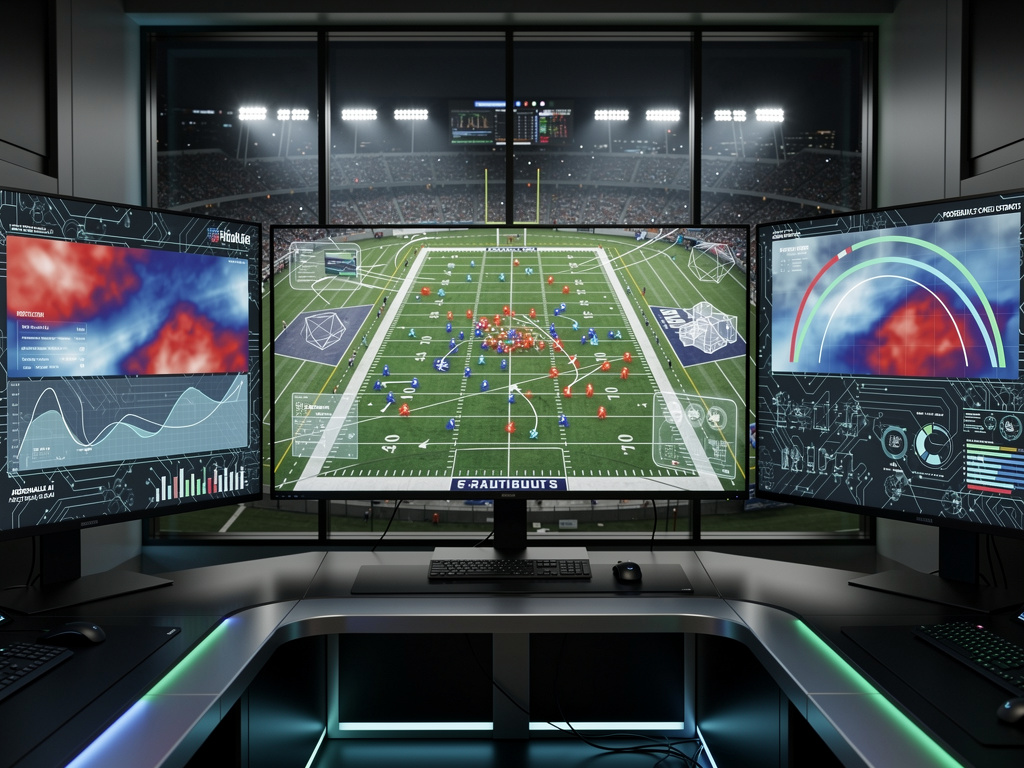
At the heart of this broadcast is a collaboration with cutting-edge technology providers, including the NFL’s Next Gen Stats and Adrenaline, a firm founded by former Dallas Cowboys linebacker Sean Lee. Adrenaline’s TruPlay AI leverages machine learning and artificial intelligence to dissect plays in real time, drawing from vast datasets to offer predictive analytics. This isn’t just about overlaying stats on the screen; it’s about simulating the strategic depth of a coach’s meeting room, complete with All-22 camera angles that show the entire field and every player’s positioning.
The broadcast team features a mix of former players and analysts well-versed in the nuances of football strategy. Luke Kuechly, the retired Carolina Panthers linebacker known for his cerebral approach to the game, will co-host alongside ESPN’s Dan Orlovsky, a former quarterback turned commentator. Field Yates will contribute from the studio, while analytics experts like Brian Burke and Seth Walder from ESPN will provide decision-making insights, explaining pivotal choices such as fourth-down conversions or play-calling probabilities.
The Tech Behind the Tackles
This initiative builds on a growing trend in sports broadcasting where data and AI are no longer sidelines but central to the narrative. According to details shared in a recent announcement, the system processes real-time data from player tracking, offering metrics like completion probability over expected (CPOE) and win probability updates that evolve as the game unfolds. It’s a step up from previous alternate broadcasts, such as Amazon’s Prime Vision, which has experimented with similar AI features to highlight open receivers and predict blitzes.
One key innovation is the integration of predictive modeling that goes beyond mere statistics. For instance, the AI can forecast defensive schemes based on historical data and current formations, giving viewers a glimpse into what coaches might be thinking. This draws from advancements in computer vision and machine learning, technologies that ESPN has been refining for years. As noted in a post on X by analytics specialist Brian Burke, such systems operate in near-real time without relying on delayed film reviews, a capability honed through ESPN’s internal developments.
The partnership with Adrenaline adds a layer of authenticity, as Sean Lee’s experience as an 11-year NFL veteran informs the AI’s design. The technology aims to “bring the meeting room to fans’ living rooms,” as described in an ESPN press release. This means viewers might see breakdowns of why a certain route was open or how a defensive adjustment countered an offensive play, all powered by algorithms that analyze millions of data points per game.
From Data Streams to Viewer Engagement
Industry observers see this as ESPN’s response to demands for more immersive and educational content in an era where fans have access to endless stats via apps and websites. The altcast complements the main Monday Night Football broadcast on ESPN and ABC, which features Joe Buck and Troy Aikman, by offering a parallel experience tailored for those who want to geek out on the numbers. It’s not the first time ESPN has experimented with alternate feeds—ManningCast with Peyton and Eli Manning has been a hit for its casual, insider chit-chat—but MNF Playbook shifts the focus squarely to analytics.
Recent posts on X highlight the excitement around similar tech integrations in football broadcasting. For example, discussions around Amazon’s Thursday Night Football features, which use machine learning to suggest fourth-down decisions and predict receiver openings, underscore a broader shift toward AI-enhanced viewing. These innovations collect hundreds of millions of data points per season, enabling features like blitz predictions before the snap, as shared in various X threads from sports business analysts.
To ensure the broadcast doesn’t overwhelm casual viewers, ESPN plans to balance the data deluge with expert commentary. Kuechly and Orlovsky will narrate the action, explaining complex metrics in accessible terms. This approach could appeal to a niche but passionate audience, including fantasy football players, aspiring coaches, and data enthusiasts who follow outlets like Pro Football Focus for in-depth breakdowns.
Innovations Rooted in Evolution
The roots of this technology trace back to earlier NFL broadcasting experiments. In 2019, ESPN introduced systems based on player tracking data that allowed for real-time analytics without waiting for All-22 film, a breakthrough that has since evolved. Today’s iterations incorporate stadium-specific details, eye-tracking for quarterbacks, and custom opponent simulations, making the broadcast feel like a virtual strategy session.
Comparisons to other sports are inevitable. In basketball, the NBA has used similar AI for shot probability models during games, while baseball’s Statcast provides pitch tracking and exit velocities. Football, with its complex plays and hidden strategies, presents unique challenges that MNF Playbook addresses through its AI backbone. As reported by Sportico, the predictive AI model here has potential applications beyond media, possibly extending to team training and scouting.
Moreover, the involvement of figures like Orlovsky, who often breaks down film on social media, adds credibility. His insights, combined with Kuechly’s defensive expertise, could make abstract data tangible. Imagine a scenario where the AI predicts a 65% chance of a successful pass based on defender positioning, and the hosts explain why—perhaps due to a mismatch in speed or route running.
Challenges and Future Horizons
Implementing such technology isn’t without hurdles. Real-time data processing requires robust infrastructure to avoid lags, especially during high-stakes moments. There’s also the risk of information overload; not every fan wants a barrage of probabilities mid-play. ESPN seems aware of this, positioning MNF Playbook as an opt-in experience for “avid fans,” as emphasized in their official rollout.
Feedback from early previews suggests enthusiasm. Posts on X from NFL analytics communities praise the inclusion of experts like Walder, who has long advocated for data-informed broadcasting. One thread noted how this could educate viewers on advanced concepts like expected points added (EPA), potentially elevating the overall discourse around the sport.
Looking ahead, this could pave the way for more personalized viewing options. Imagine customizable overlays where fans select specific metrics, or VR integrations that let users “enter” the playbook. As AI advances, broadcasts might even incorporate fan queries in real time, answered by virtual assistants drawing from the same data pools.
Pushing Boundaries in Sports Media
The broader implications for the industry are significant. With streaming services vying for sports rights, innovations like MNF Playbook help ESPN differentiate itself in a crowded field. Disney, ESPN’s parent company, has invested heavily in tech, and this altcast aligns with efforts to merge entertainment with education.
Critics might argue it’s too niche, but success could inspire similar formats across sports. For instance, soccer broadcasts could adopt AI for tactical breakdowns, or tennis for shot prediction. The key is accessibility—making sure the tech enhances rather than eclipses the game’s excitement.
In terms of monetization, targeted ads for data-savvy viewers, perhaps from fantasy platforms or betting apps, could follow. Yet, ESPN must navigate regulations around gambling integrations, ensuring the focus remains on analysis.
Voices from the Field
Interviews and statements from involved parties underscore the ambition. Sean Lee, in discussions about Adrenaline, has highlighted how AI can democratize elite-level insights. Orlovsky, known for his quarterback breakdowns, sees it as a way to “peel back the curtain” on decision-making.
Fan reactions on X are mixed but optimistic. Some express eagerness for the All-22 view, long coveted by enthusiasts, while others hope it avoids becoming a dry stats recitation. As one post put it, this could be “a look into the future of broadcasting,” echoing sentiments from earlier AI trials in NFL coverage.
The debut game’s choice—49ers vs. Colts—offers a compelling test case, with quarterbacks like Brock Purdy and Anthony Richardson providing rich data for analysis. If successful, MNF Playbook might extend beyond the season, influencing postseason coverage.
The Playbook’s Lasting Impact
As ESPN rolls out this feature, it’s clear the network is betting on data as the next frontier in fan engagement. By blending AI with expert voices, MNF Playbook not only informs but potentially inspires a new generation of analytically minded fans and professionals.
Challenges remain, such as ensuring inclusivity for diverse audiences and refining the tech based on feedback. Yet, the potential is vast, from enhancing coaching tools to creating interactive fan experiences.
Ultimately, this innovation reflects football’s shift toward a more scientific era, where every snap is a data point in a larger story. For industry insiders, it’s a reminder that in sports media, staying ahead means embracing the numbers game. As detailed in coverage from The Verge, this debut marks a pivotal moment in how we watch the gridiron unfold.


 WebProNews is an iEntry Publication