
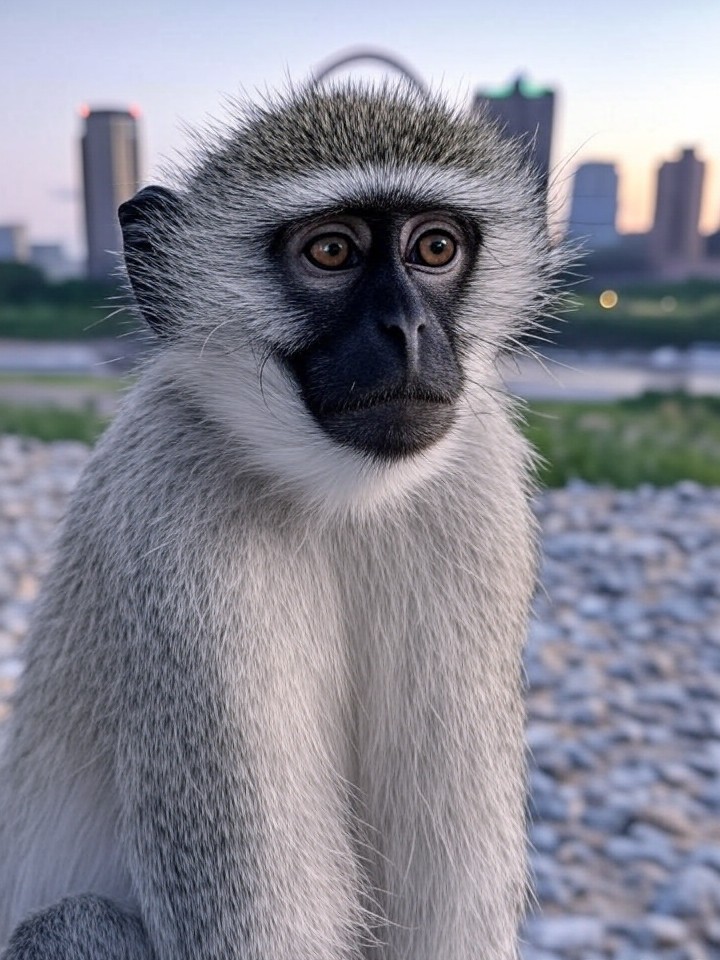
Monkeys Unleashed: AI’s Fakeout Frenzy Derails St. Louis’s Bizarre Primate Pursuit
In the heart of St. Louis, Missouri, a peculiar crisis has unfolded over the past few days, blending the chaos of escaped wildlife with the deceptive prowess of artificial intelligence. What began as sightings of vervet monkeys roaming free in urban neighborhoods has escalated into a citywide hunt complicated by a flood of AI-generated images. These digital fabrications, shared widely on social media, have misled authorities and residents alike, turning a straightforward animal control operation into a cautionary tale about technology’s double-edged sword.
The incident kicked off on January 10, 2026, when residents in North St. Louis reported spotting as many as four vervet monkeys scampering through backyards and streets. City officials, caught off guard, quickly mobilized to investigate. According to reports from The New York Times, no one knows the exact origin of these primates, which are not native to the region and are typically found in Africa. Speculation ranges from an illegal pet owner to a possible escape from a private collection, but the St. Louis Health Department is probing potential violations of the city’s wild animal ordinance.
As the search intensified, the situation took a modern twist. People began posting images online claiming to show the monkeys in various locations, but many of these turned out to be AI-generated fakes. This influx of misinformation has hampered rescue efforts, forcing authorities to sift through false leads while the real animals remain at large. The phenomenon highlights how generative AI tools, now accessible to anyone with a smartphone, can exacerbate real-world emergencies.
The Digital Deception Takes Hold
Experts in AI and misinformation point out that tools like Midjourney or DALL-E can produce hyper-realistic images in seconds, making it easy for pranksters or attention-seekers to create convincing hoaxes. In this case, fabricated photos of monkeys perched on the Gateway Arch or swinging from traffic lights have gone viral, drawing resources away from genuine sightings. A report from Futurism details how these AI images are “complicating rescue efforts,” with emergency responders chasing ghosts instead of primates.
The St. Louis Police Department, in collaboration with animal control teams, has deployed traps and thermal cameras, but the noise from social media has overwhelmed their operations. One official, speaking anonymously, described the frustration: “We’re getting dozens of calls based on pictures that look real but aren’t. It’s like trying to find a needle in a haystack while someone keeps adding fake needles.” This isn’t the first time AI has interfered with public safety; similar issues arose during natural disasters where fake images of damage misled relief efforts.
On platforms like X (formerly Twitter), the story has exploded, with users posting a mix of genuine concern and satirical takes. Posts warn residents to lock doors and windows, echoing past incidents like the 2024 monkey escape from a South Carolina research lab, but amplified by the AI angle. Sentiment on X ranges from humorous memes about “monkey apocalypse” to serious discussions on regulating AI-generated content, underscoring the platform’s role in shaping public perception during crises.
Tracing the Monkeys’ Mysterious Origins
Vervet monkeys, known for their agility and social behavior, aren’t suited for Midwestern winters, raising concerns about their welfare. Animal experts from the St. Louis Zoo have been consulted, advising on humane capture methods. The Associated Press, in an article at AP News, notes that “multiple monkeys are on the loose,” with AI complications making it harder to pinpoint their numbers or locations.
Investigations suggest the monkeys may have escaped from an unlicensed owner violating local laws. The St. Louis Health Department, as reported by STLPR, is examining whether this breaches ordinances prohibiting exotic animals in residential areas. No injuries have been reported yet, but officials warn against approaching the animals, which could carry diseases or react aggressively if cornered.
The broader implications extend to wildlife trafficking. Vervet monkeys are sometimes smuggled for the exotic pet trade, a multibillion-dollar industry plagued by ethical issues. This incident echoes global patterns where escaped or released exotic animals disrupt local ecosystems, as seen in Florida’s invasive python problem or escaped big cats in the UK.
AI’s Role in Amplifying Chaos
The rise of AI-generated content has transformed misinformation from a niche concern to a mainstream threat. In St. Louis, fake images have not only confused search teams but also sparked unnecessary panic among residents. Vice describes it as “an embarrassingly modern problem,” where technology hinders rather than helps.
Industry insiders argue that without better detection tools, such hoaxes will proliferate. Companies like OpenAI and Google are developing watermarks for AI images, but adoption is spotty. In this scenario, experts recommend verifying sources before sharing, yet the viral nature of social media makes that challenging. X posts about the incident often blend real news with fabrications, creating a feedback loop of confusion.
Moreover, this event raises questions about AI’s societal impact. Regulators in Washington are debating bills to mandate labeling of synthetic media, but progress is slow. Tech ethicists warn that unchecked AI could undermine trust in visual evidence, affecting everything from journalism to law enforcement.
Community Response and Official Strategies
Residents of St. Louis have responded with a mix of amusement and caution. Neighborhood groups on apps like Nextdoor are abuzz with tips on spotting real versus fake monkey sightings, while some locals have taken to patrolling parks with binoculars. The city’s tourism board, ironically, sees a silver lining: the story has put St. Louis in the national spotlight, albeit for bizarre reasons.
Officials have called in reinforcements, including primate specialists from nearby zoos and even drone operators to scan hard-to-reach areas. Sky News reports a “troop of vervet monkeys on the loose,” with no clear source, emphasizing the mystery. To combat AI fakes, authorities are partnering with tech firms for rapid image analysis, though this is resource-intensive.
Public health experts are monitoring for zoonotic risks, given vervets can carry viruses transmissible to humans. Vaccinations and quarantines are prepared if captures occur, drawing parallels to past outbreaks linked to escaped lab animals.
The Broader Tech-Wildlife Intersection
This isn’t an isolated case; AI’s interference in wildlife management is becoming more common. In Australia, fake images of invasive species have derailed eradication programs, while in the U.S., AI hoaxes have complicated searches for missing pets or endangered animals. The St. Louis incident serves as a case study for how digital tools can backfire in analog crises.
Looking ahead, solutions might involve AI itself—machine learning algorithms trained to detect fakes could be deployed by emergency services. Startups are already pitching such services, but integration with public agencies lags. Policymakers must balance innovation with safeguards, ensuring AI enhances rather than hinders public safety.
On X, discussions evolve from the immediate event to philosophical debates about technology’s role in society. Users reference historical animal escapes, like the 2011 Zanesville, Ohio, incident, but note how AI adds a new layer of complexity.
Lessons from the Primate Debacle
As the search continues into its fourth day, with the current date being January 14, 2026, hopes remain high for a resolution. Traps baited with fruits have been set in areas of confirmed sightings, and community volunteers are assisting under official guidance. Deseret News highlights the “unknown number of monkeys,” underscoring the uncertainty fueled by AI.
For industry insiders, this episode underscores the need for robust AI governance. Tech companies should prioritize ethical AI development, including built-in safeguards against misuse. Governments could mandate education on digital literacy to empower citizens against misinformation.
Ultimately, the St. Louis monkey saga illustrates the unpredictable ways technology intersects with everyday life. What started as a quirky news item has evolved into a profound example of modern challenges, prompting reflection on how we navigate an era where reality and fabrication blur seamlessly.
Echoes of Past Incidents and Future Precautions
Drawing from history, similar escapes have occurred, such as the 2024 Alpha Genesis lab breakout in South Carolina, where over 40 monkeys fled, prompting lockdowns. X posts from that time, resurfacing now, show patterns of public reaction, blending fear with humor. In St. Louis, the AI element distinguishes it, amplifying the chaos exponentially.
Experts advocate for preventive measures, like stricter exotic animal regulations and AI content moderation. The Fox News update notes officials warning against approaching the animals, emphasizing safety.
As this unfolds, it may catalyze changes in how cities handle hybrid digital-physical crises, fostering collaborations between tech innovators and public servants to build resilient systems.


 WebProNews is an iEntry Publication