
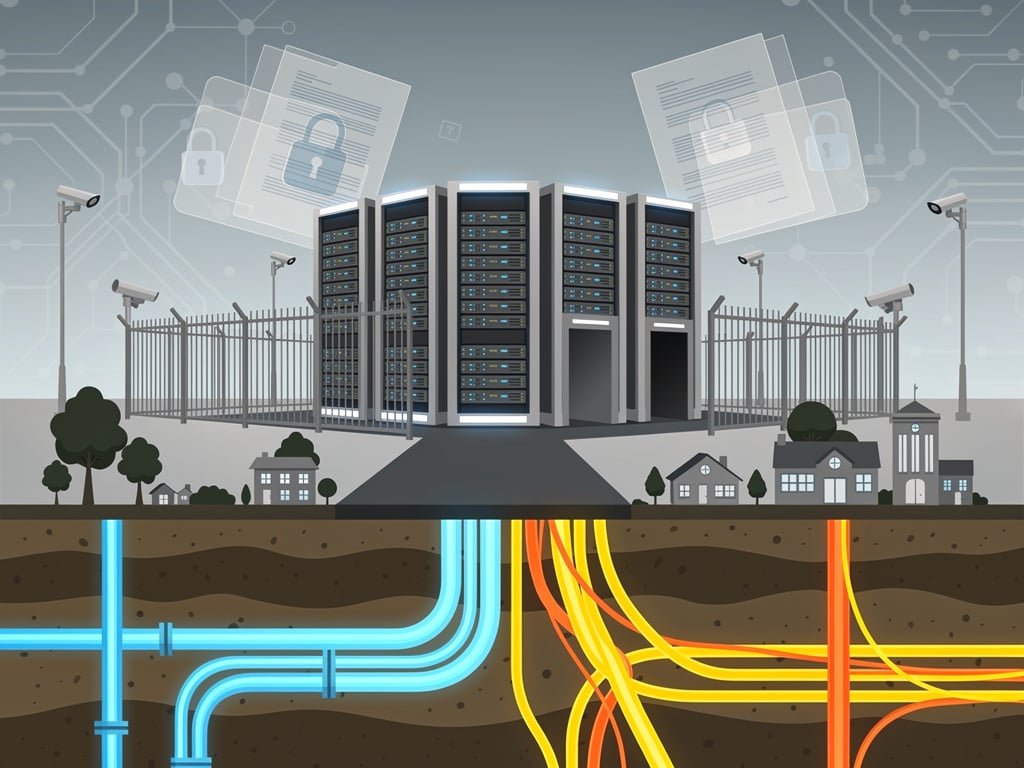
Erin Brockovich knows a thing about hidden costs. The activist who took on a utility giant over contaminated water decades ago now targets another industry racing to build at breakneck speed. Data centers. Those hulking facilities that power artificial intelligence and cloud computing. But many communities see them arrive with little warning and even less information.
Brockovich launched a website last month complete with an interactive map. It lets residents flag proposed or existing data centers near them. The response surprised even her. What began with about 30 reports swelled to nearly 4,000 submissions within weeks. The map now shows more than 2,700 pins across 49 states. TechCrunch reported.
“The single most common concern — more than noise, more than water usage, more than rising utility bills — is the one word that keeps appearing in submission after submission: transparency,” Brockovich wrote in a post on her Substack, The Brockovich Report.
Residents describe feeling silenced. Ignored. Secretive dealings. Not seen and not heard. They report back-room agreements. Nondisclosure agreements that bind local officials. Planning meetings where decisions appear already locked in before the public learns a project exists. One Louisiana resident, Diane Cobb, told of discovering plans for a massive Meta facility only after the fact. “Nobody told us anything,” she said. They supposedly had a big meeting. The whole community was supposed to come. Nobody knew anything about it. Ever.
Brockovich doesn’t oppose data centers or the AI they support. She questions the pattern of secrecy. Projects often surface only after permits clear or when presented as ordinary warehouses. Developers rarely engage communities early. And once deals close, information on water draw, power demand and long-term effects stays locked away. “There’s a lot of secrecy and NDAs at a very proposal stage,” she told Business Insider after appearing on “The Jim Acosta Show.” Data centers get “shoved down their throats” in secrecy, she added. People handle the truth. They just want inclusion.
The scale explains the alarm. A single large facility can consume electricity equivalent to 50,000 homes. U.S. data centers already accounted for more than 4 percent of national power use in 2023. Projections point to over 9 percent by 2030. Meta’s Hyperion campus in rural Louisiana will span 4 million square feet. It will eventually draw more electricity than all of New Orleans. Similar multibillion-dollar projects from Google, Amazon and Microsoft dot the map. Elon Musk’s xAI Colossus in Memphis packs a million GPUs. These aren’t small additions to the grid. They reshape entire regions.
Water draws particular worry. Facilities rely on evaporative cooling that can pull millions of gallons daily. In drought-prone or already stressed areas the impact compounds. California offers a stark case study. Operators expand into the Imperial and Kern valleys where groundwater sits overdrafted and the Colorado River runs thin. Yet public data on exact consumption remains scarce.
A patchwork of rules lets much stay hidden. Few environmental reviews reach the public in full. Water suppliers often ignore requests for usage figures. State lawmakers tried to mandate better reporting in 2025. Governor Gavin Newsom vetoed the measures under industry pressure. New bills in 2026 would require disclosures to local authorities and restrict builds in critically overdrafted basins. Tech groups fight them. “You cannot manage what you have not and cannot measure,” said Assemblymember Diane Papan, as detailed in CalMatters.
Similar fights play out elsewhere. Georgia lawmakers consider banning nondisclosure agreements that hide utility data from residents. Researchers at places like MIT warn global data center electricity demand could top 1,000 terawatt-hours by the end of this year. Without granular information, communities cannot weigh trade-offs. Planners cannot model cumulative strain on power plants or aquifers. And voters stay in the dark about who really benefits.
Industry groups such as NetChoice push back. They run ads highlighting jobs and economic gains. Tech companies argue these facilities bring tax revenue and high-tech employment to areas that need both. Some projects do deliver. Yet the map Brockovich maintains tells another story. Pockets of organized resistance have stalled or killed proposals. A New Jersey township banned them outright. Montana residents packed a town hall and forced concessions. In Illinois, citizen pressure led one developer to withdraw plans entirely.
Brockovich frames the issue as democratic. People deserve to know before concrete pours. They should see full environmental assessments rather than redacted summaries. They want officials to answer whether they signed NDAs that shield details from public records requests. Her site encourages exactly that. Upload photos and videos. Attend planning board sessions. Ask hard questions early. The map doesn’t claim to catalog every facility. Roughly 4,000 data centers operate nationwide already, many predating the AI surge. It instead highlights where people voice active concerns. Patterns emerge fast. Secrecy repeats from Texas to Virginia, from Midwest farm towns to California suburbs.
And the concerns run deeper than utilities. Residents report unexplained animal illnesses. Worries over long-term health from constant low hum of servers or potential emissions. Property values that could suffer if noise or visual blight dominates. In one Texas town more than 300 complaints center on a single proposed mega-project. These voices don’t reject progress. They reject being excluded from it.
Federal lawmakers have taken notice. The Data Center Transparency Act would compel the Environmental Protection Agency to issue regular public reports on water consumption, reuse rates, air quality effects and electricity draw. It remains in committee. State efforts gain traction in spots but face stiff opposition from an industry that views rapid expansion as essential to American competitiveness in AI.
Brockovich built her reputation forcing accountability from powerful companies. Her PG&E case ended in a $333 million settlement and a Hollywood film starring Julia Roberts. She brings the same tenacity here. Not as an opponent of technology but as a champion for informed consent. Communities, she argues, can handle the truth. What they cannot accept is being kept from it until the machines already hum.
Her map continues to grow. New pins appear daily. As AI investment accelerates and hyperscalers race to train ever-larger models, the pressure on local resources will only mount. Whether that leads to genuine openness or deeper entrenchment remains an open question. For now Brockovich has given residents a tool to make their voices visible. The industry and its government partners must decide whether to listen.


 WebProNews is an iEntry Publication