
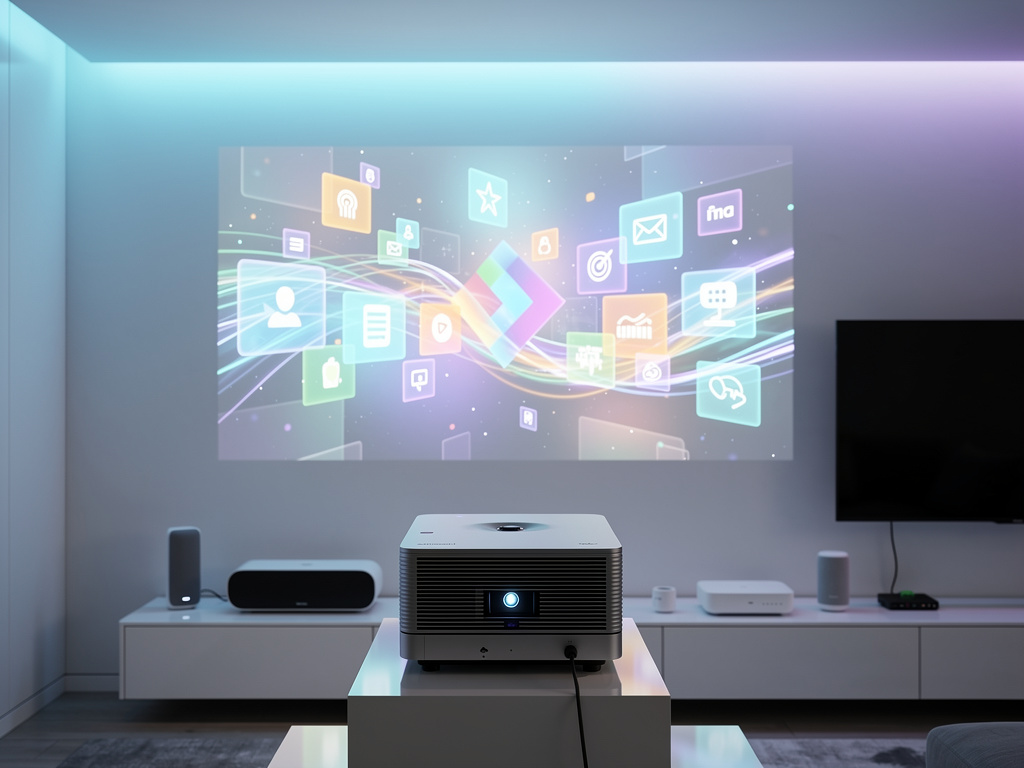
Epson’s Projection Revolution: How Gemini AI is Redefining Home Entertainment
In the bustling halls of CES 2026, Epson unveiled a significant advancement in home projection technology, integrating Google TV enhanced by Gemini AI into its Lifestudio line of projectors. This move positions Epson as a pioneer in blending artificial intelligence with large-screen viewing, promising a more intuitive and personalized entertainment experience. The announcement, made amid a flurry of tech reveals, highlights how traditional hardware manufacturers are adapting to the demands of smart, connected living rooms.
The integration begins with the Epson Lifestudio Grand Ultra Short Throw Laser Projector, with plans to extend to other models later in the year. According to reports from Mashable, this upgrade eliminates the need for external streaming devices, embedding Google TV directly into the projector. Users can now access a vast array of streaming services, apps, and content recommendations powered by Gemini’s advanced AI capabilities.
Gemini, Google’s multifaceted AI model, brings features like smarter content discovery, voice-controlled navigation, and seamless smart home integration. This isn’t just about watching shows; it’s about creating an ecosystem where the projector anticipates user preferences and simplifies interactions. Industry observers note that this could shift consumer expectations, making projectors a central hub rather than peripheral devices.
AI at the Heart of Projection
Epson’s decision to incorporate Gemini stems from a broader trend where AI is infiltrating consumer electronics to enhance usability. As detailed in a post on Google’s official blog, Google Blog, the new Gemini features for Google TV include proactive assistance, such as handling complex queries and managing hardware settings. For Epson’s projectors, this means users can ask for movie recommendations based on mood or even adjust ambient lighting through voice commands.
The Lifestudio series, known for its ultra-short throw capabilities, allows for massive screen sizes in compact spaces. With Gemini, these projectors gain intelligence that rivals smart TVs. A report from 9to5Google emphasizes that this upgrade is a “major” one, enabling features like personalized watchlists and AI-generated summaries of shows, which could save users time in deciding what to watch.
Moreover, the integration supports always-on listening for voice commands, similar to smart assistants, but tailored for entertainment. This raises questions about privacy, yet Epson assures that data handling aligns with Google’s stringent policies. Early adopters, as shared in various posts on X (formerly Twitter), express excitement over the potential for hands-free operation during movie nights.
Technical specifications reveal that the Lifestudio Grand boasts 4K resolution, high brightness for daylight viewing, and now, AI-driven upscaling for non-4K content. Drawing from Technobezz, this makes it one of the first projectors to implement Gemini, setting a benchmark for competitors like Sony or LG.
Market Implications and Competitive Edge
The timing of this release coincides with a surge in home entertainment demands post-pandemic, where consumers seek immersive experiences without leaving their homes. Epson’s strategy leverages Google’s ecosystem, which includes integration with Android devices and services like YouTube and Google Photos. This could broaden appeal to tech-savvy households already invested in Google’s universe.
Analysts predict this will challenge the dominance of traditional TVs in living rooms. Projectors, often seen as niche for home theaters, are now viable everyday options thanks to AI smarts. A piece from ecoustics.com highlights how Gemini adds “smarter content discovery, voice control, and smart home features,” potentially driving sales in a market projected to grow by 15% annually.
On social platforms like X, users are buzzing about the convenience. Posts from tech influencers praise the elimination of dongles, echoing sentiments that this integration streamlines setups. However, some express concerns over dependency on Google’s AI, questioning long-term support and updates.
Epson’s history in projection technology dates back decades, but this pivot to AI marks a bold evolution. By partnering with Google, they’re not just selling hardware; they’re offering an experience. This aligns with industry shifts where software increasingly defines hardware value.
Features Deep Dive: What Gemini Brings
Diving deeper into Gemini’s role, the AI enhances Google TV by providing contextual recommendations. For instance, if a user watches sci-fi frequently, Gemini might suggest hidden gems or even generate trivia during viewing. As explained in Chrome Unboxed, updates turn the TV into a “proactive assistant capable of handling complex queries.”
Voice control is another standout, allowing commands like “dim the lights and play a comedy” without fumbling remotes. Integration with smart home devices means the projector can sync with Philips Hue lights or Nest thermostats, creating immersive environments. This level of connectivity is unprecedented in projectors, potentially attracting gamers and binge-watchers alike.
Furthermore, Gemini’s on-device processing ensures low latency, crucial for real-time interactions. Epson’s laser technology complements this with long-lasting performance, reducing maintenance needs. Reports indicate that future models will include even more advanced AI, like predictive maintenance alerts.
Privacy features include opt-in data sharing and transparent AI decision-making. Google has emphasized ethical AI use, which Epson echoes in their announcements. This addresses potential backlash in an era of increasing data scrutiny.
Challenges and Future Prospects
Despite the hype, challenges remain. Compatibility with existing home setups could be an issue, as not all users have Google-centric ecosystems. Pricing, while not fully disclosed, is expected to be premium, potentially limiting accessibility. Mashable notes that the rollout starts with high-end models, with broader availability later.
Competition is fierce, with brands like Samsung integrating their own AI into displays. Epson’s edge lies in projection’s unique advantages, like portability and massive screens. Industry insiders speculate this could lead to partnerships beyond Google, perhaps with other AI providers.
Looking ahead, Epson plans to expand Gemini to more Lifestudio variants, including portable options. This could democratize high-end entertainment, making cinema-like experiences available in smaller spaces. Posts on X from CES attendees suggest strong initial reception, with demos showcasing seamless AI interactions.
The broader impact on the entertainment sector is profound. As AI blurs lines between devices, projectors might evolve into multi-purpose hubs for work, gaming, and leisure. Epson’s initiative could inspire similar integrations in other hardware categories.
Innovation in User Experience
User experience is at the core of this integration. Gemini’s ability to learn from viewing habits creates a tailored interface, reducing the overwhelm of endless content libraries. For families, this means kid-friendly recommendations and parental controls enhanced by AI monitoring.
Technically, the projectors support HDR10+ and Dolby Vision, amplified by Gemini’s content optimization. This ensures vibrant visuals regardless of source quality. Ecoustics.com details how this “drives the category closer to fluid, app-rich experiences,” mirroring smartphone ecosystems.
Feedback from early previews, as seen in Technobezz, praises the intuitive setup process. Users can link accounts effortlessly, diving straight into content. This ease of use could convert skeptics who view projectors as complicated.
Epson’s commitment to sustainability also shines through, with energy-efficient lasers and recyclable materials. Pairing this with AI that optimizes power usage adds an eco-friendly layer to the appeal.
Strategic Partnerships and Ecosystem Growth
The partnership between Epson and Google exemplifies strategic alliances in tech. Google’s push for Gemini across devices, from phones to TVs, now extends to projectors, creating a unified experience. 9to5Google reports this as part of a “major update,” signaling Google’s ambition in the living room.
For developers, this opens avenues for app creation tailored to projection. Imagine AR overlays during sports events or interactive educational content. Such possibilities could expand the market beyond entertainment.
Globally, this integration might accelerate adoption in emerging markets where TVs are costly, but projectors offer affordable large screens. X posts in multiple languages reflect international interest, from Spanish tech blogs to English influencers.
Epson’s roadmap includes software updates to keep Gemini evolving, ensuring longevity. This forward-thinking approach mitigates obsolescence, a common tech pitfall.
Economic and Consumer Trends
Economically, this could boost Epson’s revenue in a stagnant projector market. Analysts forecast increased demand as consumers prioritize home upgrades. The CES announcement, covered extensively, positions Epson as an innovator.
Consumer trends show a preference for integrated devices over modular ones. Gemini’s intelligence caters to this, simplifying lives in an increasingly complex digital world.
In comparison to rivals, Epson’s offering stands out for its native integration, avoiding the clunkiness of add-ons. As per Google’s blog, this “makes Google TV even more helpful,” a sentiment echoed across sources.
Ultimately, this development underscores a shift toward AI-centric entertainment, where hardware like Epson’s projectors becomes smarter, more responsive, and integral to daily life. With ongoing updates promised, the future looks bright for immersive, intelligent viewing.


 WebProNews is an iEntry Publication