
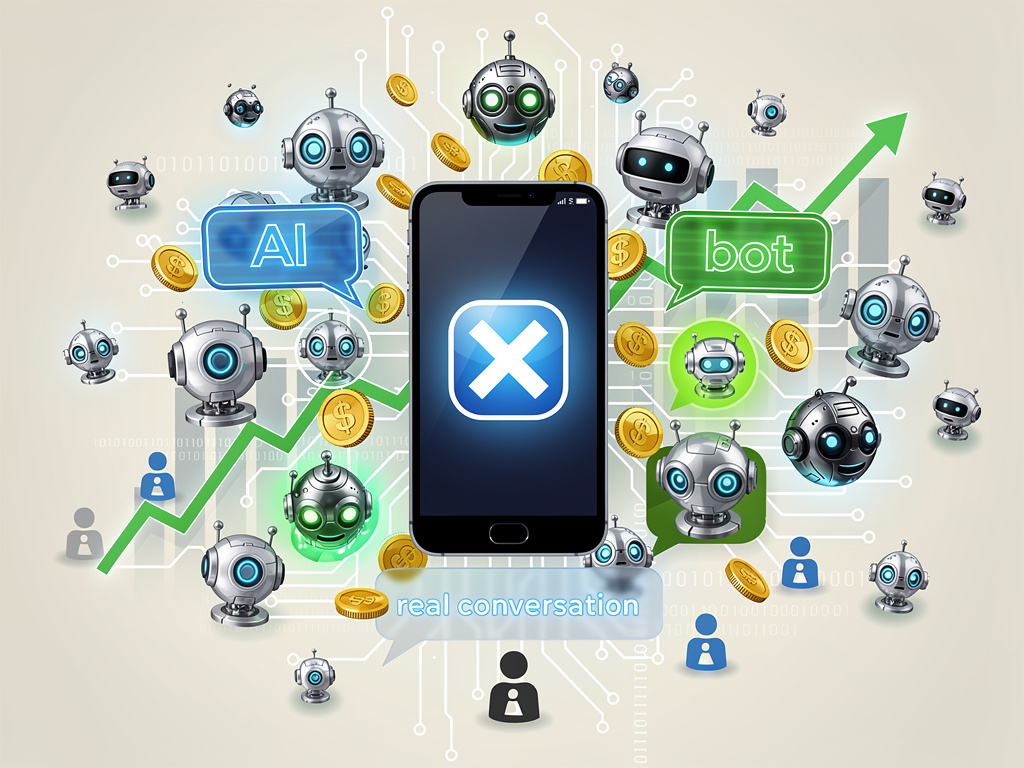
In a rare moment of candor about the platform he owns, Elon Musk recently acknowledged what millions of social media users have long suspected: artificial intelligence bots are flooding X — formerly Twitter — and threatening to drown out authentic human interaction. The billionaire’s comments have reignited a fierce debate about the future of online discourse, the economics of social media engagement, and whether platforms can survive the onslaught of AI-generated content that is rapidly becoming indistinguishable from posts written by real people.
Musk’s remarks came in response to growing user frustration over the proliferation of AI-driven accounts on X, many of which generate replies, posts, and even entire threads designed to mimic genuine human conversation. As reported by UNILAD Tech, Musk spoke out about the prospect of social media becoming dominated entirely by AI, warning that such a future would undermine the very purpose of these platforms. His acknowledgment is significant not only because he controls one of the world’s largest social networks, but because X’s own policies and monetization strategies have arguably contributed to the problem he now decries.
The Bot Problem That Won’t Go Away
The issue of bots on social media is hardly new. For years, platforms including Facebook, Instagram, and X have grappled with automated accounts that spread misinformation, inflate engagement metrics, and manipulate public opinion. But the advent of large language models — particularly OpenAI’s GPT series, Anthropic’s Claude, and open-source alternatives — has supercharged the problem. Today’s AI bots don’t just repost spam links or generate garbled text; they craft nuanced opinions, engage in multi-turn conversations, and even develop recognizable “personalities” that attract genuine followers.
According to multiple analyses circulating among researchers and discussed widely on X itself, the proportion of AI-generated content on the platform has surged dramatically over the past year. Some estimates suggest that a significant percentage of replies to high-profile posts are now generated by bots, many of which are designed to farm engagement and earn revenue through X’s creator payment program. This creates a perverse incentive: the more engagement a post generates, the more its author earns, and AI bots can generate engagement at a scale and speed no human can match.
Musk’s Monetization Machine and Its Unintended Consequences
When Musk acquired Twitter in late 2022 and rebranded it as X, he introduced sweeping changes to the platform’s verification and monetization systems. The legacy blue checkmark was replaced with a paid subscription model under X Premium, and a revenue-sharing program was launched to compensate creators based on the engagement their posts received. The intent was to democratize content creation and reward users who drove meaningful conversation. In practice, however, the system created a gold rush for bot operators who realized they could use AI to generate high-volume, high-engagement content and collect payouts with minimal human effort.
As UNILAD Tech reported, Musk’s public statements suggest he is aware of this dynamic and concerned about its trajectory. The irony is difficult to ignore: the very financial incentives Musk introduced to make X more attractive to creators have simultaneously made it more attractive to bot farms. Industry observers have noted that without robust detection and enforcement mechanisms, any engagement-based payment system will inevitably attract automated exploitation. The challenge for X — and for Musk personally — is to find a way to reward authentic human creativity without subsidizing synthetic content mills.
The Technical Arms Race Between Detection and Deception
Detecting AI-generated content has become one of the most pressing technical challenges in the social media industry. Traditional bot detection relied on identifying patterns such as unusual posting frequency, identical text across multiple accounts, or metadata anomalies. But modern AI bots are far more sophisticated. They can vary their posting schedules, paraphrase content to avoid duplication flags, and even simulate the kind of imperfect grammar and typos that characterize genuine human writing. Some bot operators use AI to generate unique profile photos, bios, and posting histories that make their accounts virtually indistinguishable from real users.
X has implemented several measures to combat the problem, including requiring phone number verification for new accounts, limiting the reach of unverified users, and deploying machine learning models designed to flag suspicious activity. But these measures have had mixed results. Legitimate users have complained about being falsely flagged or shadowbanned, while sophisticated bot operators have found ways to circumvent detection. The arms race between bot creators and platform defenders mirrors the broader cybersecurity challenge: every new defense prompts a new method of evasion, and the attackers often have the advantage of speed and adaptability.
A Broader Industry Reckoning With Synthetic Content
Musk’s concerns are not unique to X. Across the social media industry, platforms are wrestling with the implications of AI-generated content. Meta has introduced labeling requirements for AI-generated images on Facebook and Instagram. YouTube has implemented disclosure rules for synthetic content in videos. TikTok has experimented with watermarking tools designed to identify AI-created media. Yet none of these measures have proven fully effective, and the sheer volume of AI content being produced continues to outpace the industry’s ability to manage it.
The problem extends beyond social media into areas such as journalism, academic publishing, and e-commerce, where AI-generated text is increasingly used to produce articles, research papers, and product reviews at industrial scale. For social media platforms specifically, however, the stakes are existential. If users come to believe that the majority of interactions on a platform are with bots rather than real people, the platform’s value proposition collapses. Social media derives its power from the perception of authentic human connection — the sense that one is engaging with real individuals who hold real opinions and share real experiences. Strip that away, and what remains is little more than a content feed generated by algorithms talking to other algorithms.
What Musk’s Admission Means for X’s Future Strategy
Musk’s willingness to speak publicly about the AI bot problem may signal a strategic pivot for X. Industry analysts have speculated that the platform could introduce more aggressive verification requirements, including biometric authentication or government ID checks, to ensure that accounts belong to real humans. Such measures would be controversial — privacy advocates would object, and the friction of additional verification could drive away users — but they may be necessary to preserve the platform’s credibility.
Another possibility is a restructuring of X’s monetization model to reduce the incentive for bot-driven engagement farming. Rather than paying creators based on raw engagement metrics, X could shift toward quality-based signals, such as the depth of conversation a post generates, the diversity of its audience, or the ratio of genuine replies to automated ones. Such a system would be technically complex to implement but could help realign the platform’s incentives with authentic human interaction.
The Philosophical Question at the Heart of the Debate
At its core, the debate over AI bots on social media raises a fundamental question about what these platforms are for. If the purpose of social media is to connect humans with other humans — to facilitate conversation, debate, and community — then the unchecked proliferation of AI accounts represents a direct threat to that mission. But if social media is primarily a content delivery mechanism, where the quality and relevance of the content matters more than its provenance, then AI-generated posts may be not only acceptable but desirable.
Musk himself appears to fall firmly in the first camp. His public statements, as documented by UNILAD Tech, suggest that he views social media as fundamentally a human endeavor and that AI should serve as a tool to enhance rather than replace human participation. Whether he can translate that vision into effective policy on X remains to be seen. The platform’s financial pressures, its competitive position against rivals like Meta’s Threads and Bluesky, and the relentless pace of AI advancement all complicate the picture.
The Stakes for Users, Advertisers, and the Digital Public Square
For everyday users, the proliferation of AI bots means navigating an increasingly unreliable information environment. Conversations that appear organic may be manufactured. Trending topics may be amplified by coordinated bot networks. Recommendations and reviews may be generated by entities with no genuine experience or opinion. The erosion of trust that results from this dynamic has implications far beyond social media — it affects public discourse, political campaigns, consumer behavior, and the broader information ecosystem.
For advertisers, the bot problem is equally concerning. Brands pay premium rates to reach real human audiences on social media. If a significant portion of the engagement their ads receive comes from AI bots, the return on their advertising spend is fundamentally compromised. This has led some major advertisers to demand greater transparency from platforms about the composition of their user bases — a demand that Musk’s X, along with its competitors, will need to address credibly if it hopes to maintain advertiser confidence.
Elon Musk’s public acknowledgment of the AI bot crisis on X is a watershed moment for the social media industry. It validates concerns that users and researchers have raised for months and puts pressure on all major platforms to develop more effective responses. Whether Musk can solve the problem on his own platform — and whether the broader industry can keep pace with the rapid evolution of AI capabilities — will be one of the defining challenges of the digital era. The humans who built social media now face the uncomfortable reality that their creations may soon belong more to machines than to people.


 WebProNews is an iEntry Publication