
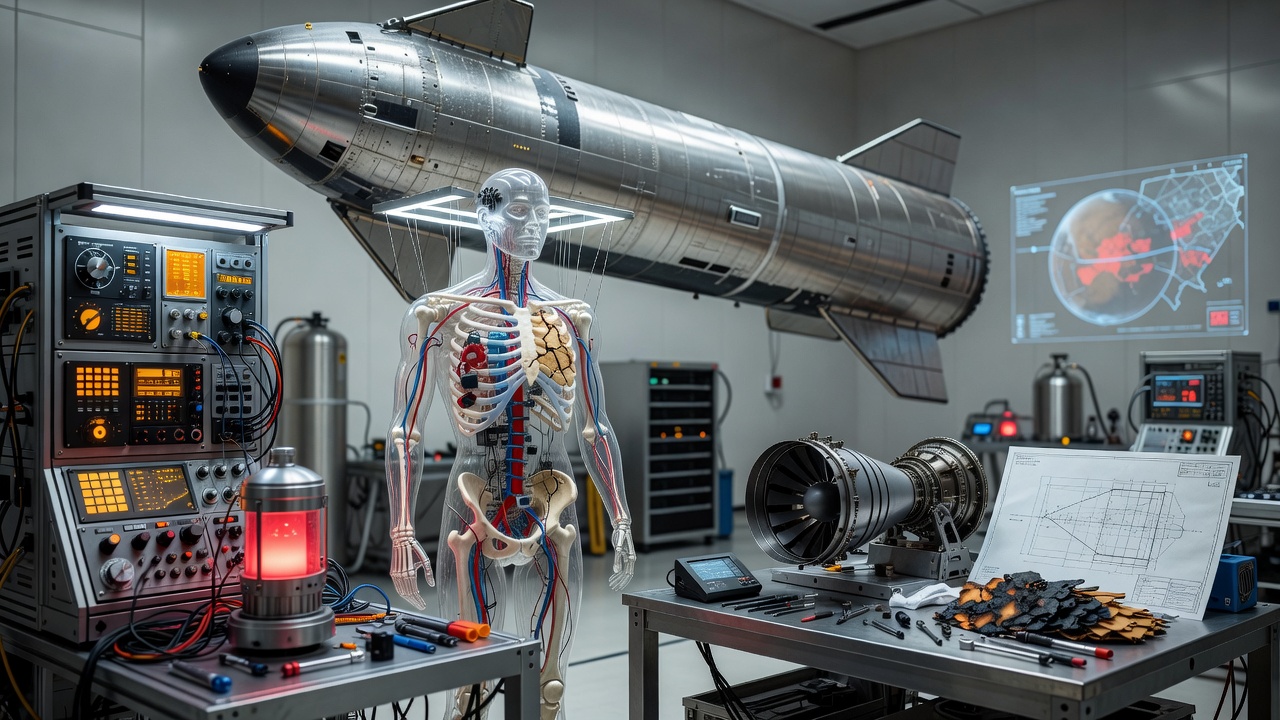
Elon Musk has never sugarcoated the dangers of sending humans to Mars. In remarks that echo across years of interviews and public appearances, the SpaceX chief executive laid out a blunt criterion for would-be travelers. “Are you prepared to die? Then okay, you’re a candidate.”
The quote, highlighted in a TechRadar article, captures the raw calculus behind Musk’s multiplanetary vision. First journeys will carry extreme peril. No technology yet eliminates the hazards of deep space. And yet volunteers line up. They accept the odds. Some see it as the ultimate adventure. Others view it as a necessary gamble for humanity’s long-term survival.
But the timeline keeps shifting. Musk once spoke of uncrewed Starships reaching Mars in 2026. That window has closed. In a late December podcast with entrepreneur Peter Diamandis, he conceded the attempt would represent “a low-probability shot and somewhat of a distraction,” according to a recent MarketWatch report on the comments. Plans now point to 2029 at the earliest for uncrewed flights. Crewed missions could follow in the early 2030s if landing tests succeed. The planetary alignment that permits efficient travel appears only every 26 months. Miss one. Wait two years.
Radiation poses the silent threat. Galactic cosmic rays and solar particle events bombard travelers during the six-to-nine-month transit. No magnetic field or thick atmosphere shields them as on Earth. A recent scientific paper in Nature explored faster trajectories using Starship that could cut transit to roughly 90 days. Even then, the total mission dose might reach 331 millisieverts during the journey, with surface time adding more. Researchers calculated this could raise lifetime cancer risk by several percentage points, though it stays below some NASA career limits for younger astronauts. Shorter trips preserve bone density too. Crews lose about 1 percent of bone mass per month in microgravity despite exercise regimens.
Older estimates painted a grimmer picture. NASA models have long projected more than a 3 percent added risk of fatal cancer for a Mars round trip. That figure approaches or exceeds agency guidelines depending on age, sex and exact exposure. Bone weakening, muscle atrophy, vision impairment from fluid shifts, and psychological strain compound the physical toll. A one-way trip might reduce some transit risks. It introduces others. What happens if systems fail after landing? Rescue remains years away.
Musk acknowledged these realities years ago. At the 2016 International Astronautical Congress and in a 2017 talk, he told audiences the first Mars voyagers should expect danger. “Honestly, a bunch of people will probably die in the beginning,” he said in an interview with Diamandis covered by Space.com. The journey is long. Uncomfortable. Food supplies limited. Return not guaranteed. Yet he frames it as glorious. The price of opening a new frontier.
Critics remain unconvinced. Lord Martin Rees, the British astronomer royal, has called Musk’s Mars ambitions a “dangerous delusion.” Others question whether private enterprise should shoulder such human risk without more government oversight. SpaceX counters that rapid iteration with Starship test flights will drive down the probability of failure. The vehicle has survived increasingly demanding trials. Orbital refueling, heat shield durability, precise landing on another planet. Each element must work flawlessly. One overlooked variable and the mission ends.
Recent developments underscore the gap between vision and execution. Starship’s uncrewed Mars shots, once eyed for late 2026, now look improbable. Musk cited bureaucratic hurdles and technical maturity in posts and interviews. A September 2024 update on X outlined sending five uncrewed Starships during the next alignment. Success there would greenlight crewed attempts four years later. Failure would push the schedule again. The company has not yet demonstrated reliable propellant production on Mars. In-situ resource utilization, the ability to make fuel from Martian ice and atmosphere, exists mostly in simulations and small-scale tests.
Even if hardware improves, human factors loom large. A Guardian article from 2016 captured public reaction to Musk’s original comments. Readers volunteered despite the risks. Some cited scientific curiosity. Others expressed a desire to contribute to something larger than themselves. Psychological screening would weed out those seeking glory alone. Candidates must demonstrate tolerance for isolation, cramped quarters and the knowledge that Earth might become a distant memory.
Financial stakes rise alongside human ones. SpaceX’s recent IPO filing, analyzed in a DW story published in May 2026, lists radiation, micrometeoroids and potential crew injury or death among core business risks. Investors must accept that a single catastrophic event could damage the company’s reputation and valuation. Yet Musk’s track record with Falcon 9 reusability suggests persistence can overcome early setbacks. The same approach may apply to Mars. Or it may not. History shows that exploration often claims lives. The question is whether society still possesses the stomach for it.
Shorter transit times offer one path to risk reduction. The Nature study demonstrated trajectories that halve radiation exposure compared with conventional six-month routes. Crews would face lower cumulative doses. They might maintain better physical condition upon arrival. Such optimizations depend on heavier initial mass or advanced propulsion. Starship’s massive payload capacity could enable the extra propellant or shielding. But every added kilogram increases launch demands and costs.
Life on the surface brings fresh challenges. Dust storms can last weeks and coat solar panels. Temperatures swing wildly. Perchlorates in the soil complicate agriculture and water extraction. Any habitat must withstand pressure differences, radiation and micrometeorite strikes. Early crews might live inside Starship hulls or buried modules. Scaling to a self-sustaining city of a million, Musk’s long-term target, requires manufacturing, food production and medical capabilities far beyond current planning.
Supporters argue the alternative is worse. Remain a single-planet species and humanity stays vulnerable to asteroid impacts, climate catastrophe or self-inflicted disasters. Spreading to Mars creates a backup. Musk has repeated this logic for two decades. His probability estimates for SpaceX’s early success hovered below 10 percent. The company beat those odds. Mars may demand similar defiance of conventional wisdom.
But beating odds differs from eliminating them. Radiation damage accumulates. Cancer might appear years after return. Or not at all. Bone loss could lead to fractures during surface operations. Isolation might trigger depression or conflict within small crews. These variables resist precise modeling. NASA studies continue. Data from Artemis lunar missions will inform deeper understanding. Yet Mars presents unique conditions. Longer duration. Higher radiation. No quick abort option.
So candidates must answer Musk’s question honestly. Preparation for death does not make it inevitable. It does acknowledge reality. Engineers will strive to lower probabilities. Heat shields will improve. Life support systems will gain redundancy. Autonomous robots could precede humans, as Musk suggested in 2025 comments about sending Optimus bots on early flights. Still, the first wave accepts pioneer status. Their experiences will shape every mission that follows.
Recent analyses on platforms like Stack Exchange and academic forums highlight fuel production as another potential showstopper. Without proven in-situ propellant generation, return trips become impossible for early landings. That turns missions into one-way endeavors by default. Musk has floated this idea before. Some view it as pragmatic. Others see it as unacceptable risk.
The coming years will test these assumptions. Starship must achieve rapid reusability, orbital refueling and safe interplanetary injection. Each milestone reduces uncertainty. None guarantees safety. The gap between robotic success and human survival remains wide. Musk’s candor serves as both warning and recruiting tool. It filters for those who grasp the stakes.
And the stakes could not be higher. Not just for the individuals involved but for the future trajectory of human expansion. Success would mark the first step off the cradle planet. Failure would reinforce caution. Either outcome reshapes how governments, companies and citizens weigh the value of pushing boundaries. For now, the answer remains the same. If you’re prepared to die, the application process is open.


 WebProNews is an iEntry Publication