
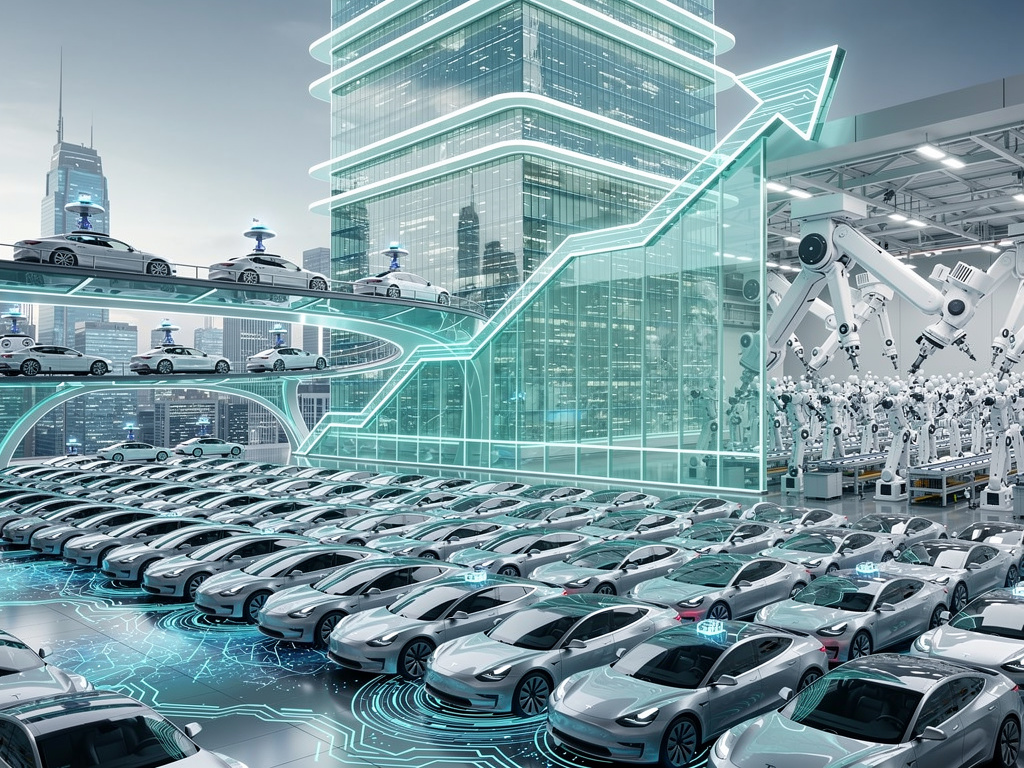
Musk’s Trillion-Dollar Gambit: Decoding Tesla’s Path to Valuation Revolution in 2025
Elon Musk has never shied away from audacious targets, and his latest compensation package at Tesla Inc. underscores that ethos. Shareholders recently approved a plan that could net Musk shares worth nearly $1 trillion if he propels the company to unprecedented heights, including a market capitalization potentially exceeding $8.5 trillion. This isn’t just about personal wealth; it’s a blueprint for transforming Tesla from an electric vehicle pioneer into a multifaceted tech juggernaut. Drawing from recent analyses, this package ties Musk’s rewards to milestones like producing 20 million cars annually, deploying 1 million robotaxis, and scaling humanoid robots to 1 million units. As Tesla navigates a pivotal year, these goals could redefine its valuation, shifting investor focus from car sales to AI-driven innovations.
The approval came amid heated debate. In November 2025, Tesla shareholders voted in favor of the package, as reported by BBC, granting Musk hundreds of millions of new shares contingent on hitting these ambitious targets. This follows a court battle over his 2018 compensation, which was reinstated earlier in the year. Critics, including famed investor Michael Burry, have labeled Tesla “ridiculously overvalued,” pointing to its underperforming shares in 2025, per a piece in Fox Business. Burry’s newsletter highlighted the company’s market cap as inflated relative to fundamentals, echoing sentiments in a CNBC report that noted Tesla’s shares lagging the broader market this year.
Yet, optimism persists among Musk’s proponents. The package’s structure, detailed in a Reuters analysis, allows Musk to earn billions by achieving even a subset of easier goals, without fully revolutionizing Tesla’s core business. This tiered approach—12 tranches unlocking based on market cap growth and operational metrics—could add $7.5 trillion in additional market value for full vesting. Posts on X, formerly Twitter, reflect bullish sentiment, with users like Whole Mars Catalog emphasizing the need for trillions in growth, far surpassing the billions required in 2018.
Unpacking the Milestones: From EVs to AI Dominance
At the heart of Musk’s vision is expanding Tesla’s electric vehicle production to 20 million units per year, a goal that would dwarf current output and solidify its lead in the automotive sector. This isn’t merely about scaling assembly lines; it involves leveraging advancements in battery technology and supply chain efficiencies. A New York Times article on the pay vote described how meeting such targets could elevate Tesla’s valuation to rival the world’s top companies combined. Musk himself has projected that Tesla’s Optimus humanoid robots could generate over $10 trillion in value, as cited in X posts aggregating earnings call insights.
Beyond cars, the robotaxi initiative represents a seismic shift. Musk aims for 1 million autonomous vehicles on the road, creating a network that generates revenue through ride-sharing without human drivers. This aligns with Tesla’s Full Self-Driving (FSD) technology, which Musk claims will enter new markets in 2026, according to a recent Motley Fool update. The potential here is immense: if successful, robotaxis could transform urban mobility, turning Tesla into a software and services powerhouse. Recent news on X highlights analyst price targets ranging from $15 to $1,000 per share, driven by hype around Cybercab and FSD advancements.
Humanoid robots add another layer. Musk’s plan calls for 1 million Optimus units, positioning Tesla in the robotics market to automate labor-intensive tasks. A Fortune piece quoted Musk predicting that AI and robotics could make work optional in 10 to 20 years, rendering money irrelevant in a post-scarcity world. This futuristic outlook ties into broader EBITDA goals, requiring Tesla to hit $400 billion annually— a feat X users note would make it twice as valuable as Nvidia today.
Investor Skepticism and Market Realities
Despite the enthusiasm, challenges loom. Tesla’s 2025 has been lackluster, with revenue growth slowing and questions mounting over new catalysts like robotaxis offsetting operational strains, as outlined in a StockTwits analysis using five charts to explain the downturn. Shares have underperformed, and critics like Burry argue the valuation doesn’t match reality. This echoes a TechStock² report on current stock prices and 2026 forecasts, which tempers robotaxi hype with warnings of regulatory hurdles.
Musk’s compensation has drawn scrutiny for its scale. A Euronews story suggested it could make him the world’s first trillionaire, despite declining sales in some quarters. X posts from users like The Humanoid Hub detail the 12 tranches, requiring feats like 1 million bots and 20 million cars, while others, such as nextbigfuture, break down the doubling of company value needed at each level. These discussions underscore a divide: believers see it as incentive for innovation, while detractors view it as excessive.
Financially, the package replaces the voided 2018 structure, with tranches vesting only on hitting specific financial and operational marks. As one X post noted, energy storage isn’t even mentioned, putting the onus on FSD, taxis, and robots for EBITDA milestones. This focus could pivot Tesla’s identity, but it risks alienating investors if milestones falter.
Strategic Implications for Tesla’s Ecosystem
Musk’s broader ecosystem amplifies these goals. Tesla’s integration with ventures like SpaceX and xAI could create synergies, such as using AI for autonomous systems across domains. A Yahoo Finance piece imagined dividing Musk’s net worth among Tesla employees, highlighting the wealth concentration but also the value created—estimated at $2.3 trillion benefiting millions, including retirement funds, per X sentiment.
Operationally, achieving these targets demands manufacturing dominance. X users like TysonTesla outline pathways: scaling FSD software, robotaxi network effects, and energy growth as a profit engine. This isn’t speculative; it’s grounded in measurable steps, though timing remains the wildcard. Musk’s philosophy, as one X thread described, views Tesla as a tool for freeing humanity from dirty energy and manual labor through tech, freedom, and efficiency.
Regulatory and competitive pressures add complexity. Expanding FSD into new markets faces scrutiny from safety agencies, potentially delaying robotaxi rollout. Meanwhile, rivals in EVs and AI are closing gaps, making Musk’s timelines aggressive.
Valuation Projections and Long-Term Bets
Projecting Tesla’s value under these goals involves modeling exponential growth. If Musk hits the $8.5 trillion market cap, it would eclipse current giants, fulfilling his earnings call claim of surpassing the top five companies’ combined value. X posts from years ago, like one from 2020 predicting a $700 billion valuation by 2025, now seem prescient as Tesla approaches that mark amid volatility.
Analysts debate the feasibility. While some see robotaxis as a game-changer, others warn of overvaluation. A recent X discussion criticized the plan’s car goal as autopilot-driven but insufficient without robotics for full EBITDA. Yet, if delivered, it could generate trillions in economic value, as one user calculated.
For industry insiders, this package isn’t just compensation—it’s a high-stakes bet on Musk’s ability to execute. Success could validate his vision, transforming Tesla into an AI and robotics leader. Failure might expose overhyping, but given his track record, many are wagering on the former.
Global Impact and Ethical Considerations
The ripple effects extend globally. Scaling to 20 million cars could accelerate the shift to sustainable transport, reducing emissions. Robotaxis might democratize mobility, while Optimus could reshape labor markets, aligning with Musk’s prediction of optional work.
Ethically, the wealth disparity raises questions. X users like George doubt the $8.5 trillion cap is achievable, calling it unlikely. Others defend it as incentive for innovation that benefits society.
Ultimately, 2025 marks a crossroads for Tesla. Musk’s goals, if met, promise a valuation revolution, but they demand flawless execution in a competitive arena. Investors watching closely will determine if this gambit pays off.


 WebProNews is an iEntry Publication